First Seen
2023-05-10T21:03:42+00:00
simple-description (llama3.2-vision_11b)
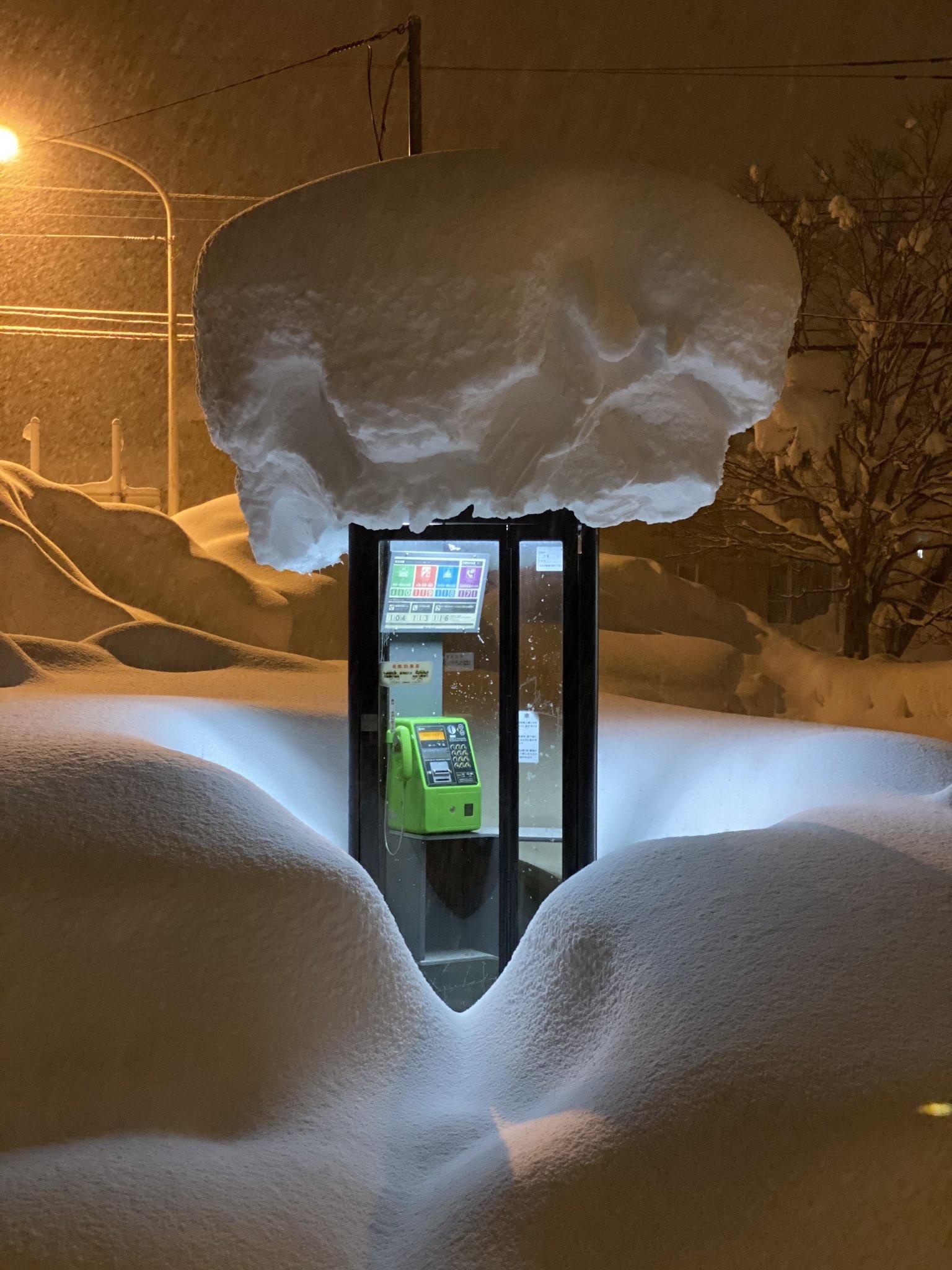
The meme is a photo of a snow-covered city street, with a large snowbank blocking the entrance to a public phone booth. The image is captioned "When you can't get a signal but you need to make a call". The meme is a humorous commentary on the challenges of staying connected in a winter-weathered city, where even the most basic necessities like phone booths can be inaccessible due to snow.
detailed-analysis (gemma3-27b-vision)
Okay, here's a multi-section analysis of the image, broken down into the requested theoretical frameworks. I’ll indicate where a particular framework doesn't seem particularly applicable, and focus on those where the image lends itself to richer interpretation.
Visual Description
The image depicts a public utility kiosk, seemingly for phone or internet access, completely enveloped in deep snow. The kiosk is a black rectangular structure with a glass front displaying various connection options/instructions. A green device, likely a card reader or some sort of connection port, is attached to the right side. The snow is the dominant element, sculpted into organic, almost wave-like forms around the kiosk, burying the base and rising high above it, seemingly isolating the structure. The background is dark and out of focus, suggesting a nighttime or very low-light condition. A street lamp is visible, casting a warm, yellow glow. The overall effect is one of isolation, encapsulation, and the overwhelming power of nature. The contrast between the rigid, technological object and the fluid, amorphous snow is striking.
Foucauldian Genealogical Discourse Analysis
This image is ripe for a Foucauldian analysis. The kiosk itself can be seen as a site of power/knowledge. Historically, public telephone booths (and by extension, modern internet kiosks) represent a specific discourse around communication, access, and control. The kiosk isn’t just a tool for connection, but an embodiment of the state or a service provider’s control over the means of communication.
The snow acts as a disruptive force to this power/knowledge regime. By burying the kiosk, it temporarily interrupts its function and renders its inherent power impotent. This isn’t merely a physical obstruction, but a symbolic one. The snow represents a force beyond the control of the technologies and institutions represented by the kiosk, a "return of the repressed" or a reminder that natural forces ultimately supersede human endeavors.
Tracing the "genealogy" of the kiosk—from early public telephone boxes to modern digital access points—reveals how discourses of communication have evolved alongside technologies of control and surveillance. The snow, in its disruption, momentarily breaks that lineage.
Critical Theory
The image evokes the theme of alienation, a key concept in Critical Theory, particularly as articulated by the Frankfurt School. The kiosk, despite being a tool for connection, stands isolated and inaccessible, representing a disconnect between technology and the human experience. It symbolizes the increasingly mediated nature of our lives, where access to basic needs (communication, information) is controlled by external systems.
The snow can be seen as a metaphorical "covering" or "mask" that reveals the artificiality of these systems. The natural world, in its overwhelming presence, highlights the constructed nature of our technological infrastructure and the alienation it creates. The image subtly critiques the notion of progress through technology, suggesting that it often comes at the cost of our connection to the natural world and to each other. It's a picture of technology subsumed by nature.
Marxist Conflict Theory
While not as overtly apparent, a Marxist reading could focus on the means of communication as a source of power and control. The kiosk, as a point of access to the internet or telephone service, can be understood as a commodity, controlled by a capitalist entity. The snow can be interpreted as a temporary disruption of this control, a "seizure of the means of communication" by a natural force.
However, this reading is limited. The image lacks explicit representation of class struggle or exploitation. It’s more about access being momentarily denied than about the inherent contradictions of capitalist production. The image highlights a temporary failure of infrastructure rather than a critique of its fundamental structure.
Postmodernism
The image resonates with several postmodern themes. The deconstruction of the kiosk’s intended function is central – the snow renders it useless, effectively dismantling its purpose. The image also highlights the instability of meaning. The kiosk, usually a symbol of connection, becomes a symbol of isolation and obstruction.
The blurring of boundaries between nature and technology is also apparent. The snow isn’t simply around the kiosk; it’s engulfing it, creating a hybrid object that challenges traditional categories. This blurring and deconstruction align with postmodern emphasis on the fluidity of meaning and the rejection of grand narratives. The image is essentially a commentary on the fleeting and contingent nature of technology and infrastructure.
Queer Feminist Intersectional Analysis
This framework isn’t a strong fit for this particular image. While it’s possible to stretch a reading about access (or lack thereof) as relating to marginalized communities, it doesn’t organically lend itself to this visual. The image lacks explicit references to gender, sexuality, or the intersection of multiple forms of oppression. While access to communication is certainly a social justice issue, this image doesn't inherently represent that in a way that calls for an intersectional lens. It's more broadly about isolation and the power of nature.
Let me know if you'd like me to elaborate on any of these analyses, or explore alternative interpretations.
simple-description (llama3.2-vision)
This meme is an image of a snowplow driver's perspective, looking out at a massive snowbank that has formed in front of their plow. The text "I'm not arguing, I'm just explaining why I'm stuck in this snowbank" appears in the image. The meme is likely referencing a common frustration of snowplow drivers who get stuck in the snow they're trying to clear.
tesseract-ocr
es . a Ee, 4 a. 73 } <@ | : = “ge “saa oe a a The Se ee /. a 3 es oa ft We / ge ig hi a A ick THe \ : : a i; >" , ge ae LS rai mana (aN harle ‘ , 8 oe i ep rare i F 5 s a # i, dears | ; om m ee, ) 4 aoc yaa ON bs _ Y ey 2 Ne a wr a Sm” Py oe if a, RA eee | , , ae ea J Ff ¢ at ee iu eR a » seas ea ' KAI ei ig yng . a agen ‘ —=—P = P 4 : rE ' . 4 eee ~ ie Ss | ca 2 1 | Ce i “ a fs ee Pe aaa . Exe a 2 @ : : eats iaieaae a ee mii : ee , eae oS a= Pe 4 ! BS | a ! ees - om 7 oe Slee | ; } F oe on iat oo pee Ui) | oo ee acri SS 6 Sy Se ae ms ete, * = 2a eet . ie a 5 ee i ip Serres bai Neel pane “ie | i ge a ; ORR ee ee: a 2 CAE Ee ae ie eas Se CE ea * <i ie Wyk ies ey see ye Bae sae Cap eee + ane oan pelt ate cata. ae ee Sekt, Fee eips Be A pone abt Ss4 ia Ee a gga aS eee a se _ me. ns » ncaa oie ope Seemann ~ ie en Na : . 2 oe Se a eo eee if Ronee re a 2k a he RS Wie ee ae ee Se WI =. Citas