First Seen
2025-09-26T19:59:51+00:00
simple-description (qwen3.5_2b-q8_0)
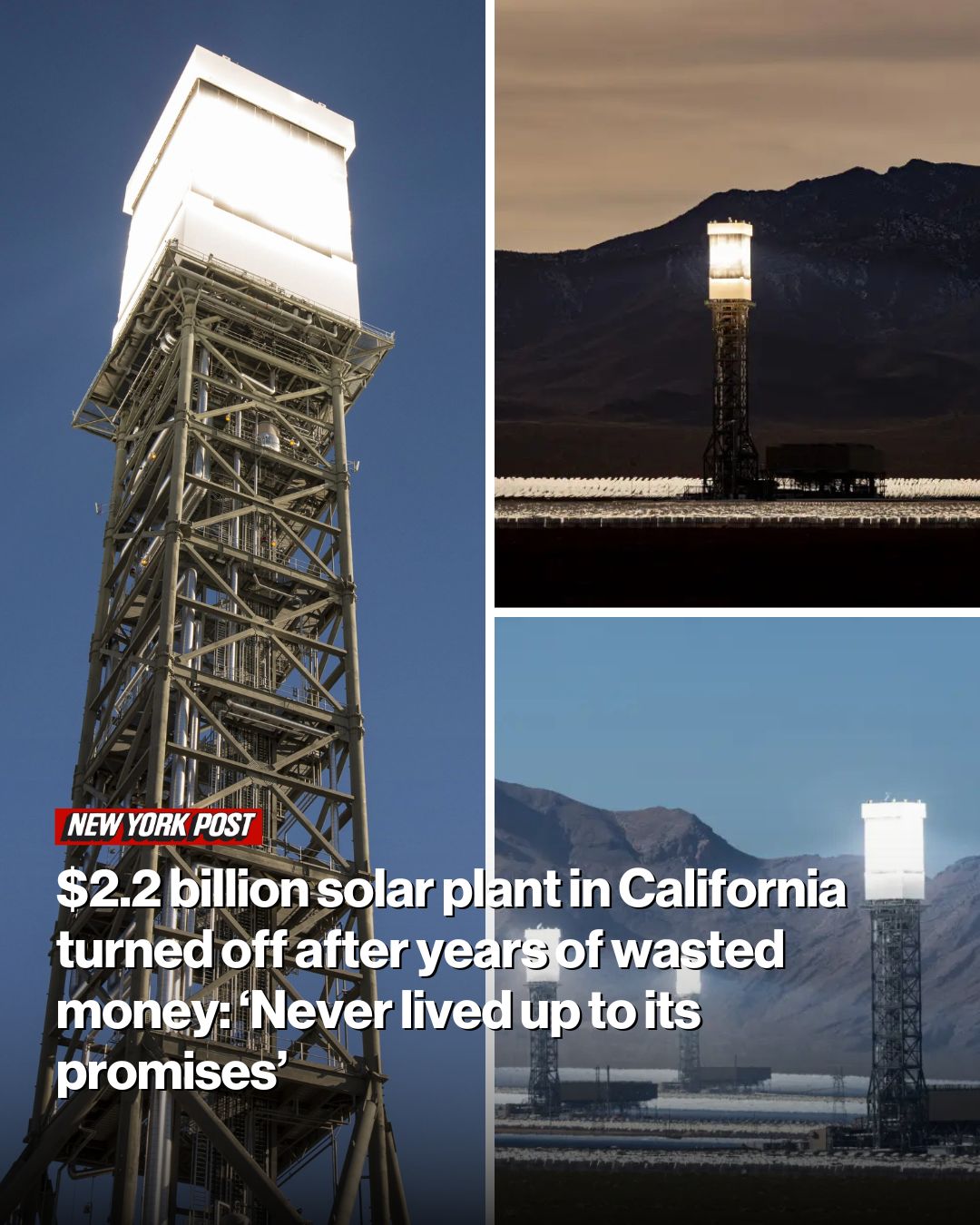
This meme uses a visual of a massive solar power structure to ironically satirize the failure of high-tech urban sustainability projects. While it presents an image of a grand, expensive green energy grid plant, the accompanying text reveals that such ambitious investments often end up being wasted when the technology "never lived up to its promises."
detailed-analysis (gemma3_27b-it-q8_0)
Okay, let's dissect this image and its associated text through the lens of Urbanism, Power Grids, and Sustainability, utilizing applicable theoretical frameworks.
Visual Description
The image presents a stark contrast between ambition and failure. It features three photographs of the Ivanpah Solar Electric Generating System in California. The primary image showcases a central ‘power tower’ – a tall, lattice-structured steel framework topped with a bright, reflective receiver. Two smaller inset images depict a long array of heliostats (mirrors) stretching across a desert landscape. The heliostats focus sunlight onto the receiver. The background scenery emphasizes the vastness and arid environment of the Mojave Desert. The overall visual impression is one of imposing industrial structure seemingly stranded within a natural, though harsh, landscape. The "New York Post" branding and accompanying text (“$2.2 billion solar plant in California turned off after years of wasted money: ‘Never lived up to its promises’”) are prominently displayed, framing the imagery as a story of failure. The overall color tone is warm, reflecting the desert climate, but also subtly reinforcing the sense of heat and potentially, overheating – a significant technical challenge in concentrating solar power.
Critical Theory
From a Critical Theory perspective, this image powerfully illustrates the gap between ideal and reality within narratives of sustainability and technological progress. Critical Theory interrogates the underlying power structures and assumptions that shape societal projects. Here, the plant symbolizes a utopian vision of clean energy. However, its failure (as stated in the text) reveals underlying flaws in the pursuit of this utopia.
- Instrumental Reason: The plant’s design and construction likely relied on a purely “instrumental reason” – a focus on efficiency, technical solutions, and economic calculations, without sufficient consideration of ecological impacts, local community needs, or the inherent limitations of the technology in that specific environment. The focus on measurable outcomes (power generation) neglected potential unforeseen consequences (bird deaths, water usage for cleaning mirrors, limited operating hours).
- The Illusion of Progress: The image challenges the narrative of linear technological progress. It highlights how a project marketed as a step toward a more sustainable future can, in practice, become a costly failure, reinforcing cynicism around green technologies and potentially hindering true systemic change.
- Commodification of Nature: The imposing structure within a pristine landscape exemplifies the commodification of nature – reducing ecological space to a resource for energy production, rather than valuing it for its inherent worth.
Marxist Conflict Theory
A Marxist analysis would focus on the economic and class dimensions of the project’s failure.
- Capital Accumulation & Waste: The $2.2 billion investment represents a significant concentration of capital. The “wasted money” suggests a failure to generate sufficient surplus value from the plant, highlighting the inherent contradictions within capitalist systems – the drive for endless growth versus the limitations of natural resources. The project essentially served as a misallocation of capital that did not result in profit.
- Labor Exploitation (Potential): The construction of the plant likely involved the labor of workers, potentially under exploitative conditions. The failure of the plant doesn’t necessarily alleviate their exploitation; it simply shifts the cost of that failure onto society.
- The Role of Government Subsidies: The fact that such a large project was funded (likely with taxpayer money) highlights the role of the state in propping up private interests, especially those promoting “green” technologies, and the potential for cronyism and corruption. The subsidy becomes a transfer of wealth from the working class to capital.
- Class disparities: the costs of the project being "wasted" will inevitably be spread throughout the population, likely affecting those with lower incomes more drastically than those with wealth and power.
Foucauldian Genealogical Discourse Analysis
A Foucauldian approach examines how the discourse surrounding the plant – the narratives, power dynamics, and knowledge production that accompanied it – shaped its development and subsequent interpretation.
- The Discourse of “Renewable Energy”: The plant was presented as part of a larger discourse about renewable energy as the inevitable future. This discourse was constructed by scientists, politicians, corporations, and environmental groups. The failure of the plant destabilizes this discourse, revealing it as a construction rather than a natural progression.
- Power/Knowledge: The expertise of engineers and energy companies was central to the plant's construction. However, this "knowledge" was not neutral; it was linked to power dynamics, economic interests, and assumptions about control over nature. The plant's failure calls into question the legitimacy of that expertise.
- Normalization of Risk: The scale of the investment, and the publicity surrounding it, may have normalized the acceptance of significant environmental and economic risks associated with untested technologies.
- Disciplinary Power: The idea of “sustainable development” itself can be seen as a form of disciplinary power, shaping our behavior and expectations around energy consumption and environmental responsibility. This failure suggests the limits of that disciplinary power.
Postmodernism
From a Postmodern perspective, the image challenges grand narratives and essential truths.
- Deconstruction of the “Green” Narrative: The failure of the plant undermines the universal claim that renewable energy is always a positive solution. It reveals that "green" is a contingent and contextual label.
- Fragmentation and Uncertainty: The fragmented images (the three separate photographs) and the negative framing contribute to a sense of fragmentation and uncertainty. There is no single, coherent story here, just a collection of partial perspectives.
- Relativism: The plant's failure underscores that "success" and "failure" are not objective concepts; they are relative to specific criteria, perspectives, and power structures.
In conclusion: The image, and the accompanying text, offers a complex case study of the interplay between technological ambition, economic realities, and the broader socio-ecological contexts of energy production. It serves as a cautionary tale, exposing the limitations of top-down, technologically-driven solutions to complex sustainability challenges and inviting critical reflection on the power dynamics that shape our energy future.
simple-description (llama3.2-vision_11b)
The meme is a satirical image of a solar power tower, a massive solar energy collector, with a bold headline stating that a $2.2 billion solar power plant in California has been shut down due to lack of funding. The image is a commentary on the irony of a massive solar power plant being shut down due to financial issues, highlighting the challenges of renewable energy infrastructure. The text " $2.2 billion solar power plant in California shut down" is a key part of the meme, emphasizing the absurdity of a massive solar power plant being shut down due to financial issues.