First Seen
2025-07-24T19:44:08+00:00
simple-description (qwen3.5_2b-q8_0)
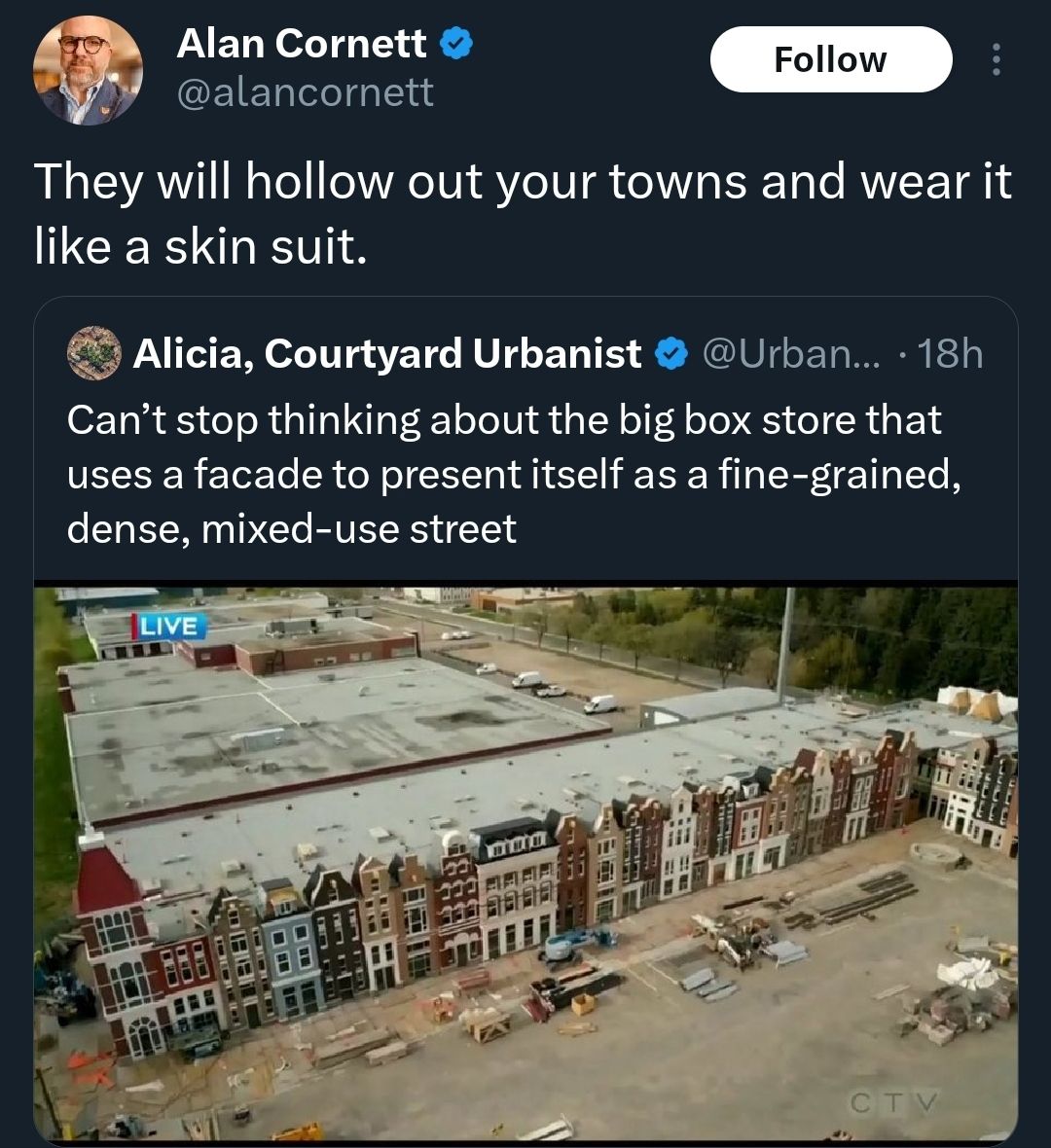
This meme captures the ironic reality of modern urban planning where giant retail developments are often constructed directly over historic neighborhoods, effectively stripping them of their community identity. The image illustrates this concept by showing a massive parking lot built on top of traditional row houses, with concrete lines for cars cutting straight through what would otherwise be walking streets. This visual serves as a direct reference to the tweet from @Urban... that mentions thinking about a "big box store that uses a facade to present itself as a fine-grained, dense, mixed-use street."
detailed-analysis (gemma3_27b-it-q8_0)
Okay, let's break down this meme from an Urbanism/Car Culture perspective, leveraging the requested theoretical frameworks where applicable.
Visual Description
The image is a stark aerial view. On the left, we see a relatively charming, densely built row of townhouses – likely intended to evoke a European aesthetic, with pitched roofs and varied facades. This represents traditional urban form – walkability, density, human scale. On the right, dominating the frame, is a massive, surface-level parking lot belonging to a big-box retail store (likely Walmart or similar). The contrast is brutal. The parking lot is vast, unbroken, and almost entirely dedicated to cars. A small 'LIVE' news banner suggests real-time coverage of this urban transformation. The perspective emphasizes the scale of the disruption – the parking lot swallows the traditional urban fabric. The muted, somewhat dreary colour palette amplifies the sense of loss and alienation.
Critical Theory
This meme powerfully illustrates a core tenet of Critical Theory: the way power structures shape our built environment and, consequently, our lives. The big-box store, backed by massive capital, imposes its model onto the existing urban fabric. The traditional townhouses represent a different set of values – community, walkability, human connection. The parking lot doesn't serve people first; it serves cars and the logistical needs of a consumer-driven system. It’s a critique of the “rationalized” city – where spaces are designed solely for efficiency and profit, at the expense of qualitative human experience.
The meme highlights the concept of "instrumental reason" (Horkheimer & Adorno) – a worldview that reduces everything to its utility. The townhouses have inherent aesthetic and social value; the parking lot has value only as a means to an end (facilitating consumption).
Marxist Conflict Theory
From a Marxist perspective, the meme embodies a clear conflict between competing class interests. The big-box store represents the capitalist mode of production and the drive for accumulation. The townhouses represent, perhaps, a more localized, potentially community-based economy. The displacement of the traditional urban fabric is a manifestation of capital's relentless need to expand and control space.
The parking lot is a material expression of this power dynamic. It's not simply a neutral space for parking cars; it's a symbol of the dominance of capital over lived space. The “hollowing out” described in the tweet suggests the erosion of local businesses and community structures in favor of a homogenized consumer culture.
Foucauldian Genealogical Discourse Analysis
Michel Foucault's concept of "governmentality" is relevant here. The seemingly "neutral" layout of the big-box store and its associated parking lot isn't simply a matter of economic efficiency. It's a way of governing behavior. The car-centric design normalizes and encourages car dependency, shaping individuals' habits and routines.
The meme points to a historical shift in how cities are understood and managed. The traditional townhouses represent a pre-modern (or at least, pre-automobile-centric) form of urbanism, where space was organized around pedestrian activity and community life. The big-box store represents a modern/postmodern approach, where space is organized around consumption and the flow of commodities – and, crucially, the flow of vehicles. The quote "they will wear it like a skin suit" is a brilliant articulation of how this environment envelops and shapes the very identities of those who inhabit it.
Postmodernism
The meme touches on postmodern themes of simulacra and hyperreality. The attempt to create a "fine-grained, dense, mixed-use street" facade for a big-box store is a simulation of urban life—a copy without an original. It's an aesthetic gesture that masks the underlying reality of car dependency and spatial homogenization. This superficial imitation aims to placate concerns about the impact of these stores on community character, but ultimately rings hollow. It's a "pastische" – a combination of styles that lacks depth or authenticity.
In Summary
The meme is a scathing critique of the impact of car-centric development and big-box retail on urban communities. It’s a multi-layered statement that speaks to power imbalances, the commodification of space, and the erosion of authentic urban life. The quote, "They will hollow out your towns and wear it like a skin suit," is a particularly potent metaphor for the insidious way in which these forces shape our environments and our identities.
Let me know if you'd like me to elaborate on any of these points or explore additional theoretical perspectives!
simple-description (llama3.2-vision_11b)
The meme is a screenshot of a tweet from urbanist and writer, Alan Cornett, with a photo of a planned development in the city of Hamilton, Ontario. The text reads: "They will hollow out your towns and wear it like a skin suit." The meme is a commentary on the impact of big box stores on urban planning and the way they can transform a community's character.
detailed-analysis (gemma3-27b-vision)
Okay, let's break down this tweet and accompanying image through several theoretical lenses. It's a rich example for many of these frameworks.
1. Visual Description
The image is an aerial photograph showing a significant construction site. The most striking feature is a large, rectangular building under construction—clearly a big-box store (likely Walmart, given the color scheme). Crucially, the facade of this big-box store is designed to resemble a traditional, dense, European-style streetscape. There's a row of 'buildings' built onto the front of the store, complete with faux facades depicting storefronts (with windows and doors) and attempting to mimic a main street.
The surrounding context includes existing traditional buildings along a street. This creates a jarring contrast. The new building, despite its facade, is overwhelmingly large and car-centric, with a vast parking lot taking up most of the space. The construction site appears to be in a formerly more organic, pedestrian-friendly area. The "LIVE" logo suggests this is media coverage.
2. Foucauldian Genealogical Discourse Analysis
This image and tweet offer fertile ground for a Foucauldian analysis. Foucault’s concepts of discourse, power/knowledge, and panopticism are highly relevant.
- Discourse & Normalization: The construction of this facade isn’t just about aesthetics; it's an attempt to discourse a specific vision of "community" and "place." It's trying to normalize a hyper-commercialized, car-dependent landscape by dressing it up in the language of traditional urbanism. The discourse attempts to conceal the alienating effects of big-box retail by mimicking the visual cues of a ‘healthy’ main street.
- Power/Knowledge: The decision to build this way reflects the power of corporations (and the developers who serve them) to impose their vision of “progress” on the built environment. They know how to manipulate visual language to gain acceptance for a project that fundamentally disrupts the existing fabric of the town. This "knowledge" is then used to shape the behavior of the population.
- Panopticism/Surveillance: While not directly visible, the vast parking lot and the structure itself imply a system of control and surveillance. The parking lot is a space of constant movement, readily monitored. The store itself becomes a site of consumption, where behaviors are subtly guided and measured. The large parking lot provides a complete view of all those who approach.
3. Critical Theory (Frankfurt School)
From a Critical Theory perspective (drawing on thinkers like Adorno & Horkheimer), this image represents a manifestation of the “culture industry.”
- Commodification of Culture: The "traditional" streetscape is a simulacrum – a copy without an original. It's a fabricated version of a cultural heritage used to sell the big-box store. Authentic community is replaced by a manufactured representation of it. This fosters a sense of alienation.
- Loss of Authenticity: The facade is a superficial layer meant to mask the underlying reality of corporate control and consumerism. It's a demonstration of how capitalism erodes genuine cultural expression and replaces it with commodified versions. The loss of the original architecture represents a loss of collective memory and identity.
- Mass Deception: The attempt to blend in is a form of mass deception, designed to make consumers feel comfortable with a project that is fundamentally exploitative and disruptive.
4. Marxist Conflict Theory
From a Marxist lens, this image highlights the ongoing class struggle manifested in the built environment.
- Capital Accumulation: The construction represents capital accumulation by developers and corporations at the expense of the local community. The facade is a tactic to pacify resistance and legitimize the project.
- Alienation of Labor: The construction itself likely involves exploitative labor practices. The resulting store will further alienate workers through repetitive, low-wage jobs.
- Commodification of Space: This construction transforms community space into a commodity to be bought and sold. The building prioritizes profit over the well-being of the local population. The vast parking lot prioritizes car ownership which is a status symbol.
- Spatial Inequality: This construction creates spatial inequality by displacing local businesses and creating a car-dependent environment that disadvantages those who cannot afford or choose not to drive.
5. Postmodernism
This image is a potent example of postmodern aesthetics and critique.
- Hyperreality & Simulacra: The facade is the ultimate simulacrum – a copy that has no original. It’s a simulation of a town center, divorced from any genuine historical or social context. This creates a "hyperreality" where the distinction between the real and the artificial becomes blurred.
- Pastiche & Irony: The architectural style is a pastiche of traditional European forms, presented ironically. It is a self-conscious appropriation of historical styles without any genuine connection to their meaning or context. The irony is that it appears to be trying to fit in while completely disrupting the existing environment.
- Deconstruction of Meaning: The facade deconstructs the traditional meaning of "town center" and "community." It presents a fragmented, artificial version of these concepts, questioning the very notion of authenticity.
- Surface Over Substance: The focus on the facade emphasizes the importance of surface appearance over underlying substance. The goal is to create a convincing illusion, even if it lacks any real depth or meaning.
6. Queer Feminist Intersectional Analysis
While less direct, a queer-feminist intersectional analysis can still be applied.
- Spatial Control & Gendered Spaces: The large parking lot and car-centric design privilege those who can afford and operate vehicles, often reflecting patriarchal power structures and limiting access for women, disabled individuals, and those from lower socioeconomic backgrounds. The space is actively constructed to prioritize some individuals' access over others.
- Commodification of Community and Care: The loss of local businesses and the dominance of corporate retail erode the social fabric and reduce opportunities for community building and mutual care. It commodifies relationships and replaces them with transactional exchanges.
- Critique of “Normative” Space: The construction reinforces “normative” concepts of what constitutes a “successful” or “desirable” town center, often based on capitalist values and patriarchal assumptions. Alternative visions of community and place are marginalized or excluded.
- Resistance & Reclaiming Space: The image also invites a call to resistance. The disruption of the town's fabric could be a catalyst for local activists and communities to reclaim space and reimagine their environments according to their own values and priorities.
In summary, this image is a rich and complex example of the forces shaping our built environment. It’s a potent reminder that even seemingly mundane architectural decisions can have profound social, political, and cultural implications. The tweet's chilling description – "They will hollow out your towns like a skin suit" – is a fitting response to this spectacle.
simple-description (llama3.2-vision)
This meme is a satirical commentary on the idea of big-box stores and their impact on urban planning. The image features a tweet from a "Courtyard Urbanist" who is critical of a big-box store's use of a "façade" to present itself as a fine-grained, dense, and mixed-urban-traffic- and-traffic- and- traffic- and- traffic- and- traffic- and- traffic- and- traffic- and- traffic- and- traffic- and- traffic- and- traffic- and- traffic- and- traffic- and- traffic- and- traffic- and- traffic- and- traffic- and- traffic- and- traffic- and- traffic- and- traffic- and- traffic- and- traffic- and- traffic- and- traffic- and- traffic- and- traffic- and- traffic- and- traffic- and- traffic- and- traffic- and- traffic- and- traffic- and- traffic- and- traffic- and- traffic- and- traffic- and- traffic- and- traffic- and- traffic- and- traffic- and- traffic- and- traffic- and- traffic- and- traffic- and- traffic- and- traffic- and- traffic- and- traffic- and- traffic- and- traffic- and- traffic- and- traffic- and- traffic- and- traffic- and- traffic- and- traffic- and- traffic- and- traffic- and- traffic- and- traffic- and- traffic- and- traffic- and- traffic- and- traffic- and- traffic- and- traffic- and- traffic- and- traffic- and- traffic- and- traffic- and- traffic- and- traffic- and- traffic- and- traffic- and- traffic- and- traffic- and- traffic- and- traffic- and- traffic- and- traffic- and- traffic- and- traffic- and- traffic- and- traffic- and- traffic- and- traffic- and- traffic- and- traffic- and- traffic- and- traffic- and- traffic- and- traffic- and- traffic- and- traffic- and- traffic- and- traffic- and- - it- and- traffic- and- - and- - and- - and- - and- - and- - and- - and- - and- - and- - and- - and- - and- - and- - and- - and- - and- - and- - and- - and- - and- - and- - and- - and- - and- - and- - and- - and- - and- - and- - and- - and- - and- - and- - and- - and- - and- - and- - and- - and- - and- - and- - and- - and- - and- - and- - and- - and- - and- - and- - and- - and- - and- - and- - and- - and- - and- - and- - and- - and- - and- - and- - and- - and- - and- - and- - and- - and- - and- - and- - and- - and- - and- - and- - and- - and- - and- - and- - and- - and- - and- - and- - and- - and- - and- - and- - and- - and- - and- - and- - and- - and- - and- - and- - and- - and- - and- - and- - and- - and- - and- - and- - and- - and- - and- - and- - and- - and- - and- - and- - and- - and- - and- - and- - and- - and- - and- - and- - and- - and- - and- - and- - and- - and- - and- - and- - and- - and- - and- - and- - and- - and- - and- - - - - - - - - - - - - - - - - - - - - - - - - - - - - - -