First Seen
2024-05-28T01:09:23.887025+00:00
simple-description (llama3.2-vision_11b)
The meme is a humorous image of a truck with the words "Trans Portation" on the side, playing on the word "transportation" to imply the truck is transporting itself, or "trans-porting" itself. The text "Trans Portation" is a clever play on words, poking fun at the idea of a truck being able to transport itself. The meme is a lighthearted and silly take on the concept of transportation.
detailed-analysis (gemma3-27b-vision)
Here's an analysis of the image based on your requested theoretical frameworks. Note that some frameworks are more applicable than others.
Visual Description
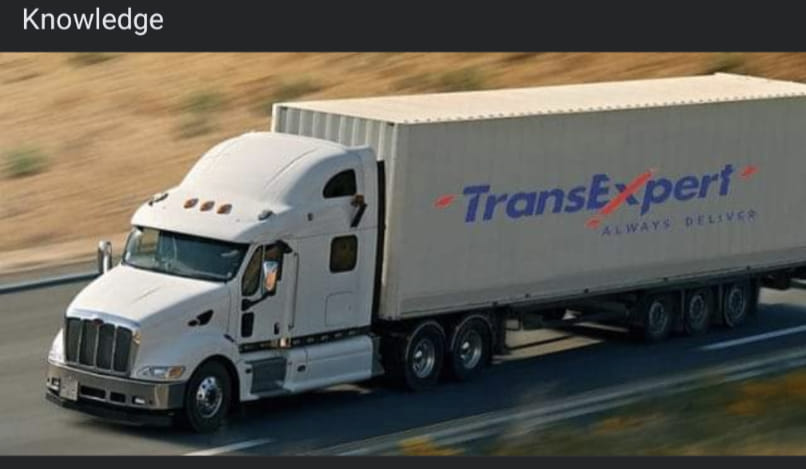
The image depicts a large, white semi-trailer truck traveling on a highway. The truck is modern in design, with a streamlined cab and a rectangular trailer. The trailer is emblazoned with the logo "TransExpert" in red and blue lettering, along with the tagline "ALWAYS DELIVER." The background shows a blurred highway landscape, suggesting motion and speed. The image is brightly lit, emphasizing the truck's clean and professional appearance.
Foucauldian Genealogical Discourse Analysis
- Discourse of Logistics & Efficiency: The truck, branding ("ALWAYS DELIVER"), and the very concept of a "TransExpert" represent a discourse surrounding logistics, efficiency, and seamless delivery. This discourse emphasizes control, predictability, and the optimization of movement.
- Power/Knowledge: The truck embodies the power to move goods and connect different regions. This power is intertwined with knowledge: logistical knowledge (routes, scheduling), market knowledge (demand, supply chains), and technological knowledge (tracking, fuel efficiency). The truck doesn't simply transport goods, it disciplines space and time to enable the flow of commodities.
- Genealogy of the “Expert”: Tracing the term “expert” in this context reveals a shift from artisanal skill and localized knowledge to centralized, technologically-driven expertise. "TransExpert" frames the entire operation as controlled and managed by a specialized, abstract authority.
- Normalizing Practices: The ubiquitous presence of such trucks normalizes the constant flow of goods and the expectation of instant gratification. It subtly reinforces a system dependent on constant consumption and logistical control.
Critical Theory
- Commodification of Space and Time: The truck is a symbol of how space and time have become commodified within a capitalist system. Its function is not merely to move goods, but to reduce the friction of exchange and accelerate the circulation of capital.
- The "Machine" as Metaphor: The truck can be viewed as part of a larger "machine" of production and consumption. It represents the impersonal, efficient, and often exploitative forces driving contemporary society.
- Loss of Locality: The image evokes a sense of deterritorialization—goods are moved vast distances, often obscuring their origins and connections to local communities.
- Spectacle: The sleek design and branding contribute to a 'spectacle' of efficiency, diverting attention from the labor conditions and environmental impact of the transportation system.
Marxist Conflict Theory
- Labor and Exploitation: While the truck symbolizes efficiency, it hides the often-exploitative labor conditions of truck drivers and warehouse workers who make the delivery process possible. The image doesn't show the human cost behind the "ALWAYS DELIVER" promise.
- Means of Production: The truck represents a key means of production in a capitalist system—facilitating the movement of commodities and maximizing profit. Ownership of these means of production is concentrated in the hands of a few.
- Class Struggle: The efficient transportation network symbolized by the truck contributes to the accumulation of capital by the owning class, potentially widening the gap between the rich and the poor.
- Surplus Value: The efficiency of the transportation network allows for the extraction of surplus value – the difference between the cost of production and the selling price of goods.
Postmodernism
- Simulacra and Simulation: The truck, with its pristine appearance and branding, can be seen as a simulacrum—a copy without an original. The emphasis on branding and delivery speed creates an illusion of seamlessness and reliability.
- Fragmentation and De-centering: The truck represents the fragmentation of space and the de-centering of local economies. Goods are moved across vast distances, breaking down traditional connections between producers and consumers.
- Hyperreality: The promise of “ALWAYS DELIVER” creates a hyperreality – a reality that is more real than real. This expectation of instant gratification becomes a self-fulfilling prophecy, driving further consumption and logistical expansion.
- Loss of Grand Narratives: The truck doesn't subscribe to any overarching ideologies. It simply exists as a tool to facilitate the movement of goods, devoid of any deeper meaning.
Queer Feminist Intersectional Analysis
- Gendered Labor: While not immediately visible in the image, the transportation industry is historically and currently dominated by male labor. Intersectionally, women and LGBTQ+ drivers might face unique challenges regarding safety, harassment, and discrimination within the field.
- Spatial Politics: The control of transportation networks affects access to resources and opportunities, disproportionately impacting marginalized communities. The truck's movement is not neutral; it reinforces existing power structures and spatial inequalities.
- The Male Gaze: The truck’s robust, powerful design could be read through the lens of the male gaze, embodying stereotypically masculine attributes of strength and control.
- Commodification of Mobility: The ability to easily transport goods is a privilege that is not universally available. This reinforces existing systemic inequalities.
Disclaimer: These analyses are interpretations based on theoretical frameworks and are open to debate. The image is open to many different readings depending on the viewer’s perspective and context.
simple-description (llama3.2-vision)
The meme is a picture of a truck with a trailer that says "Truck Driver's Guide to the World" on it. The image is a play on the idea that the truck driver's guide to the world is actually just a trailer full of books, implying that the driver is only reading the title of the book rather than actually reading the contents.
tesseract-ocr
— 2 ie ale ; id 4) -Tra ' a a 8 nsExpert | Ls a eS a ‘