First Seen
2023-05-24T21:09:24+00:00
simple-description (llama3.2-vision_11b)
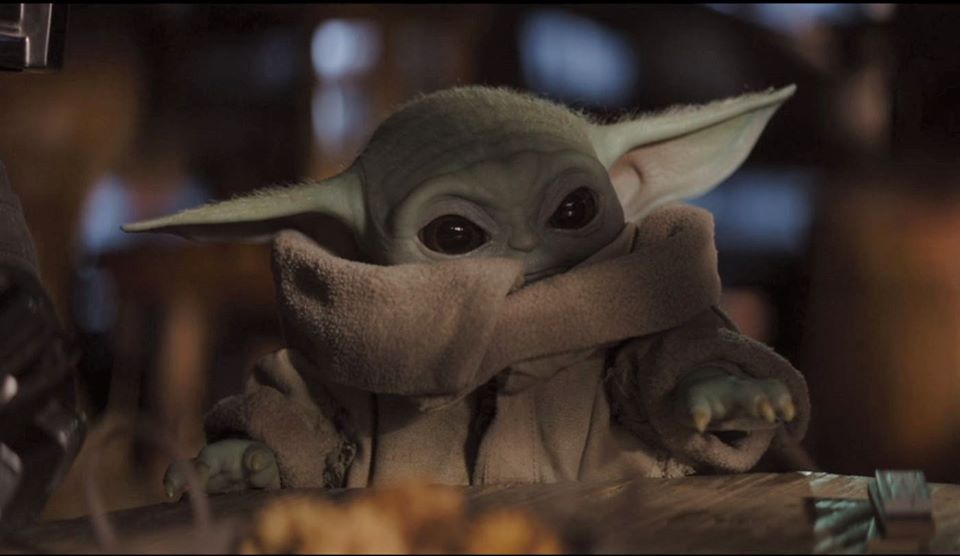
The meme is an image of Baby Yoda from the Star Wars series, sitting in a bar and looking at a screen with a shocked expression. The text overlayed on the image reads "When you finally get the WiFi password". The meme is a humorous take on the character's innocent and curious nature, poking fun at the common frustration of trying to get access to a WiFi network.
detailed-analysis (gemma3-27b-vision)
Okay, here's an analysis of the image of "Grogu" (Baby Yoda) from The Mandalorian across several theoretical lenses, as requested. I'll only include sections where the concepts are relevant and can be meaningfully applied.
Visual Description
The image showcases Grogu (commonly referred to as "Baby Yoda"), a young member of the same alien species as Yoda, in a close-up, front-facing shot. He is a small, green-skinned creature with large, expressive black eyes. His ears are large, pointed, and elf-like. He's positioned as though peeking over an object—likely a control panel or table—with his little hands clasped in front of his face. The lighting is dim and warm, creating a feeling of intimacy and vulnerability. The background is blurred, likely depicting the interior of a spaceship or ship. The color palette is dominated by muted tones of browns, greens, and yellows. The overall impression is one of adorable innocence, curiosity, and slight mischief. The composition heavily emphasizes his large eyes, which draw the viewer into an immediate emotional connection.
Foucauldian Genealogical Discourse Analysis
Grogu’s immense popularity offers a fascinating case study through a Foucauldian lens. The ‘cuteness’ attributed to him isn’t inherent but constructed through a historical discourse.
- Historical Context: Prior to Grogu, the ‘baby’ archetype in science fiction and fantasy tended toward either vulnerability/damsel-in-distress, or potential threat/evil. Grogu disrupts this by combining vulnerability with demonstrated Force abilities.
- Power/Knowledge: Disney (as a power structure) actively produces Grogu’s image and narrative through media. This production isn’t just about entertainment; it’s a construction of knowledge about what is considered appealing, cute, and even valuable.
- Discursive Formation: The discourse surrounding Grogu rapidly coalesced around themes of protection, innocence, and need. This formation is amplified by memes, fan art, and merchandise, further solidifying these meanings. The production of Grogu merchandise generates discourse and capital in turn.
- Genealogy: Tracing the genealogy of “cute” in media would reveal evolving norms. Grogu doesn’t simply belong to existing categories; he reconfigures them, becoming a figure around which new ideas of cuteness and value are built.
- Discipline: In a sense, the public’s enthusiastic response and desire to ‘protect’ Grogu can be seen as a form of self-discipline—we feel compelled to participate in this cultural moment, reinforcing the power structures (Disney) that produced it.
Critical Theory (specifically, the Culture Industry/Adorno & Horkheimer)
Grogu is an excellent example for analysis through the lens of the Frankfurt School's critical theory. The mass production and consumption of Grogu-related merchandise (toys, clothing, etc.) exemplify the culture industry at work.
- Commodification of Sentiment: The emotional response to Grogu (adoration, protectiveness) is systematically commodified by Disney. The more we feel for Grogu, the more we are likely to buy products associated with him.
- Pseudo-Individualization: While fans may believe their engagement with Grogu is a personal, individual experience, the experience is pre-packaged and shaped by Disney's marketing strategies. The illusion of choice is maintained, but the underlying goal is mass consumption.
- Loss of Authenticity: The genuine emotional connection to a character becomes entangled with the artificiality of consumer culture. The character’s significance is diminished as it becomes primarily a vehicle for profit.
- Repression of Critical Thought: The overwhelming cuteness of Grogu can serve as a distraction from larger social or political issues. Adorno and Horkheimer would argue this contributes to a passive and uncritical public.
Postmodernism
Grogu's popularity also resonates with postmodern concepts:
- Pastiche and Intertextuality: Grogu's design explicitly references Yoda and other Star Wars lore. He’s a remix, a pastiche of familiar elements, updated for a new generation. This layering of references is characteristic of postmodern art and culture.
- Simulation and Hyperreality: The constant proliferation of images and merchandise surrounding Grogu creates a hyperreality—a simulation of reality that becomes more real than the original character. Our experience of Grogu is often mediated through screens, memes, and products, rather than through direct engagement with the source material.
- Fragmentation of Meaning: The meme culture surrounding Grogu fragments the character's original narrative. He's reinterpreted, repurposed, and applied to various contexts, creating a multiplicity of meanings.
- Deconstruction of Narrative: The narrative surrounding Grogu is deliberately paced. The withholding of information about his origins and abilities allows for fan speculation and actively engages the audience in the construction of the story.
I hope this provides a helpful and comprehensive analysis! Let me know if you’d like me to elaborate on any particular point or theoretical lens.
simple-description (llama3.2-vision)
The meme is a screenshot of the character Baby Yoda from the Star Wars series, with a shocked expression on his face. The image is captioned "When you finally get to the last donut in the box".
tesseract-ocr
a wr 4 a]