First Seen
2023-05-24T21:09:23+00:00
simple-description (llama3.2-vision_11b)
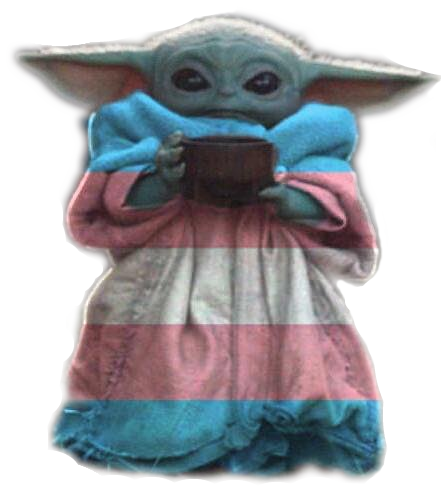
The meme features Baby Yoda from the Star Wars series, holding a cup of coffee and looking adorable. The meme is captioned "I've got a bad feeling about this" and is a play on the character's innocence and the ominous tone of the Star Wars franchise. The image is humorous and relatable, poking fun at the idea that even the youngest members of the Star Wars universe can be aware of the dangers of the galaxy.
detailed-analysis (gemma3-27b-vision)
Okay, here's an analysis of the image, broken down into the sections you requested, addressing only those that apply, and providing interpretations relevant to those frameworks.
Visual Description
The image depicts "Grogu," commonly known as "Baby Yoda," a character from the Disney+ series The Mandalorian. He is rendered in his familiar small, green, childlike form with large ears and dark eyes. He is holding a small cup or bowl, suggesting the continuation of a familiar trope of this character being fed. However, the most striking visual element is the clothing Grogu is wearing. Instead of his usual tan-colored robe, he is draped in a garment replicating the colors of the transgender pride flag – pink, light blue, and white bands. The fabric appears soft and slightly textured, contrasting with the smooth texture of the character’s skin. The image is likely a digital manipulation or a physical costume rendition.
Queer Feminist Intersectional Analysis
This image is rife with potential for queer feminist intersectional analysis.
- Symbolic Appropriation and Visibility: The direct imposition of the transgender pride flag onto a widely beloved and innocent figure like Grogu is a pointed act of symbolic representation. It immediately draws attention to transgender identity, making it visible in a popular culture context. This is potentially a positive act of affirmation and visibility, particularly in a media landscape where transgender representation is often lacking or problematic.
- Childhood & Innocence & Identity: The association with a child-like figure complicates the usual discourse around gender identity. It can be interpreted as a message that gender identity is formed early, natural, and inherent. It moves the conversation away from the idea that transgender identity is a "lifestyle choice" or "adult" concept. However, it's crucial to avoid framing the image as suggesting a child has a transgender identity; it’s about associating inclusivity and acceptance with innocence.
- Intersectionality of Fandom & Identity: For LGBTQ+ fans of The Mandalorian and Star Wars, this image could serve as a powerful gesture of belonging. It’s a representation of themselves within a fandom space, a claiming of that space as inclusive. It acknowledges that queer identities are present within all communities, including those centered around popular culture.
- Potential for Backlash: It’s important to acknowledge that this image could also attract negative attention and backlash, particularly from those who oppose transgender rights or consider any discussion of gender identity inappropriate. This demonstrates the political charge inherent in even seemingly innocent visual representations.
- Symbolic power of cuteness: This image leans heavily on the cuteness of "Baby Yoda" to gain attention and garner positive associations with transgender identities. While not necessarily negative, the use of cuteness can sometimes trivialize important issues.
Foucauldian Genealogical Discourse Analysis
Foucault's work focuses on how power operates through discourse (language and systems of thought).
- Shifting Norms around Gender: The image can be viewed as a disruption of established discourses around gender. Traditionally, the binary of male and female has been the dominant framework for understanding gender. By associating a beloved character with the transgender pride flag, the image challenges that binary and opens up space for acknowledging the diversity of gender identities.
- The Construction of “Normal”: Foucault argues that concepts like “normal” and “deviant” are not natural but are socially constructed through discourse. This image implicitly questions what is considered "normal" in terms of gender expression. It challenges the idea that transgender identities are outside the norm by incorporating them into a mainstream cultural narrative.
- Power/Knowledge: The image shows how power and knowledge are intertwined. The dominant discourse around gender has historically been defined by those in power, often excluding or marginalizing transgender individuals. This image can be seen as a counter-discourse—a way of reclaiming power and challenging the dominant narrative by creating a new representation.
- Disrupting the Visual Regime: The image can be seen as disrupting the "visual regime"—the set of visual conventions and expectations that govern how we perceive and understand the world. By imposing the transgender pride flag onto a familiar character, the image forces us to reconsider our assumptions about gender and representation.
Important Notes:
- Interpretation is subjective: These analyses are just one way of interpreting the image. Other interpretations are possible.
- Context is key: The meaning of the image will depend on the context in which it is viewed and shared.
- Sensitivity: It's important to approach these analyses with sensitivity and respect for transgender individuals and communities.
Let me know if you’d like me to elaborate on any of these points or explore other theoretical frameworks!
simple-description (llama3.2-vision)
The meme is an image of a character from the Star Wars franchise, specifically a young version of the character known as "Baby Yoda" or "The Child" from the Disney+ series "The Mandalorian". The image shows Baby Yoda holding a mug of coffee and looking like it's about to spill it. The text that appears in the image is "I don't like it when it's hot."
tesseract-ocr
cm