First Seen
2023-05-10T21:03:41+00:00
simple-description (llama3.2-vision_11b)
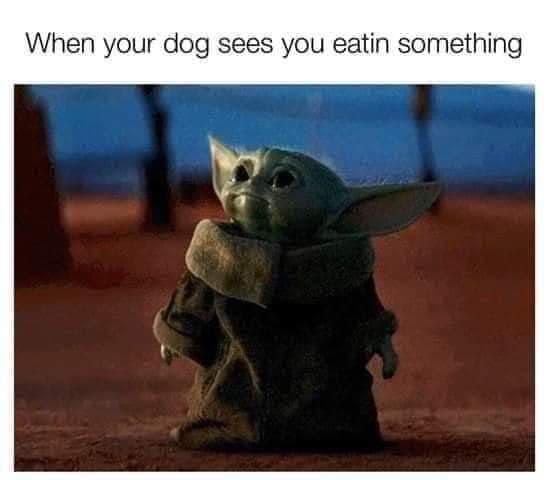
The meme is a still image from the Star Wars: The Mandalorian TV show, featuring Baby Yoda (also known as "The Child") looking up at someone with a curious expression. The text "When you're trying to eat and your dog sees you" appears above the image, implying that the dog has interrupted the person's meal and is now demanding attention. The meme is a humorous commentary on the common experience of being interrupted by a hungry pet while trying to enjoy a meal.
detailed-analysis (gemma3-27b-vision)
Okay, let's break down this meme ("Baby Yoda/Grogu looking intensely at someone eating") through the lenses you requested. I'll skip sections that don't really apply.
Visual Description
The image is a still from "The Mandalorian" featuring Grogu (commonly known as "Baby Yoda") looking intensely, with wide eyes and slightly furrowed brow, towards the viewer (or implied viewer/person eating). He's bundled in his signature robe. The background is a blurry, reddish-brown desert landscape. The text overlay reads "When your dog sees you eating something." The meme relies on the humorous juxtaposition of the adorable, seemingly innocent Grogu adopting an expression of longing and expectation, mirroring the behavior of a dog intently watching their owner eat. The lighting and color palette emphasize the slight melancholy of the expression.
Foucauldian Genealogical Discourse Analysis
This meme highlights a fascinating power dynamic shaped through discourse. Let's trace the genealogy of the "begging dog" trope. Historically, dogs have been constructed—through language, media, and social practices—as dependent creatures, reliant on humans for sustenance. This isn't a natural state; it’s a constructed one, enabled by domestication and reinforced through consistent behaviors like "puppy dog eyes."
The meme takes this construction and transfers it to Grogu, a character with different origins and power dynamics (a powerful Force-sensitive being). This transfer is interesting because it demonstrates how a certain type of "look" (the pleading gaze) has become a codified signifier of desire and expectation. The meme doesn't just show a dog wanting food; it demonstrates how we've learned to read that look as a demand, and it projects this learned interpretation onto a non-canine character. The act of eating, therefore, becomes a moment where a power dynamic is enacted: the eater possesses something desired, and the 'begging' gaze tries to exert control over that possession through social expectation. The meme draws power from the cultural acceptance of the concept.
Critical Theory (Frankfurt School)
From a Critical Theory perspective (specifically the Frankfurt School's focus on the “culture industry”), this meme participates in the constant commodification and trivialization of emotional connection. The meme relies on the readily available visual of Grogu, a character whose image is already commodified through merchandise and media.
The humor derives from the reduction of a complex interaction to a relatable, easily digestible visual. It doesn’t require deep reflection on the dynamics of pet ownership, or the emotional bonds between humans and animals. It's instant gratification, a brief moment of amusement without challenging any underlying assumptions. The meme, therefore, is symptomatic of a culture that prioritizes spectacle and superficiality over genuine engagement with complex issues. It reinforces the cycle of consumerism and distraction.
Postmodernism
The meme embodies several aspects of postmodern thought. Firstly, it is an intertextual work, drawing on knowledge of both "The Mandalorian" and the common cultural trope of a begging dog. It’s meaning isn't inherent in the image itself, but arises from the collision of these existing cultural references.
Secondly, it is a parody – a playful recontextualization of both the character and the situation. It doesn't take either seriously, but uses them for humorous effect. This playful deconstruction of established narratives and tropes is a hallmark of postmodern art.
Finally, the meme embraces simulacra and simulation. The image isn’t a ‘real’ interaction between a human and a dog or a force-sensitive baby; it's a representation of a representation, a hyperreal image that has lost its connection to any original experience.
Let me know if you'd like me to expand on any of these analyses, or explore a different theoretical framework!
simple-description (llama3.2-vision)
This meme is a still image from the Star Wars franchise, specifically from the movie "The Mandalorian" (2019). The image shows the character "The Child" (also known as "Baby Yoda") with a surprised expression. The text "When your dog sees you eating something" is written above the image, implying that the dog has caught its owner eating something and is now aware of the snack.
tesseract-ocr
When your dog sees you eatin something 4 i