First Seen
2023-11-16T09:24:52+00:00
simple-description (llama3.2-vision_11b)
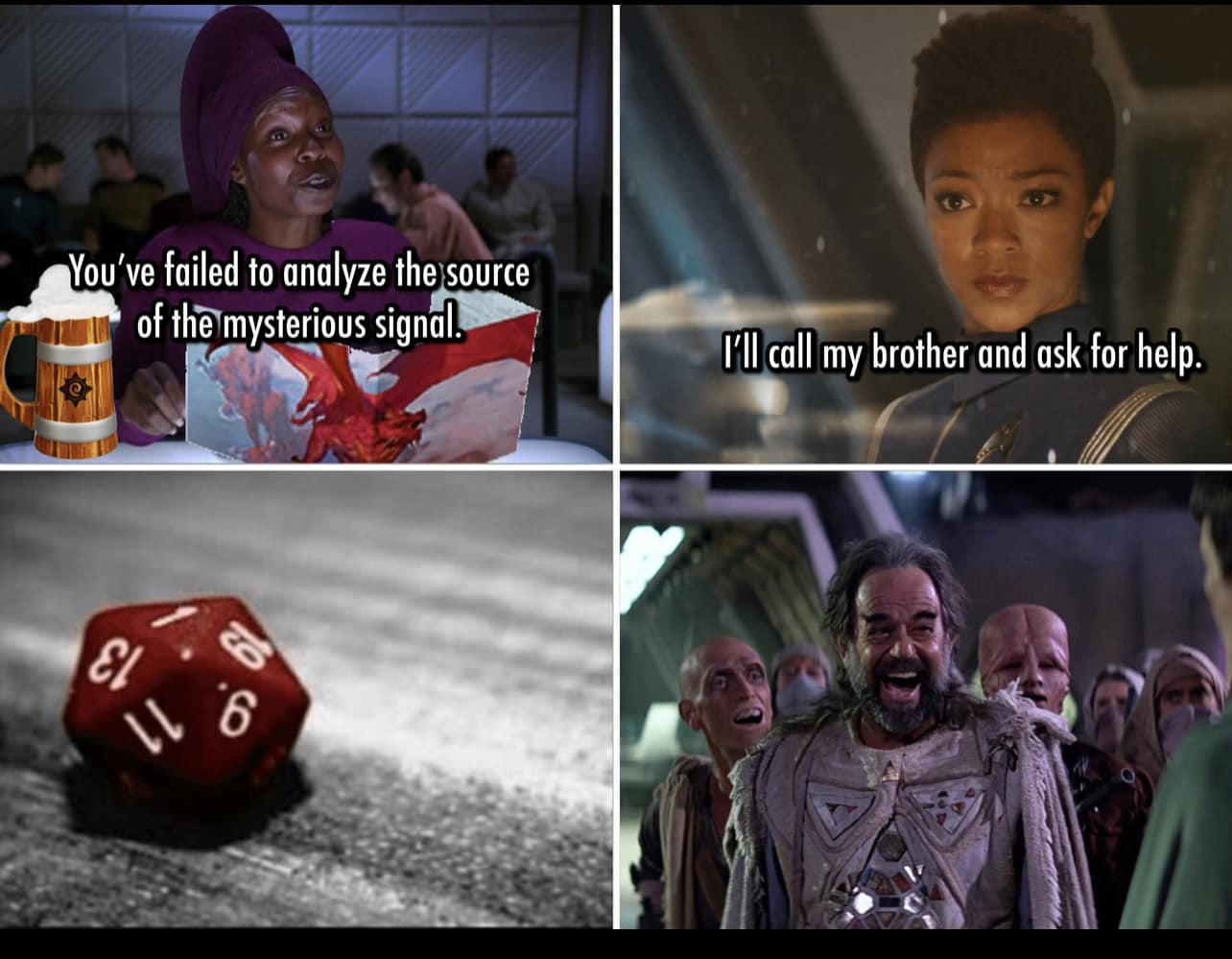
The meme is a Star Trek reference, specifically from the TV show "Star Trek: The Next Generation". The image is a split-screen comparison of two scenes from the show, with the top panel showing a character (Deanna Troi) saying "I'm detecting a strange energy pattern, Captain" and the bottom panel showing a character (Geordi) saying "I'm detecting a strange energy pattern, Captain". The meme is a humorous take on the idea that the characters are using the same phrase to describe a mysterious energy pattern, with the caption "When you're trying to sound smart but you're just repeating the same thing" implying that the characters are not actually detecting anything new.
detailed-analysis (gemma3-27b-vision)
Okay, let's break down these images from Galaxy Quest (a satirical take on Star Trek tropes) through the lenses you've requested. It's important to remember this is a comedy, and the analysis will reflect that – it's satire of serious themes.
Overall Visual Description
The images comprise four distinct scenes from the movie Galaxy Quest.
- Top Left: A purple alien, Sarris, stands in a brightly lit corridor with a beverage and a red, oddly-shaped gift box in the foreground. He appears to be berating someone (off-screen) and the caption shows text of dialogue.
- Top Right: Lt. Tawny Madison, a Starfleet officer, stands in a dimly lit corridor, looking determined. She is speaking and her dialogue is shown in text.
- Bottom Left: A close-up shot of a red polyhedral die (likely a D20 from a tabletop role-playing game like Dungeons & Dragons) resting on a dark surface.
- Bottom Right: Commander Taggart (and other Thermians) stands in the cockpit of a spaceship, smiling maniacally. They are surrounded by technological controls.
Foucauldian Genealogical Discourse Analysis
This is where things get really interesting with Galaxy Quest. The entire movie is a commentary on the "discourse" of science fiction, particularly Star Trek.
- The Discourse of Heroism & Expertise: Sarris’s line, “You've failed to analyze the mysterious signal,” represents the expectation of expertise within the science fiction genre. He speaks as a figure of authority, expecting a certain level of analysis and competency. This "discourse" sets the rules and standards for what is considered acceptable behavior (and competence) within the universe the characters inhabit.
- The Genealogy of the "Signal": The signal itself, as a narrative device, traces a "genealogy" of tropes. It's a call for help, a mysterious alien encounter – elements borrowed from countless sci-fi stories. Galaxy Quest playfully exposes this lineage.
- Power/Knowledge in the Thermian Discourse: The Thermians’ belief that the actors are the heroes they portray is a potent demonstration of power/knowledge. Their knowledge (however misguided) dictates their actions and their power over the crew. The Thermians aren’t simply mistaken; they construct a reality based on their interpretation of the broadcast signals.
- Discourse and the Die: The die represents the randomness inherent in tabletop roleplaying, a counter-discourse to the strict protocols of a sci-fi universe. It embodies a type of improvisational discourse, and the chaos of its rolls.
Critical Theory
- Satire and Deconstruction: Galaxy Quest fundamentally deconstructs the tropes of the science fiction genre. It reveals the artificiality of heroism, the absurdity of rigid protocols, and the power of media construction. By presenting these tropes in a comedic light, the film exposes their inherent contradictions.
- The Spectacle and the Real: The Thermians' perception of the actors as genuine heroes can be interpreted through a Baudrillardian lens. They’ve lost the ability to distinguish between simulation and reality, believing the “spectacle” of the television show is the “real.”
- The Question of Authenticity: The actors are forced to perform heroism, even while knowing they are not genuinely heroic. This raises questions about authenticity, and the performative nature of identity.
Marxist Conflict Theory
- Class and Labor: The actors embody a form of “cultural labor.” They are employed to create the illusion of heroism, but are themselves largely marginalized. Their labor is exploited for the entertainment of others.
- The Thermians as a Proletariat: The Thermians, in a way, represent a working class, enslaved by the villain Sarris and desperately seeking rescue. The actors are unintentionally thrust into a role as their saviors.
- Ideology and the Broadcast: The broadcast signals from the television series function as a form of “ideology,” shaping the Thermians’ worldview and justifying their subservience.
Postmodernism
- Intertextuality: The film is heavily reliant on intertextuality – referencing and parodying other science fiction works, particularly Star Trek. The entire premise relies on the audience’s familiarity with these tropes.
- Pastiche & Irony: Galaxy Quest employs pastiche (a blend of styles) and irony. It playfully rehashes familiar tropes, while simultaneously undermining their seriousness.
- The Blurring of Reality & Simulation: The film's central conceit—the Thermians believing the actors are their heroes—is a prime example of postmodern blurring of reality and simulation. The lines between fiction and reality are deliberately collapsed.
Queer Feminist Intersectional Analysis (potentially more nuanced)
This is where the connection is more subtle, but present.
- Performance of Gender: Lt. Tawny Madison's character is initially portrayed as a stereotypical "damsel in distress" but subverts that trope throughout the movie, demonstrating her intelligence and agency. Her character is a performance of femininity, shaped by the expectations of the sci-fi genre.
- Masculinity and Heroism: The male actors' initial lack of genuine heroism can be read as a critique of traditional conceptions of masculinity. Their journey involves learning to embrace a more authentic form of bravery.
- Intersection of Identity: The actors’ individual identities and experiences intersect with their roles as performers, creating a complex web of expectations and challenges. They must navigate the pressures of their profession while also maintaining their sense of self.
Let me know if you would like me to expand on any of these sections, or explore other theoretical frameworks!
simple-description (llama3.2-vision)
The meme is a humorous image that combines two scenes from Star Trek: The Next Generation. In the top-left corner, a character from the show is depicted as a "transporter" trying to transport a drink, but the transporter is malfunctioning and instead of transporting the drink, it's transporting the character's friend, who is saying "I'm a doctor, not a...". The bottom-right corner shows a character from the show saying "I'm a doctor, not a...".
tesseract-ocr
— yr id You've failed to analyze theysource LY z yan LALLA LS TTT | . at ma Ci & Me MUCH TOOT TRCnICHNC Sc TauT = mal / nN , oS » qT ve ee Via eS y =. AG ot . ‘ f \ i S 3) / , ae ne ae