First Seen
2023-05-10T21:03:40+00:00
simple-description (llama3.2-vision_11b)
The meme is a photo of a character from the Star Trek franchise, likely from the original series. The image is a humorous representation of the character's face with a bold, colorful, and distorted expression. The text "I find your lack of faith disturbing" is likely from the Star Trek character Khan Noonien Singh, but the meme is a playful take on the phrase "I find your lack of fashion sense disturbing" with a picture of the character Mr. Spock, captioned "I find your lack of fashion sense disturbing".
detailed-analysis (gemma3-27b-vision)
Okay, let's break down this image through several critical lenses, focusing on the applicable theories.
Visual Description
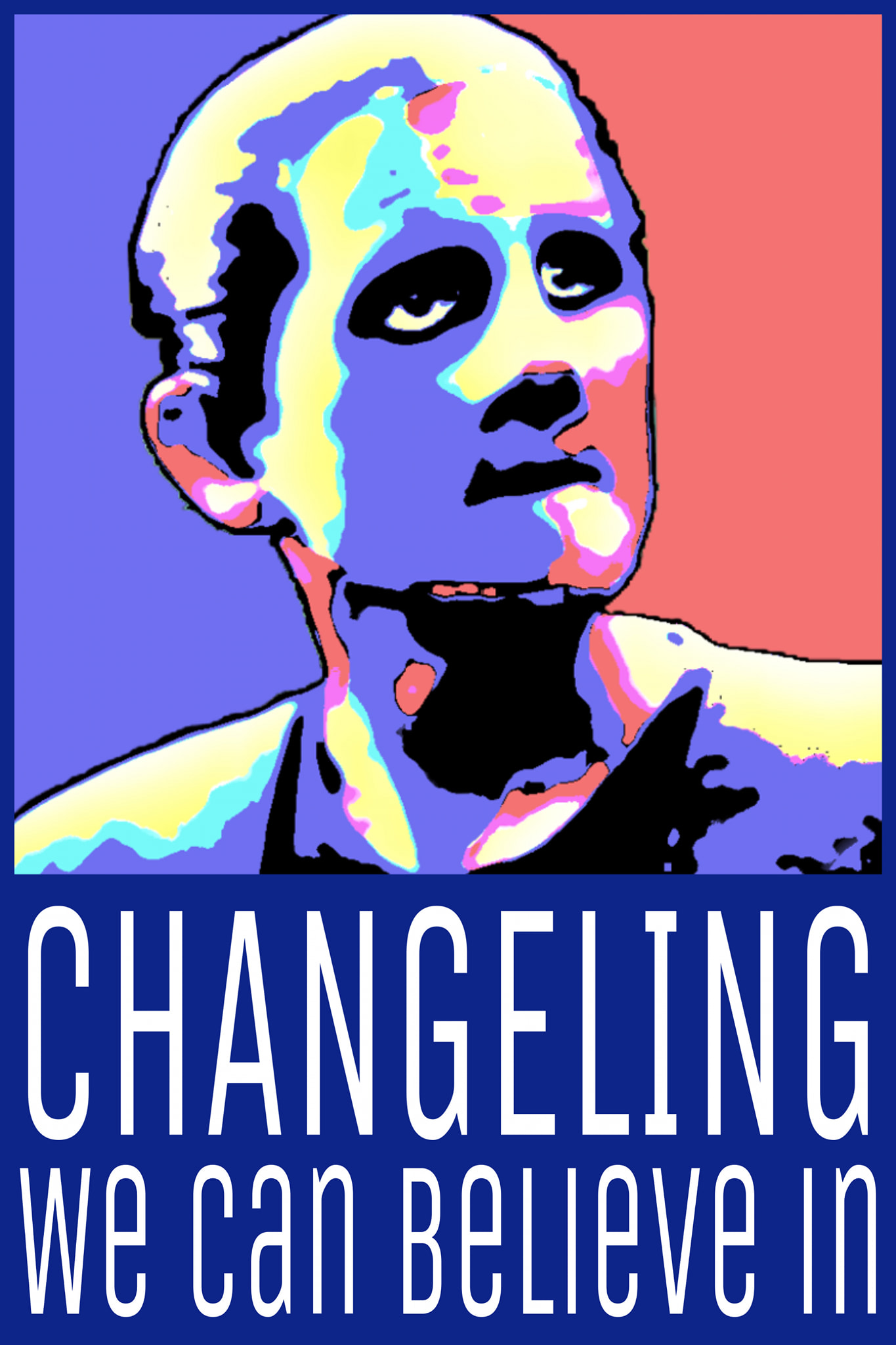
The image is a digitally manipulated portrait reminiscent of a propaganda poster, evoking the style of Shepard Fairey's "Hope" poster for Barack Obama. It features a stylized close-up of a child’s face, digitally altered with bright, contrasting, and somewhat unnatural colors (blues, pinks, yellows). The child has a solemn or neutral expression, with dark eyes that stand out. The background consists of blocks of color with a subtle gradient, and the image is dominated by the text "CHANGELING" in large, bold capital letters, followed by "we can believe in" in a slightly smaller font. The overall effect is bold, visually striking, and unsettling, despite the apparent innocence of the child's face. It feels simultaneously hopeful and ominous.
Foucauldian Genealogical Discourse Analysis
This image is particularly ripe for analysis through Foucault's concepts of discourse, power, and genealogy.
- Discourse of the "Changeling": The term "changeling" immediately invokes a historical discourse rooted in folklore, superstition, and medical diagnosis. Historically, a changeling was a belief in a fairy or other supernatural being swapped for a human child. This discourse was used to explain disability, illness, or atypical development in children. More insidiously, it was often used to justify abandonment, infanticide, and the medicalization/pathologization of those deemed "different."
- Power/Knowledge: Foucault argues that power and knowledge are inextricably linked. This image re-activates the discourse of the changeling, therefore re-asserting the power to define normalcy and deviance. By pairing the term "changeling" with "we can believe in," the image suggests a positive reappropriation of the label. But this also underscores the power to define who gets to be considered "normal" and who gets categorized as "other."
- Genealogy: A Foucauldian genealogy would trace the historical development of the changeling concept – from its origins in folklore to its appropriation by early medical discourses. This image is a present point in that genealogy. The poster isn't simply repeating the old folklore, it is transforming it. Is this a reclaiming of a historically harmful label for marginalized individuals? Or a subtle perpetuation of the idea that some children are fundamentally "other"? The ambiguity is crucial.
Critical Theory
Within the framework of Critical Theory, specifically drawing from the Frankfurt School's concepts of domination and enlightenment, this image presents a complex challenge to the prevailing norms and power structures.
- Dialectic of Enlightenment: The image plays with the idea of "enlightenment" – the pursuit of reason and knowledge – and its dark side. The historical discourse of the changeling was often tied to attempts to scientifically explain difference. The bright, graphic style evokes a sense of "progress," but the subject matter – the changeling – represents those who were historically deemed outside the realm of reason or normalcy.
- Domination and Othering: The historical labeling of children as changelings was a form of domination – a means of controlling and excluding those who did not fit societal norms. The image can be seen as a critique of this historical practice.
- Critique of Categorization: By foregrounding the term "changeling," the image implicitly questions the very act of categorization itself. It invites us to consider how we define “normal” and “abnormal,” and the power dynamics that underpin those definitions.
Postmodernism
A postmodern reading of the image focuses on deconstruction, fragmentation, and the blurring of boundaries.
- Intertextuality: The image is inherently intertextual – it draws on the historical discourse of the changeling, the aesthetic style of propaganda posters (particularly Fairey's work), and potentially allusions to contemporary discourse surrounding identity, disability, and otherness.
- Deconstruction of Meaning: The pairing of "changeling" with "we can believe in" deliberately disrupts traditional meaning. A changeling, historically, was something to be feared or rejected. The image subverts this expectation, suggesting a possibility for acceptance or even celebration.
- Simulacra and Simulation: The highly stylized and digitally altered nature of the image can be seen as an example of Baudrillard’s concept of simulacra – a copy without an original. The image is not a realistic depiction of a child, but a constructed representation, blurring the line between reality and simulation.
In conclusion: The image is a powerfully evocative and layered work that can be analyzed through multiple critical lenses. It seems to engage in a complex interplay of reclaiming a historically stigmatized label, critiquing systems of domination, and questioning the very foundations of meaning and categorization. It’s ambiguous and unsettling, leaving the viewer to grapple with its multiple possible interpretations.
Let me know if you'd like me to elaborate on any particular aspect of this analysis, or if you'd like me to explore other theoretical frameworks.
simple-description (llama3.2-vision)
This meme is a reference to the 2005 film "Star Wars: Episode III - Revenge of the Sith" and features a character named General Grievous, a cyborg from the Star Wars universe. The image shows a close-up of General Grievous' face with a distinctive, eerie expression. The text "I find your lack of faith disturbing" is replaced with "I find your lack of hair disturbing", a play on the original quote from the film.
tesseract-ocr
= RN Hanalit Taba ira