First Seen
2025-09-23T22:54:12.053670+00:00
simple-description (qwen3.5_2b-q8_0)
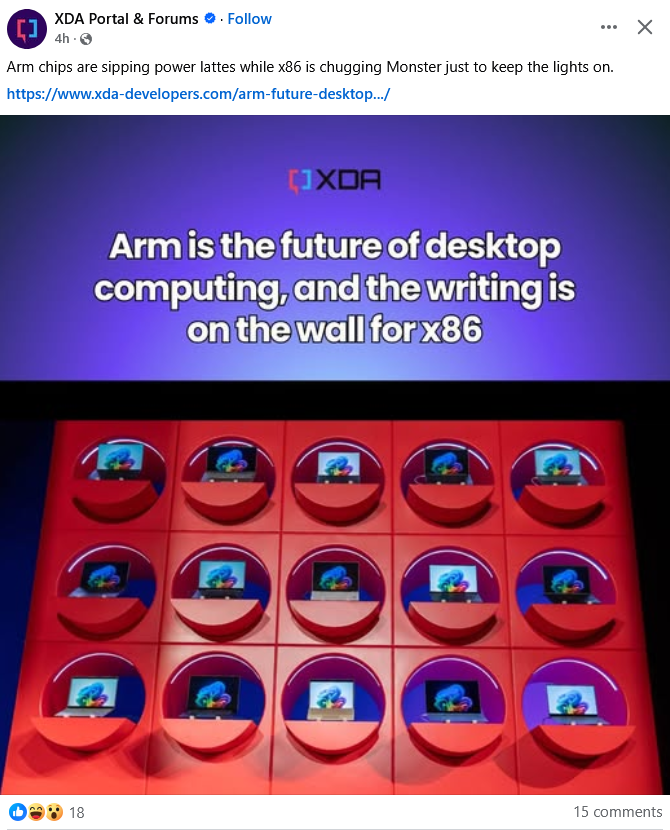
This meme compares the two major rivalries in modern computer hardware: Intel's X86 architecture versus ARM (a chipmaker famous for making chips used by Apple and Google). It is predicting that while X86 currently leads desktop computers, chips based on ARM technology are moving too fast to be stopped. As the text reads "Arm is the future of desktop computing, and the writing is on the wall for x86," it implies a fierce competition where one company will eventually win the "right" way to make computers over the next decade.
detailed-analysis (gemma3_27b-it-q8_0)
Okay, let's break down this meme from a semiconductor industry perspective, using the requested theoretical frameworks where applicable.
Visual Description
The image features a grid of classic arcade "Whac-A-Mole" game holes. Each hole displays the Intel logo (the blue and purple spinning design), suggesting the holes represent Intel and, by extension, the x86 processor architecture that Intel dominates in the desktop space. The text overlaid on the image proclaims "ARM is the future of desktop computing, and the writing is on the wall for x86." This creates a visual metaphor: ARM (a competing processor architecture) is the player, repeatedly "whacking" the Intel/x86 moles as they pop up. This implicitly suggests the ongoing struggle for market share.
Foucauldian Genealogical Discourse Analysis
From a Foucauldian perspective, this meme isn't just about tech. It's a discourse—a system of thought, language, and practices that produces knowledge and power relations. The dominance of x86 in desktop computing didn't happen naturally. It was produced through historical technological choices, marketing strategies, industry standards, and even deliberate barriers to entry for competitors.
- Genealogy of x86: Tracing the history of x86, we see a path dependent evolution that solidified Intel's position. Early IBM PC adoption cemented x86. This "first mover" advantage created a network effect. Software was written for x86. The ecosystem became self-reinforcing.
- Discipline and Normalization: Intel used its market power to 'normalize' x86 as the expected standard. Developers and consumers alike were disciplined into using it. Alternative architectures were marginalized.
- Power/Knowledge: Intel possessed (and continues to possess) the "knowledge" (through patents, engineering expertise, and marketing) to define the parameters of desktop computing. This knowledge is power – it shapes the field.
- The Meme as a Counter-Discourse: The meme acts as a counter-discourse, questioning this established order. It declares ARM's potential to disrupt the 'normal' and challenge Intel’s hegemony. It's an attempt to re-write the rules of what is considered the "future."
Critical Theory
Critical Theory, particularly the Frankfurt School's work, sees technology as not neutral but embedded within social and political structures. The meme points to a potential shift in the power dynamics within the tech industry.
- Instrumental Reason: x86’s dominance wasn't simply about 'better' technology. It was the result of instrumental reason – focusing on efficiency, optimization, and market control, even at the expense of innovation or alternative solutions.
- Culture Industry: The x86 ecosystem (software, hardware, marketing) can be seen as a component of the 'culture industry,' producing standardized products and experiences. ARM’s rise could represent a disruption to this standardization.
- Ideology: The meme challenges the ideology that x86 is the natural or inevitable choice for desktop computing. It suggests there is an alternative.
Marxist Conflict Theory
From a Marxist viewpoint, the semiconductor industry is a site of class struggle (though 'class' here isn’t solely economic, but also relates to technical dominance).
- Base and Superstructure: The "base" (the material forces of production – the semiconductor fabrication, chip design, etc.) shapes the "superstructure" (the industry, its norms, its marketing, etc.). The meme suggests a change in the base (ARM’s increasing capabilities, energy efficiency, and cost-effectiveness) is threatening the existing superstructure (Intel’s dominance).
- Class Struggle: Intel represents the established capital. ARM (and companies like Qualcomm, Apple, and MediaTek) are challengers attempting to wrest control of the market share and profits.
- Competition for Surplus Value: Both companies are battling to capture the 'surplus value' (profit) generated from the production and sale of computing devices. ARM’s potential victory would redistribute this value.
Postmodernism
Postmodern thought challenges grand narratives and embraces fragmentation and deconstruction.
- Deconstruction of the "Desktop" Narrative: The "desktop" as a fixed concept is being deconstructed. ARM's rise suggests that computing is becoming more fluid, mobile, and distributed. The traditional idea of a powerful, centralized desktop machine is becoming less relevant.
- Simulacra and Simulation: The meme itself is a simulacrum – a copy without an original. It’s a representation of a complex shift in the industry, simplified into a playful image. It's a 'simulation' of the struggle.
- The End of Metanarratives: The meme questions the long-held "metanarrative" of x86 dominance. It suggests there isn’t a single, inevitable path for computing.
In summary: The meme is a potent visual statement within the semiconductor industry, loaded with historical, political, and theoretical significance. It’s not just a playful jab at Intel; it's a declaration of a changing power dynamic, a challenge to established norms, and a glimpse into a potentially very different future for desktop computing. The "whack-a-mole" image succinctly captures the ongoing competitive struggle in the semiconductor world.
simple-description (llama3.2-vision_11b)
The meme is a screenshot of a news article from XDA Developers, a website that reports on the latest news and updates in the tech industry. The article is titled "Arm is the future of desktop computing, and the writing is on the wall for x86" and discusses the rise of ARM-based processors in the industry. The article is likely a response to the growing popularity of ARM-based processors, which are now being used in a variety of devices, from smartphones to laptops, and are being used in the development of new technologies, such as the Internet of Things, and the development of new technologies, such as the Internet of Things.