First Seen
2025-11-03T01:50:22.103540+00:00
simple-description (qwen3.5_2b-q8_0)
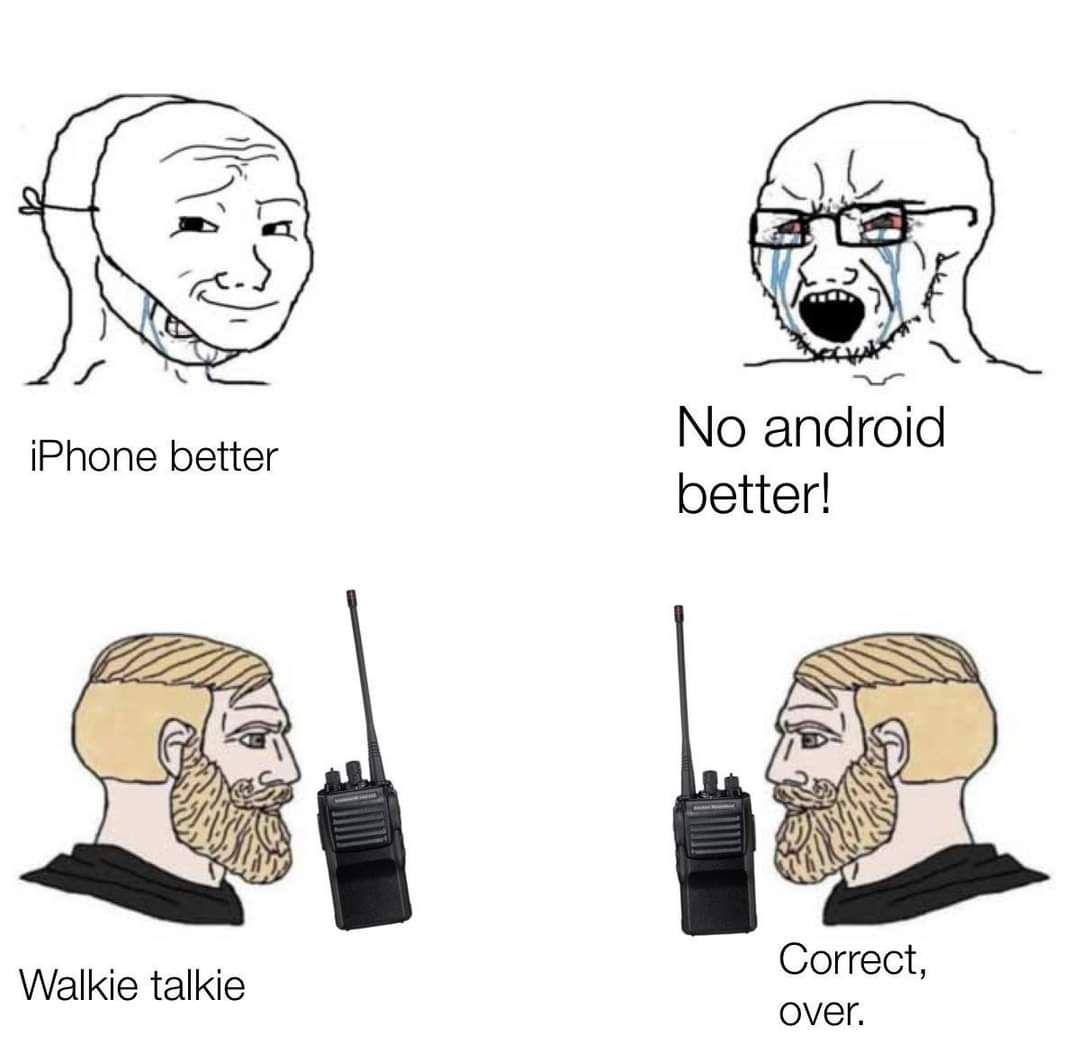
This meme uses a walkie-talkie to imply that complex technology debates are unnecessary compared to simple, direct communication. The top section plays on the "iPhone vs. Android" controversy, but the bottom panel introduces a straightforward radio call labeled "Walkie talkie." The final line, "Correct, over," implies that just using a radio channel is sufficient to bypass the need for analyzing phone specs or arguing which device is superior.
detailed-analysis (gemma3_27b-it-q8_0)
Okay, let's break down this meme from a radio/communication technology perspective, hitting the requested theoretical frameworks where applicable.
Visual Description
The meme utilizes a four-panel format, employing a series of crudely drawn faces known as "Chad" and "Soyjak" caricatures. It's designed for comedic effect using recognizable internet tropes.
- Top Left: A "Soyjak" face with a peaceful, serene expression is labeled "iPhone better." The implication is a sense of contentment and superiority.
- Top Right: A highly distorted, screaming "Soyjak" face with exaggerated features is labeled "No android better!" This represents an intense, almost hysterical loyalty.
- Bottom Left: A "Chad" face (often signifying a strong, stoic individual) is shown with a walkie-talkie in front of his face. The caption is "Walkie talkie".
- Bottom Right: A second “Chad” face, also with a walkie-talkie, has the caption "Correct, over.” This evokes the standardized communication protocol of radio operation.
The meme's core visual contrast is between the hyper-emotional response to smartphone operating systems and the calm, pragmatic acceptance of a simpler, more functional communication tool – the walkie-talkie.
---
Foucauldian Genealogical Discourse Analysis
From a Foucauldian perspective, this meme speaks to the discursive formations surrounding technology, power, and identity. Michel Foucault's genealogical method seeks to uncover the historical conditions that make certain discourses possible.
- The Discourse of Technological Superiority: The iPhone/Android debate is not about objectively better technology. It’s a discourse constructed around status, lifestyle, and social belonging. Companies invest heavily in building brand loyalty and a sense of community around their products. The meme points to the absurdity of this intense allegiance. The iPhone discourse constructs 'users' as belonging to a certain class or mindset.
- Discipline and Communication: Walkie-talkies, as devices, represent a different form of communication discipline. The protocol ("Correct, over.") enforces a structured, efficient exchange. This contrasts with the chaotic, often unstructured nature of smartphone communication (texting, social media). Foucault would argue that this enforced structure is a form of power/knowledge, dictating how communication happens, not just that it happens.
- Power/Knowledge in Technology: The power lies in controlling the narrative of technology and influencing how it's perceived. The meme playfully subverts this power by suggesting a more honest, less emotionally-charged relationship with a simpler tool.
---
Critical Theory
Drawing on the Frankfurt School’s Critical Theory, we can see the meme as a commentary on the “culture industry” and the alienation it produces.
- False Consciousness: The emotional investment in smartphone operating systems can be seen as a form of false consciousness – an acceptance of ideologies that serve the interests of corporations rather than the individual. People are distracted by superficial features and brand battles while more fundamental issues go unaddressed.
- Commodification of Identity: Choosing an iPhone or Android becomes a way of constructing identity, a commodity to be purchased along with the device. This reinforces capitalist logic.
- Reason vs. Instrumental Reason: Walkie-talkies embody a more straightforward, functional use of technology – a “reasonable” approach. Smartphones, with their endless apps and distractions, represent “instrumental reason” – technology used not for its inherent value but for its ability to increase efficiency and control (and, ultimately, profit).
---
Marxist Conflict Theory
From a Marxist lens, the meme highlights class distinctions and the dynamics of capital accumulation.
- Ideology and the Consumption of Technology: The intense loyalty to iPhone or Android brands is fueled by ideology – the set of beliefs that justify the existing social order. This ideology encourages consumption and reinforces the power of tech companies.
- Alienation: The emotional attachment to smartphones can be seen as a form of alienation. Individuals become alienated from their own agency, their own critical thinking, and from genuine connection with others.
- Means of Production: The iPhone/Android debate is, at its core, about who controls the means of production of communication technology. Apple and Google are massive corporations with immense economic and political power. Walkie-talkies, as a simpler technology, represent a more decentralized, less capital-intensive form of communication.
- Bourgeoisie vs. Proletariat: It can also be seen that the “Chad”/“Correct, over” are representing the proletariat, while the soyjacks are the bourgeoisie who spend needlessly on material items.
---
Postmodernism
The meme’s use of irony, self-referentiality, and the subversion of meaning align with postmodern themes.
- The Death of the Author/Original Meaning: The meme's meaning isn't fixed. It relies on the viewer's understanding of internet culture and their own experiences with technology.
- Simulacra and Simulation: The iPhone/Android debate is often about simulacra – copies without originals. The differences between the operating systems are often perceived rather than real, and the emotional responses are based on representations rather than concrete experiences.
- Deconstruction of Grand Narratives: The meme challenges the “grand narrative” of technological progress. It suggests that simpler technologies can be just as effective (if not more so) than the latest gadgets.
- Parody: The meme parodies the seriousness and emotional investment people have in technologies.
---
In conclusion, this meme isn’t just a joke about phones. It's a commentary on consumer culture, the power of technology, and the absurdities of modern life. It uses internet tropes to highlight the emotional investment people have in technology that is unnecessary and potentially alienating. It subtly advocates for a more pragmatic, less emotionally-charged approach to communication. The “walkie talkie” serves as a symbol of simplicity, functionality, and a rejection of the hyper-consumerist culture that surrounds smartphones.
simple-description (llama3.2-vision_11b)
The meme is a play on words, comparing the iPhone's "iPhone better" to "no android better!" in a radio context, where "no android" is a radio call sign. The image likely features a radio operator with a walkie-talkie and a radio, with the text "no android better!" written above it.