First Seen
2023-05-10T21:03:39+00:00
simple-description (llama3.2-vision_11b)
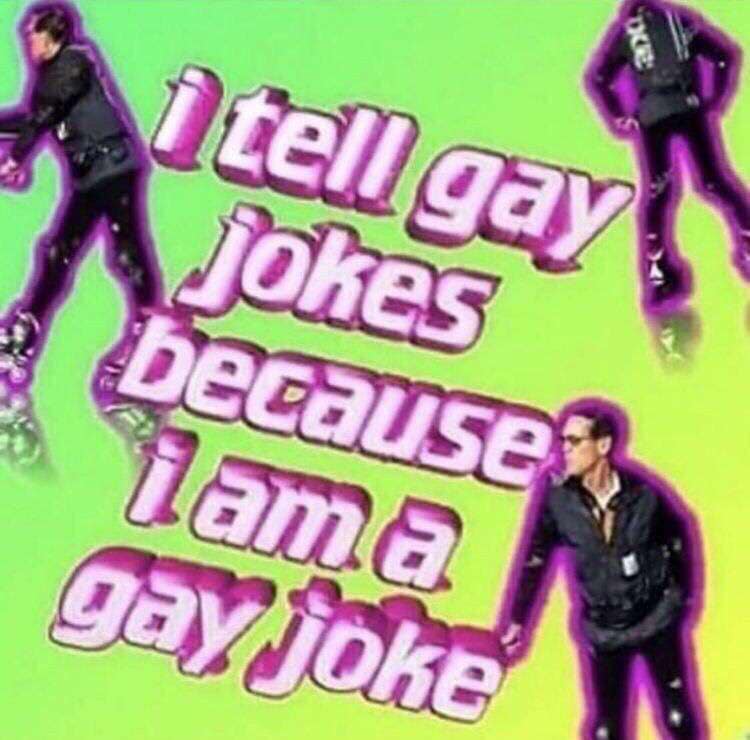
This meme is a humorous take on the idea that someone who is gay (or queer) is not supposed to make jokes about being gay, implying that it's a taboo topic. The meme is a play on the phrase "I'm not a [insert profession/ occupation], I'm a [insert profession/ occupation] comedian," but replaces the profession with "gay" to poke fun at the idea that being gay is somehow not funny or not acceptable to joke about. The meme is likely to be used in a lighthearted or ironic way to comment on the societal norms around LGBTQ+ issues.
detailed-analysis (gemma3-27b-vision)
Here's an analysis of the image, broken down into sections based on the requested theoretical frameworks, only including those that are relevant.
Visual Description
The image is a meme format featuring multiple (seemingly rapidly duplicated) photos of a man (reportedly Korean rapper Zico) wearing a black jacket and pants. The photos are overlaid on a bright lime-green background. Bold, red text is layered across the image, reading "I tell gay jokes because I am a gay joke." The visual aesthetic is purposefully chaotic and intentionally ‘low-resolution’ in a manner common to internet memes. The repetition of the figure contributes to a sense of frenetic energy and perhaps a disorienting effect.
---
Queer Feminist Intersectional Analysis
This image is rife with complex dynamics relating to queer identity, self-deprecating humor, and the intersection of identity with performance.
Self-Objectification & Performance: The statement "I am a gay joke" can be read as a form of extreme self-objectification. It positions the individual (and, by extension, potentially gay individuals in general) as existing* solely for amusement or derision. This is potentially a defense mechanism, a way to preemptively claim control over the ways in which the individual is perceived by others.
* Internalized Homophobia/Humor as a Coping Mechanism: The phrase hints at internalized homophobia, where negative societal attitudes towards homosexuality are absorbed by individuals within the gay community. The humor could be a way of grappling with this internal conflict, using laughter to deflect pain or societal judgment.
* The Burden of Representation: The image raises questions about the "burden of representation." If an individual presents themselves as a "joke," are they implicating the entire LGBTQ+ community in a performance of self-deprecating humor? This can be particularly problematic when it reinforces harmful stereotypes.
* Intersectionality: While the initial statement centers on sexual identity, the meme's context and the cultural figure represented (Zico) open up further layers of intersectional analysis. The artist/performer's gender, race, and cultural background all influence how this statement is received.
Reclaiming/Subversion: It's also possible to interpret this as an attempt to reclaim* the label of “joke” as a form of subversion. By embracing the label, the individual may be attempting to disrupt the power dynamics that allow others to define them negatively.
---
Postmodernism
This image exemplifies several key tenets of postmodern thought:
Fragmentation and Simulacra: The visually fragmented nature of the image – the repeated copies of the figure – can be understood as reflecting a postmodern sensibility that rejects grand narratives and embraces fragmentation. The image itself is a simulacrum* – a copy without an original, existing only as a mediated representation.
* Irony and Parody: The self-deprecating statement is laden with irony. It's a statement that seemingly confirms a negative stereotype while simultaneously questioning its validity. This playful ambiguity is characteristic of postmodern aesthetic.
Deconstruction of Identity: The image deconstructs traditional notions of identity. It suggests that identity is not fixed or essential, but rather a fluid and performative construct. The speaker does not have a gay identity; they are* the joke itself, blurring the boundaries between self and representation.
* Hyperreality: The image's existence as an internet meme contributes to a sense of hyperreality – a reality that is simulated and more real than real. The meme exists as a separate entity from the person it depicts, circulating and evolving independently.
---
Important Considerations:
It's crucial to acknowledge that interpreting internet memes is inherently complex. The meaning of an image can vary significantly depending on the context, the audience, and the individual's personal experiences. This analysis offers one possible interpretation, but there are undoubtedly other valid readings.
simple-description (llama3.2-vision)
This meme is a screenshot of a Twitter post from a comedian, with a caption that reads: "I tell gay jokes because I am a gay joke." The image is likely a photo of the comedian, but the text is the focus of the meme. The humor is in the play on words, as the comedian is saying they tell gay jokes because they are a joke themselves, rather than because of their sexual orientation.
tesseract-ocr
ap se 5 hk. Vit eon v y / Wor ‘Gay, oN STS ; ? ‘ w Rel 3 -t i = z ere ; q Us j > ~~ i” UET > i he , Oy ys % one Af etsy \ ‘