First Seen
2023-05-10T21:03:39+00:00
simple-description (llama3.2-vision_11b)
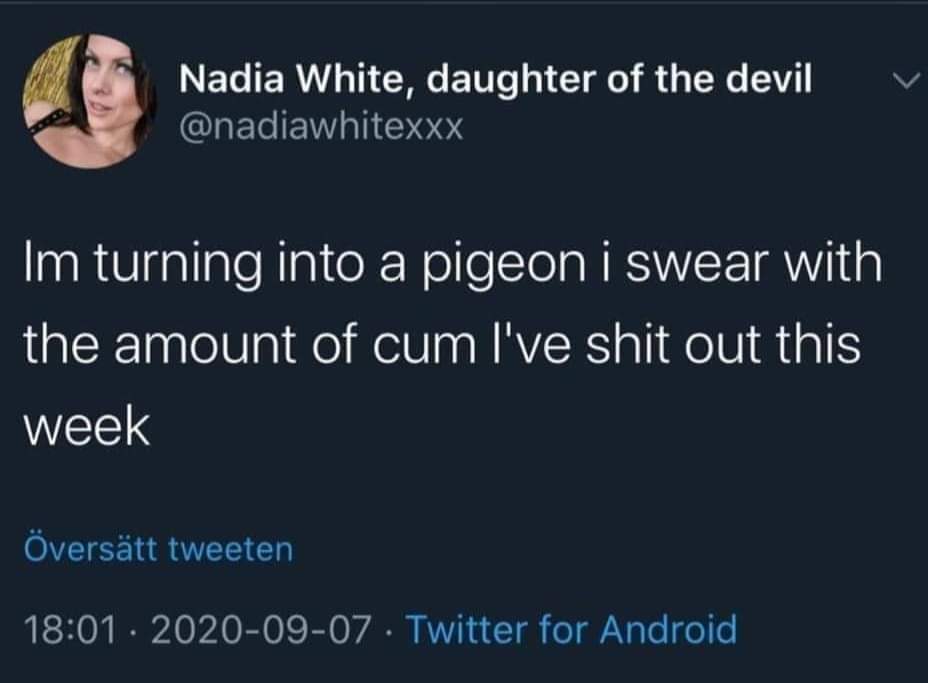
The meme is a humorous take on the idea of a "gay" pigeon, with the text "I'm gay" written on a pigeon's chest, implying that the bird is coming out as LGBTQ+. The joke is likely to be humorous because it's an unexpected and absurd scenario, and the use of a pigeon as a metaphor for coming out is a clever play on words.
detailed-analysis (gemma3-27b-vision)
Okay, let's break down this tweet using the theoretical frameworks you requested. Be warned, this tweet is intentionally provocative and deals with explicit content, so the analysis will necessarily engage with that. I will attempt to be thorough while remaining within the bounds of appropriate discussion.
Please note: Applying high-theory to a single tweet can feel like overreach, but the exercise is valuable for understanding how these frameworks function. The interpretations are, ultimately, subjective and open to debate.
---
### Visual Description
The image associated with the tweet shows a person with curly hair and a somewhat distressed or disaffected expression. The photo is a headshot, and the lighting and style suggest a candid or selfie-style portrait. It's possible to glean a sense of individuality and personality from the image, even though it's a small and somewhat grainy capture.
### Foucauldian Genealogical Discourse Analysis
This tweet offers rich material for a Foucauldian analysis, particularly concerning power/knowledge and the genealogy of desire.
* Discourse of the Body: The statement links bodily experience (sexual activity/ejaculation, and the resulting "turning into a pigeon") with a sense of identity and self-perception. This is an example of a discourse that constructs meaning around the body.
Transgression and the Normal: The tweet deliberately transgresses conventional norms around sexuality, language, and acceptable online discourse. This transgression creates* power. By speaking what is often unspoken, the author asserts agency.
* Genealogy of Desire: The tweet doesn’t just express desire; it frames it as something transformative and potentially monstrous ("turning into a pigeon"). We can read this as a rejection of normative understandings of sexuality and a questioning of the constraints placed on desire. The pigeon image subverts expectations, taking something ordinary and suggesting a disturbing transformation.
Power/Knowledge: The tweet, while seemingly personal, participates in a larger discourse about sexuality and identity online. It performs* a kind of knowledge – a rejection of shame, a claim to ownership over one's body and experiences, and an assertion of agency over one's identity.
### Queer Feminist Intersectional Analysis
This tweet is particularly strong ground for this kind of analysis, given the intersectional elements at play.
* Reclaiming the Body: The tweet is a defiant reclamation of the body and sexual agency. This is a core tenet of feminist thought, especially in response to historical and ongoing patriarchal control over women's bodies and sexuality.
* Queer Subjectivity: The language and imagery (particularly the unconventional metaphor) suggest a disruption of traditional understandings of sexuality and gender. The tweet challenges the idea of a "normal" or "natural" sexual experience.
* Intersectionality: While the tweet doesn't explicitly mention race, class, or other identity markers, it operates within the context of a broader online sphere where marginalized voices are often silenced or stigmatized. The author’s self-proclaimed online identity (“daughter of the devil”) is itself a performance of defiance and rejection of societal norms.
* Breaking Shame: The frankness of the tweet breaks with societal shame surrounding sex and bodily functions. This is often a central tenet of sex-positive feminism and queer activism.
* Metaphor and Disgust: The "turning into a pigeon" metaphor is noteworthy. Pigeons are often viewed as dirty or undesirable. This could be interpreted as a deliberate embrace of the abject – a challenging of societal notions of beauty, cleanliness, and the "acceptable" body.
### Postmodernism
The tweet aligns with several aspects of postmodern thought:
* Rejection of Grand Narratives: The tweet challenges any singular, coherent narrative about sexuality, identity, or the body. It fragments experience and embraces the chaotic and contradictory.
* Self-Referentiality and Performance: The author's "daughter of the devil" handle is a performance of identity, playing with irony and subversion.
* Fragmentation and Simulacra: The "turning into a pigeon" image can be seen as a simulacrum – a copy without an original. It's a fractured and unsettling image that disrupts conventional meaning.
* Deconstruction of Language: The deliberate use of vulgar language and unconventional imagery disrupts expectations and challenges the stability of language.
Important Considerations:
* Context Matters: This tweet exists within the broader context of online culture, specifically Twitter, where provocative and transgressive speech is common.
* Subjectivity: Interpretations of this tweet are subjective and depend on the reader’s own background and theoretical framework.
* Power Dynamics: It's important to consider the power dynamics at play online. Who is reading this tweet? Who is being addressed? What are the potential consequences of this kind of speech?
I hope this breakdown is thorough and insightful. It’s a challenging piece of text to analyze, but it offers a fascinating case study for applying these various theoretical frameworks. Let me know if you’d like me to elaborate on any of these points.
simple-description (llama3.2-vision)
The meme features a screenshot of a Twitter post by @nadia, where she jokingly says "I'm turning into a pigeon" and "I'm turning into a pigeon I swear with the amount of cum I've seen this week".
tesseract-ocr
g Nadia White, daughter of the devil 7 @nadiawhitexxx Im turning into a pigeon i swear with the amount of cum I've shit out this VVsts) 4 Oversatt tweeten 18:01 - 2020-09-07 - Twitter for Android