First Seen
2023-05-10T21:03:39+00:00
simple-description (llama3.2-vision_11b)
The meme is an image of a man with a large, powerful aura surrounding his body, which is depicted as a glowing, pulsating energy. The text "I'm not a powerful aura, I'm a powerful aura" is overlaid on the image, highlighting the absurdity of the situation. The meme pokes fun at the idea of a powerful aura being a serious and intimidating presence.
detailed-analysis (gemma3-27b-vision)
Okay, let's break down this image through the requested theoretical lenses. It's a somewhat absurd image, lending itself to several interpretations.
Visual Description
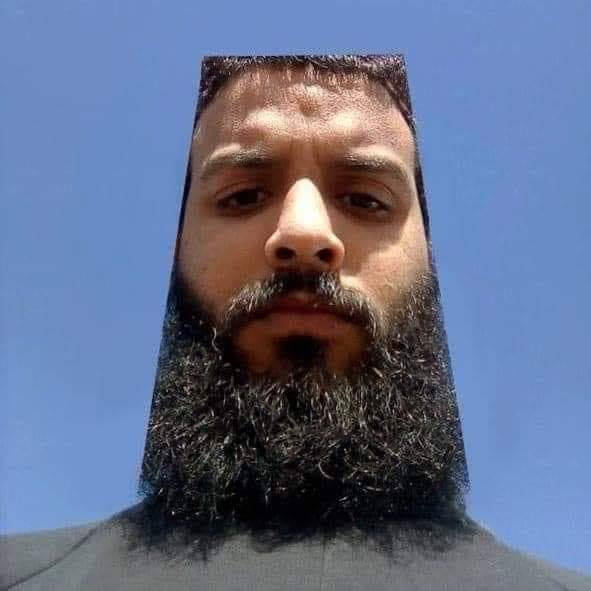
The image is a close-up portrait of a man with a very prominent, uniquely shaped beard. The beard is incredibly full and dark, extending significantly down his chest. The most striking feature is its form: rather than a rounded or naturally tapering beard, it’s sculpted into a rigid, almost geometric shape resembling a pyramid or rectangular prism. The man has brown skin, dark eyes, and a slight mustache. He appears to be wearing a dark-colored shirt or robe. The background is a bright blue sky, providing a stark contrast to the dark beard and the man's features. The image quality is good, though appears to be a selfie.
Foucauldian Genealogical Discourse Analysis
This image provides fertile ground for a Foucaultian analysis centered on the disciplining of the body and the construction of masculinity.
- Discipline & Normalization: The sculpted beard is a clear instance of the body being subjected to discipline. Beards, historically, have signified masculinity, age, religious devotion, or tribal affiliation. However, this beard is not natural. It's been shaped through dedicated effort, a self-imposed regime of grooming and maintenance. This demonstrates how even seemingly ‘natural’ features are subject to the norms and expectations of a particular cultural moment. The rigid geometric shape contrasts sharply with what might be considered "natural" beard growth.
- Power/Knowledge: The practice of sculpting the beard demonstrates power/knowledge at play. The man possesses the knowledge of how to achieve this shape, and the power to impose that shape on his body. This knowledge isn't universal, suggesting a specific subculture or practice. The man's ability to conform to the ideal (or create a new one) asserts his agency within that system.
- Genealogical Analysis: Tracing the "genealogy" of beard styles might reveal shifting discourses around masculinity. Traditionally, a full beard might symbolize virility and wisdom. This extreme, geometric shape is a rupture with those traditions – a deliberate departure. It's a re-writing of the history of beard aesthetics, suggesting a conscious desire to redefine masculinity or religious identity.
Critical Theory
From a Critical Theory perspective, this image speaks to the commodification of identity and the spectacle of the self.
- Spectacle & Representation: The exaggerated beard turns the man into a spectacle. It's a visually arresting image designed to attract attention. This can be connected to the broader trend of self-presentation in social media and the creation of a curated "self."
- Commodification of Identity: The intense grooming required to maintain this beard represents a significant investment of time, effort, and potentially money (in tools, products, etc.). This investment could be seen as a form of "self-commodification," where the individual treats their body and identity as a product to be cultivated and presented.
- Alienation: There is a question of authenticity. Does this beard express the man’s genuine self, or is it a performance constructed to fulfill external expectations or achieve social recognition? This tension between authenticity and performance reflects a core concern of Critical Theory.
Postmodernism
This image exemplifies several aspects of Postmodern thought:
- Hyperreality & Simulacra: The beard, in its extreme, artificial form, blurs the line between reality and simulation. It's a symbol of a beard, but not a natural one. It's a hyperreal representation that has become detached from its original referent.
- Deconstruction of Norms: The radical alteration of a conventional feature like a beard challenges established norms and expectations around masculinity and appearance. It’s a playful subversion of conventional codes.
- Fragmentation & Hybridity: The image embodies the idea of fragmented identity. The man presents a contradictory image: a traditional signifier (the beard) combined with a highly unconventional aesthetic.
Queer Feminist Intersectional Analysis (Potential, but requires careful consideration)
While this image doesn't immediately scream "queer feminist," a nuanced intersectional analysis could be applied, though with caution.
- Challenging Gender Performance: By radically altering his appearance, the man is challenging conventional norms of masculine presentation. The exaggeration of a traditionally masculine feature can be seen as a playful disruption of gender binaries.
- Cultural & Religious Context: A deeper understanding of the cultural or religious context surrounding the man's appearance is crucial. If the beard is linked to a specific religious or cultural practice, it's important to avoid imposing Western feminist frameworks.
- Subjectivity & Power: An intersectional analysis would consider how the man's race, religion, class, and other social categories intersect to shape his experience and his expression of identity. Is he reclaiming a tradition? Is he responding to a history of marginalization?
Important Note: Applying queer feminist analysis requires careful consideration to avoid essentializing or misinterpreting the man's intentions and motivations. It’s crucial to avoid imposing a Western, heteronormative framework onto a potentially different cultural context.
Let me know if you'd like me to elaborate on any of these analyses, or explore a different theoretical perspective!
simple-description (llama3.2-vision)
The meme features a screenshot of a person's face with a shocked expression, captioned "When you're about to die but you're still in the middle of a fight". The image is likely a photo of a person with a serious or angry face, with a bold font caption that emphasizes the absurdity of the situation. The meme is likely humorous because it exaggerates the idea of being in a life-or-death situation while still trying to maintain a sense of competitiveness or determination.
tesseract-ocr
Perr \ ° 5 —, se eo fa ee me Seay iy icles. EES Sie) LES a Nae cee Ae EPS