First Seen
2024-01-23T01:46:52+00:00
simple-description (llama3.2-vision_11b)
The meme is an image of a raised bed in a permaculture garden, with a sign that reads "Raised Bed: 1/4" of a bed. The meme is poking fun at the idea that a raised bed can be a significant investment, with the sign implying that it's only 1/4 of a bed, implying that it's not a full bed, and therefore not a full investment.
detailed-analysis (gemma3-27b-vision)
Okay, let's break down this image through the lens of several theoretical frameworks. Given the nature of the image (a garden structure), some of these will be more applicable/fruitful than others.
1. Visual Description
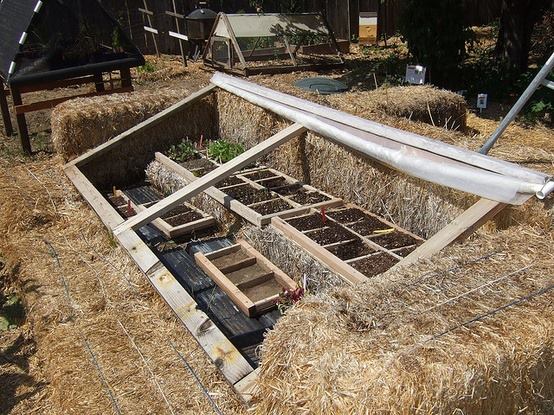
The image depicts a sunken garden bed, resembling a subterranean or in-ground greenhouse. It’s constructed from roughly hewn lumber forming a rectangular frame, dug into the ground. Black plastic sheeting lines the interior, likely to retain moisture and act as a weed barrier. The bed is divided into several raised rectangular sections, filled with dark soil in which young plants are growing. A rudimentary, open-framed covering – likely a repurposed structure covered with clear plastic – provides a greenhouse effect. The surrounding area is covered with a thick layer of straw or hay mulch. In the background, other garden structures (raised beds, a small greenhouse) and lush vegetation suggest a well-tended garden. The overall aesthetic is rustic, resourceful, and clearly a DIY project. The light is bright, casting shadows and highlighting the textures of wood, soil, and straw.
2. Foucauldian Genealogical Discourse Analysis
This sunken garden bed can be viewed as a site where discourses related to "nature," "agriculture," and "self-sufficiency" are actively produced and maintained.
- Historical Tracing: The practice of raised beds and in-ground gardens isn't new, but its modern resurgence is tied to discourses around food security, sustainability, and a rejection of industrial agriculture. We can trace the historical shift from traditional, small-scale farming practices to the current dominance of agribusiness. This sunken bed represents a counter-discourse— a deliberate attempt to reclaim a different way of relating to the land and food production.
- Power/Knowledge: The construction of this garden involves specific knowledges (gardening techniques, material sourcing, DIY construction). These knowledges are not neutral; they are often situated within particular frameworks (organic gardening, permaculture) that hold specific values and beliefs. The act of building and tending the garden demonstrates an assertion of power— the power to shape the environment, to produce food independently, and to reject the dominant agricultural system.
- Discipline: There's a degree of self-discipline involved in maintaining a garden like this. The gardener must adhere to certain routines (watering, weeding, pruning) to achieve a desired outcome. This discipline is not imposed from an external authority, but rather is self-imposed in pursuit of a particular goal.
3. Critical Theory
From a Critical Theory perspective, this garden can be understood as a microcosm of resistance against the "culture industry" and its homogenizing effects.
- Rejection of Standardization: The DIY nature of the garden bed directly challenges the standardized, mass-produced agricultural system. It's a move away from the pre-packaged, commodified food system towards a more localized, individualized approach.
- Emancipatory Potential: By growing their own food, the gardener is asserting a degree of autonomy and breaking free from dependence on corporate food production. This can be seen as an act of emancipation— reclaiming control over a fundamental aspect of life.
- Critique of Rationality: The garden can be viewed as a rejection of the hyper-rationalized, efficiency-driven logic of modern agriculture. It's a return to a more holistic, embodied way of relating to the natural world.
4. Marxist Conflict Theory
The sunken garden can be viewed through a Marxist lens as a practical response to the contradictions of capitalism.
- Means of Production: The garden represents a small-scale attempt to control the means of production (food) outside of the capitalist system. It’s a rejection of relying on others (corporations) for a basic necessity.
- Class Struggle: While not directly a site of overt class struggle, the garden can be seen as a form of resistance against the commodification of food and the exploitation of agricultural workers. It's a rejection of a system where profit is prioritized over human needs and ecological sustainability.
- Alienation: The act of gardening, of directly engaging with the process of food production, can be seen as a way to overcome the alienation that is characteristic of capitalist labor.
5. Postmodernism
A postmodern reading of the sunken garden focuses on deconstruction and the rejection of grand narratives.
- Hybridity: The garden is a mashup of materials and techniques. It's not a pristine, perfectly designed structure; it's a cobbled-together, repurposed project. This embodies the postmodern emphasis on hybridity and the blurring of boundaries.
- Rejection of Essentialism: The garden doesn’t adhere to any single "correct" way of gardening. It’s a fluid, experimental space where the gardener can adapt and innovate. This challenges the idea of a fixed, essential truth about how things should be done.
- Emphasis on Local Narratives: The garden is a distinctly local phenomenon. It’s rooted in a specific place and a specific set of circumstances. This reflects the postmodern emphasis on the importance of local narratives and the rejection of universalizing claims.
Important Note: These are just possible readings of the image. Each of these theoretical frameworks offers a different lens through which to interpret it, and there is room for multiple interpretations. The image, like any cultural artifact, is open to a variety of readings.
tesseract-ocr
ff ei | 4 ee en) “ ce awe ee an . eee ee al Mi 4 2 > ae, ee a A 5 eS ——_ a ie GB nas ees —S (ey: BC UD ‘ Ve > <a? BS SG ) Qe, “Se a hoe LOS OS ‘2% ee SCONE eS Se ee ee Oe se NG ee
simple-description (llama3.2-vision)
The meme is a photo of a small, enclosed garden or "secret garden" made from a large wooden box or crate, filled with soil and plants. The text "I made a secret garden in my backyard" appears at the top of the image. The garden is surrounded by a wooden frame and has a small roof, creating a cozy and intimate space.