First Seen
2024-11-13T17:50:32.308124+00:00
detailed-analysis (gemma3_27b-it-q8_0)
Permaculture & Shelter: Analysis of a Mobile Home Park
Here's an analysis of the image through the lens of permaculture principles, specifically focusing on "Shelter," and utilizing various critical theory frameworks where applicable.
Visual Description
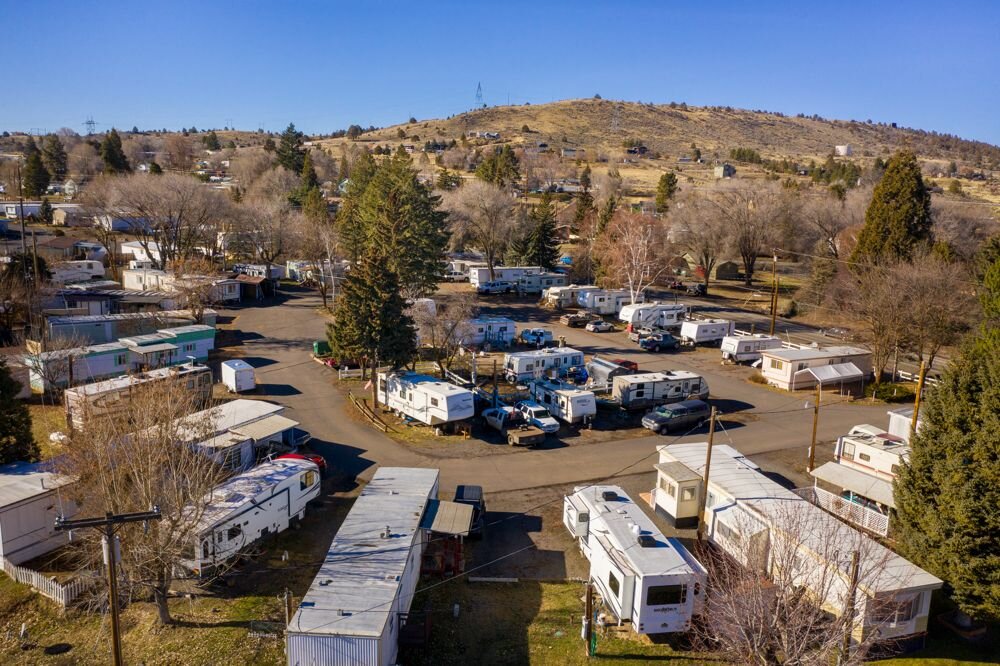
The image depicts a mobile home park nestled in a somewhat arid, hilly landscape. The park is densely populated with a variety of mobile homes and RVs, varying in age and condition. There's a lack of significant landscaping beyond scattered trees, suggesting a utilitarian approach to the land. The arrangement is relatively grid-like, indicating a prioritization of maximizing space over organic, flowing designs. The surrounding landscape is dominated by dry grasses and sparse vegetation on the hillside, hinting at a potentially fragile ecosystem. The scale of the development contrasts significantly with the natural landscape. There is very little evidence of integrated systems, like food production or water harvesting. The park is situated in the landscape, rather than integrated with it.
Foucauldian Genealogical Discourse Analysis
From a Foucauldian perspective, the mobile home park represents a discursive formation around the idea of ‘affordable housing’ and the normalization of a particular lifestyle. The history of mobile home parks is linked to the post-WWII housing boom and the evolving definition of “the American Dream.” Initially marketed as a temporary, convenient alternative, they’ve become a permanent housing option for a significant portion of the population.
The park exercises power not through overt force, but through subtle regulations and standardization. Lot size, building codes (even within the parameters of mobile home construction), and park rules all shape the residents’ lives and possibilities. The layout itself—the tight spacing, the lack of communal space beyond basic roads—is a manifestation of this power, shaping behavior and limiting autonomy. The genealogy would trace how ‘acceptable housing’ became defined in ways that allowed for the creation of spaces like this, often marginalizing communities. This discourse positions mobile home living as a 'lower' status or a 'temporary' situation, thus perpetuating a hierarchy of housing types.
Critical Theory
Critical Theory focuses on exposing power structures and ideologies. The mobile home park serves as a potent symbol of societal inequalities and the limitations of the capitalist housing market. The very existence of such a concentration of pre-fabricated housing indicates a failure of the system to provide adequate, dignified housing options for all.
The park embodies the commodification of shelter - the idea that housing is first and foremost an investment and a source of profit, rather than a fundamental human right. This commodification leads to compromises in quality, sustainability, and community building. It exposes the logic of instrumental reason, prioritizing efficiency and cost-effectiveness over well-being and ecological harmony. The stark contrast between the park's utilitarian design and the natural landscape highlights a disconnect from ecological principles and a prioritization of human control over natural processes.
Marxist Conflict Theory
A Marxist analysis views the mobile home park as a direct consequence of class struggle and the exploitation of labor. The park often represents a housing option for the working class, who are unable to afford conventional homeownership due to wage stagnation and rising housing costs. The land itself is owned by a private entity (likely a corporation or investment group), creating a clear power imbalance between landlord and tenant.
The low cost of mobile homes is often offset by ongoing “lot rent” and park fees, effectively extracting surplus value from the residents. This rent creates a dependency relationship, and the lack of land ownership prevents residents from building equity or benefiting from property value appreciation. The standardized nature of the dwellings and the lack of individual ownership reflects the alienation of labor under capitalism—residents don’t have control over their built environment, mirroring their lack of control over their labor.
Postmodernism
From a Postmodern perspective, the mobile home park represents a challenge to the traditional notion of "home" and "community." It is a fragmented space composed of disparate units, often reflecting the transient lifestyles of its residents. The aesthetics of the park – the mix of styles, the often-tacky decorations – reject the modernist ideals of streamlined design and uniformity.
The mobile home park could be seen as an example of pastiche - a collage of different housing styles and aesthetic choices, devoid of a cohesive unifying narrative. It subverts the idea of the single-family home as the ultimate symbol of the American Dream, offering an alternative (though often stigmatized) form of dwelling. The park’s resistance to a singular, grand narrative reflects a postmodern rejection of fixed meanings and overarching ideologies.
Queer Feminist Intersectional Analysis
An intersectional analysis recognizes how multiple forms of oppression (based on class, race, gender, sexuality, etc.) intersect to create unique experiences of marginalization. Mobile home parks often disproportionately house women-headed households, people of color, LGBTQ+ individuals, and people with disabilities – groups who already face systemic disadvantages in the housing market.
The park’s often-remote location and lack of public transportation can create particular challenges for residents with limited mobility or those who rely on social support networks. Additionally, the park's vulnerability to predatory lending practices and exploitative landlord-tenant relationships can exacerbate existing inequalities. Furthermore, the lack of privacy and the close proximity of dwellings can create unique safety concerns for vulnerable residents, particularly women and LGBTQ+ individuals. The standardization of the structures doesn’t account for diverse needs.
In relation to Permaculture & Shelter:
From a permaculture perspective, the mobile home park is a deeply unsustainable form of shelter. It lacks integration with the natural environment, relies heavily on external resources, and generates significant waste. Principles such as observe and interact would reveal a disconnect between the built environment and the local ecosystem. Catch and store energy is absent - no solar panels, water harvesting, or integrated food production. Use edges and value the marginal is ironic, as this is a marginalized space itself with little attention to creating positive edges or integrating with the surrounding environment.
A permaculture approach to shelter would prioritize creating dwellings that are ecologically sound, socially just, and economically viable, integrating them harmoniously with the surrounding landscape. The mobile home park, in its current form, represents a failure to embrace these principles. It serves as a stark reminder of the need for innovative and equitable housing solutions that prioritize human well-being and ecological integrity.
simple-description (llama3.2-vision_11b)
The meme appears to be a humorous take on the concept of permaculture, a design approach that aims to create sustainable and self-sufficient communities. The image likely depicts a sprawling trailer park or mobile home community, with the text overlay reading "Permaculture: Because who needs a garden when you can have a 100 yard lawn?" This tongue-in-cheek commentary pokes fun at the idea of permaculture's emphasis on community and self-sufficiency, suggesting that even the most seemingly sustainable communities can still be flawed.