First Seen
2023-05-10T21:03:43+00:00
simple-description (llama3.2-vision_11b)
The meme is a photo of a person sitting in a dark room, surrounded by candles and a Bible. The text overlay reads "Papes" which is a play on the phrase "Pope" but with a dark and ominous tone. The meme is likely referencing the idea that the person is trying to be spiritual or mystical, but is instead surrounded by darkness and candles, implying that their attempt at spirituality is failing.
detailed-analysis (gemma3-27b-vision)
Okay, let's break down this image through the lenses you've requested. I'll only include the sections that have a strong relevance to what's depicted.
Visual Description
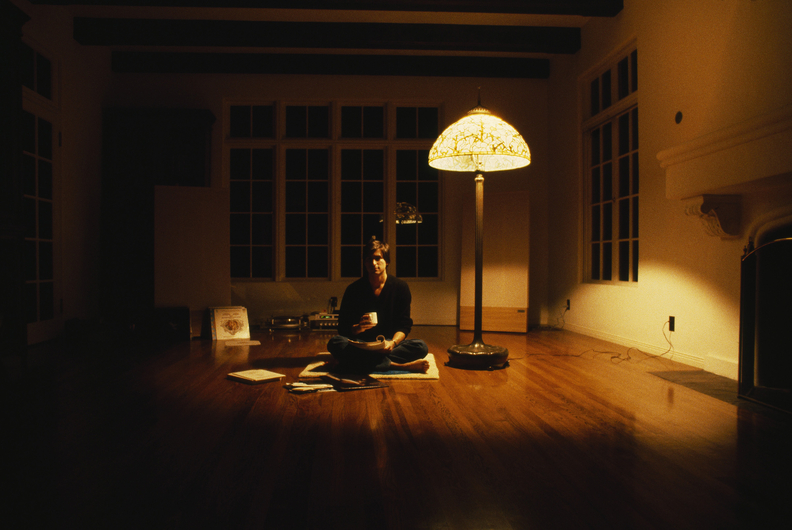
The image is a low-angle, interior shot of a person seated cross-legged on a polished wooden floor, illuminated by a large, ornate floor lamp. The room appears to be a somewhat grand, older building – potentially a public space or a historic house – based on the architectural details: high ceilings, tall, multi-paned windows, and a minimal, classical aesthetic. The lighting is dramatic, creating a strong contrast between the brightly lit circle around the individual and the deep shadows that dominate the rest of the room. Several objects – books, papers, and a mug or cup – are scattered around the person, suggesting a space dedicated to study, contemplation, or perhaps artistic creation. The person appears to be concentrating on something held in their hands – potentially a book or tablet. There's a sense of intimacy and isolation despite the size of the room. The overall color palette is warm, leaning toward amber and brown. The contrast creates a strong sense of mood and focus.
Foucauldian Genealogical Discourse Analysis
The image lends itself to a Foucauldian interpretation. Consider the space itself as a site of power/knowledge. This large room, historically, likely served a specific function – a library, a meeting hall, a place for the elite – and the architecture enforces certain behaviors and modes of thought. The person sitting cross-legged, isolated within this space, could be seen as enacting a counter-discourse to the traditional uses of the room.
The objects around the person – books, papers – represent discursive formations. These aren’t simply neutral sources of information; they are products of specific historical and social conditions, shaping how knowledge is constructed and disseminated. The act of solitary study or creation itself can be interpreted as a "practice" through which power relations are negotiated. The warm, focused lighting directs our gaze and reinforces the idea that this is where meaning is being created, isolating it from the rest of the room and perhaps from the external world.
A genealogical inquiry might ask: What historical discourses (e.g., regarding education, social class, intellectual pursuits) have shaped this space and the practices enacted within it? How does this scene challenge or reinforce those discourses?
Critical Theory
This image evokes themes central to Critical Theory, particularly regarding alienation and the individual’s relationship to culture. The individual, positioned in a large, somewhat imposing space, appears both engaged in intellectual work and isolated from the broader social context.
The room's architecture – suggestive of a certain historical period and class structure – serves as a backdrop, highlighting the potential for cultural hegemony. The person’s apparent engagement with books and ideas could be read as an attempt to negotiate their position within that dominant cultural framework.
The contrast between the brightly lit circle and the surrounding darkness could be interpreted as a metaphor for the individual’s struggle to find meaning and agency within a larger, often opaque, social system. The room's grandeur may indicate the weight of history and tradition, which the individual is attempting to grapple with.
Postmodernism
The scene subtly aligns with some postmodern themes. The strong contrast between light and shadow and the isolation of the figure within the grand space could represent the fragmentation of meaning and the loss of a singular, overarching narrative. The deliberate use of a dramatic lighting style speaks to the hyperreality often explored in postmodern art – a constructed reality that blurs the line between the authentic and the simulated.
The individual's solitude, combined with the architectural details, could also be seen as a rejection of grand narratives and a turn towards subjective experience. The image doesn't offer a clear story or message; rather, it presents a fragmented, ambiguous scene that invites multiple interpretations.
Let me know if you'd like me to explore any of these points in more detail or apply a different theoretical framework!
simple-description (llama3.2-vision)
The meme depicts a person sitting on the floor with their legs crossed, surrounded by various electronics and snacks. The image is captioned "I'm not lazy, I'm just on energy-saving mode".
tesseract-ocr
ne sa | —— L |