First Seen
2023-05-10T21:03:37+00:00
simple-description (llama3.2-vision_11b)
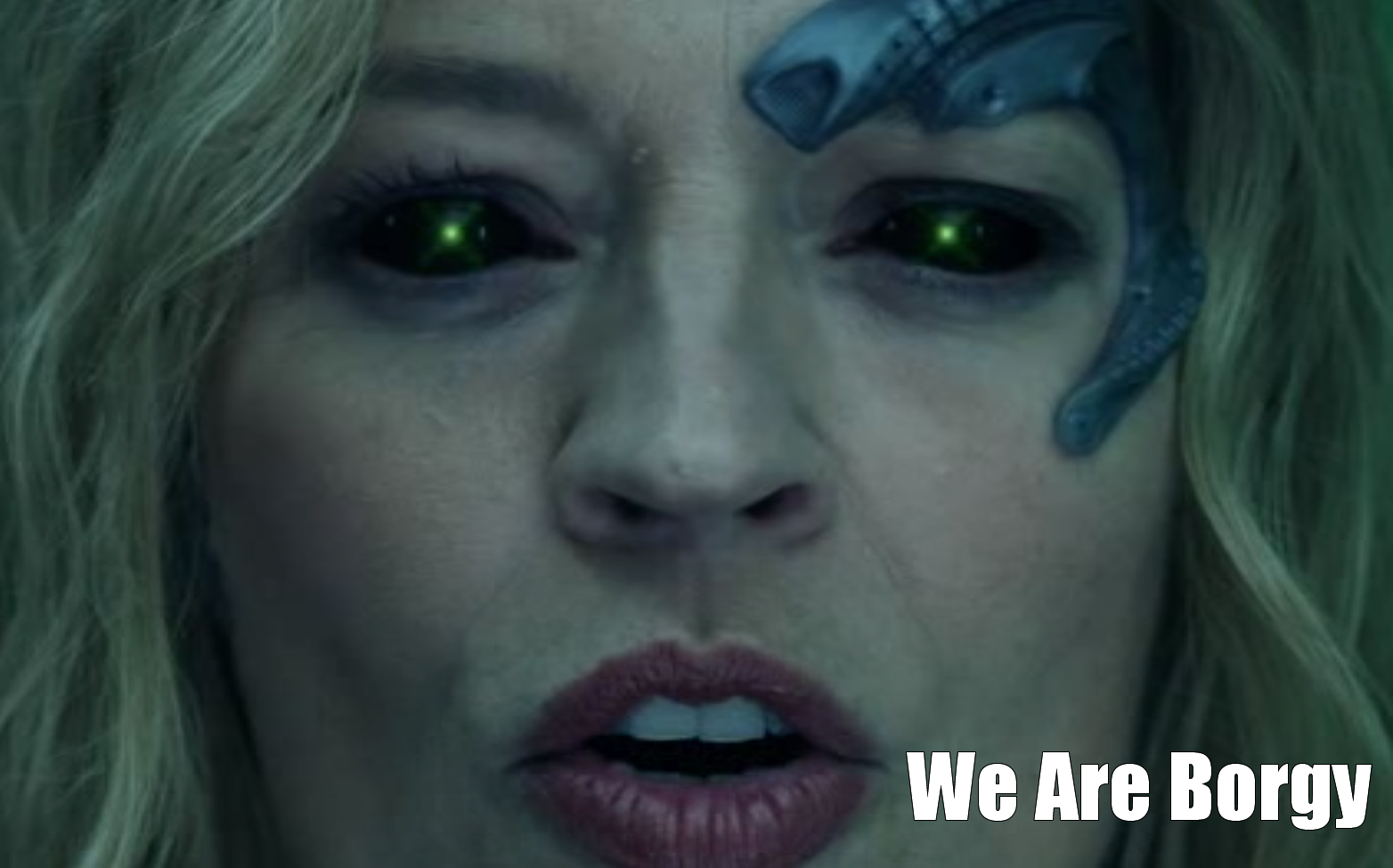
The meme is an image of a character from the TV show "The 100" with a caption "I'm not a 12-year-old girl" and "I'm a 100-year-old woman". The image is a joke about the character's age and appearance, implying that she looks younger than she actually is. The text is a humorous commentary on the character's youthfulness.
detailed-analysis (gemma3-27b-vision)
Okay, here's an analysis of the image, broken down into sections as requested. I’ll only address the headings that feel relevant to the image. Note that interpretations can vary, and these are based on what is visually apparent and how those elements can be linked to these theoretical frameworks.
---
Visual Description
The image is a close-up portrait, seemingly of a woman with dramatically altered or fantastical features. Here are key elements:
* Color Palette: The dominant color is a cool, almost sickly green, heavily washing over the skin and creating an otherworldly atmosphere. Lips are a deep, vivid purple/magenta, providing a strong contrast.
* Facial Features: The woman has sharply defined cheekbones and intense, wide eyes with unnaturally glowing green irises. There's a blue, ornate marking/scale/design visible near the temple.
* Hair: Long, flowing green hair is visible, contributing to the overall sense of a supernatural being or character.
* Expression: The expression is difficult to define, but there’s a sense of intensity, potential threat, or otherworldly calm. It's not traditionally "beautiful," but captivating and potentially unsettling.
* Lighting: The lighting is low and dramatic, emphasizing the contours of the face and contributing to the overall mood. The source of the green illumination is not clear.
---
Foucauldian Genealogical Discourse Analysis
This image lends itself well to a Foucauldian reading because it constructs a visual “other” and challenges pre-existing notions of beauty, normalcy, and humanity.
Discourse of Monstrosity/Beauty: Historically, Western beauty standards have been tightly regulated. This image actively disrupts those standards through its unnatural colors and features. It presents a form of beauty that isn't easily categorized within conventional discourse. It can be seen as a visual act of subversion*.
Power/Knowledge: The green skin and glowing eyes aren’t “natural” – they’re constructed through makeup, digital manipulation, or as part of a fantastical narrative. The power lies in the ability to define* what constitutes "beauty" or "normalcy," and this image intentionally redefines those terms.
Genealogy of "Green" Imagery: A genealogical exploration might trace the historical associations of "green" with concepts like envy, illness, magic, the natural world, and the monstrous (e.g., green skin as a marker of a supernatural being). How has “green” been used to other* or label as "different"?
Subject Formation: The image can be seen as a performance of a constructed "subject" – someone who exists outside of or challenges* established social categories.
---
Queer Feminist Intersectional Analysis
This image can be interpreted through a Queer Feminist lens because it challenges normative representations of the female body and potentially represents a fluid or non-normative identity.
* Challenging the Male Gaze: The image isn't necessarily posed or presented in a way that's overtly sexualized for a male audience. It feels more like a self-possessed, internal gaze. The power dynamic is shifted.
Reclaiming the "Monster": Historically, the “monstrous feminine” (linked to witchcraft, the unnatural, and uncontrollable sexuality) has been used to demonize women who deviate from social norms. This image can be seen as a reclamation* of that archetype, turning it into something powerful and potentially defiant.
* Fluidity and Transformation: The altered appearance suggests a fluidity of identity and a rejection of fixed categories. This can be seen as a metaphor for queer and trans experiences of gender and embodiment.
* Intersectionality of Otherness: The image creates a complex intersection of "otherness" through visual markers. This isn't just about being “not human” or “not beautiful,” but about embodying a combination of characteristics that disrupt established hierarchies.
* Breaking norms: The image breaks norms of how a woman is expected to appear in media.
---
Postmodernism
The image strongly aligns with several tenets of postmodernism.
Simulacra and Simulation: The image is* a simulation, a construction of a being that doesn’t exist in the natural world. It's a copy without an original.
* Fragmentation and Deconstruction: The image disrupts traditional notions of beauty and the human form, fragmenting the ideal and presenting a non-unified, constructed self.
* Rejection of Grand Narratives: It doesn't subscribe to a single, overarching story about beauty, humanity, or identity. It’s open to multiple interpretations.
* Irony and Playfulness: The image has a playful, almost ironic quality. It's not presented as “serious” in the traditional sense, but as a deliberate act of visual subversion.
---
Let me know if you'd like me to expand on any of these sections or explore different theoretical frameworks.
simple-description (llama3.2-vision)
This meme is an image of a person with a shocked expression, but their face has been replaced with a CGI rendering of a Borg from the Star Trek franchise. The text "We Are Borg" is written in a bold font across the top of the image, a reference to the Borg's iconic phrase.
tesseract-ocr
Uy a ‘ f oa — | | } omni aC Tat cy