First Seen
2023-05-10T21:03:37+00:00
simple-description (llama3.2-vision_11b)
This meme is an image of a character from the Star Trek franchise, specifically a young version of the character Spock, with the caption "I'm not arguing, I'm just explaining why I'm right." The meme is a humorous take on the character's stoic and logical nature, poking fun at the idea that he's not actually arguing, but rather explaining his reasoning in a calm and collected manner.
detailed-analysis (gemma3-27b-vision)
Okay, let's break down this image using the requested theoretical frameworks.
Visual Description
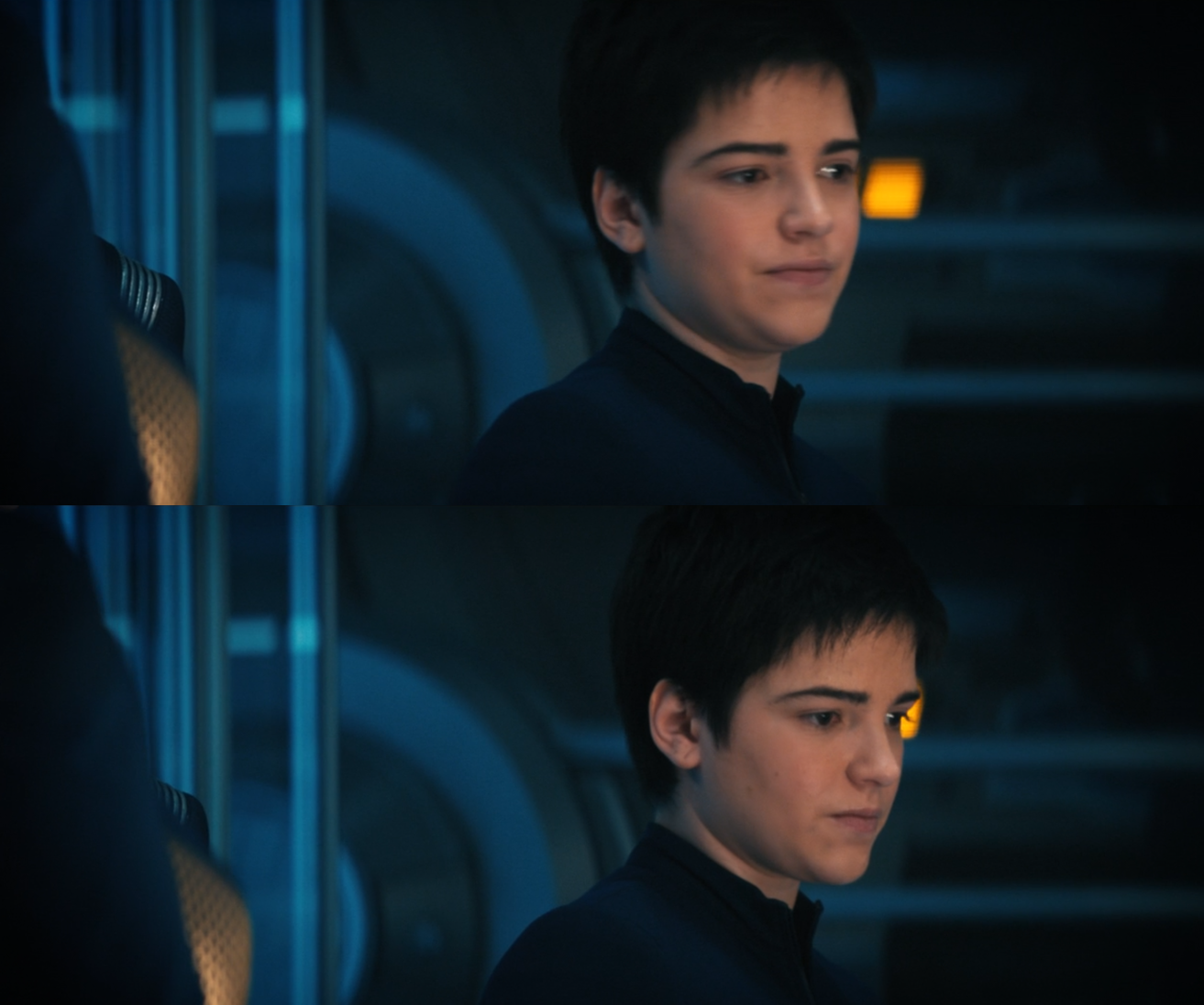
The image presents a young man with dark hair and a somewhat serious, introspective expression. He is positioned in a dark, futuristic-looking interior with a cool, blue color palette and dramatic lighting. The background consists of curved, architectural elements that suggest a technological or spaceship environment. A strong, warm light source (possibly an artificial light) illuminates part of his face and shoulder, creating a striking contrast with the surrounding darkness. The image is presented as a series of three, slightly different frames of a single moment. He is wearing a dark, high-collared garment, almost like a uniform. The composition focuses tightly on his face and upper body, creating a sense of intimacy and psychological intensity.
Foucauldian Genealogical Discourse Analysis
The image lends itself well to Foucauldian analysis. The setting, futuristic and controlled, evokes themes of surveillance, power dynamics, and discipline. The young man, potentially clad in a uniform, exists within a network of power relations. His introspective gaze suggests he is either a subject of this power, perhaps reflecting on its constraints, or, potentially, a participant in the exercise of it.
The high-collared garment can be read as a tool of control, regulating his body and appearance. It's not just clothing; it's a discourse that establishes a specific role and identity. The lighting—contrasting light and shadow—can be interpreted as a metaphor for the visible/invisible dynamics of power. What is illuminated is controlled, but the darkness hides other, potentially subversive, forces.
A genealogical approach would ask how this particular arrangement of power and knowledge came to be, tracing its historical development and the specific practices that have shaped it. What discourses (e.g., around technology, progress, order, security) legitimize this environment? What historical forces led to the creation of these architectural and disciplinary structures?
Critical Theory
Applying critical theory, the image can be seen as reflecting a potential dystopian or controlling social order. The austere aesthetic and the subject's thoughtful expression evoke a sense of alienation and the potential for resistance.
The image raises questions about the effects of technology and modernity on the individual. The setting suggests a hyper-rationalized, dehumanizing environment. The young man’s gaze is inward, as if he is wrestling with the implications of this world or struggling to maintain his individuality within it.
The image potentially critiques the totalizing tendencies of modern systems—the ways in which they attempt to control and regulate every aspect of life. The focus on the individual within this system highlights the tension between individual agency and systemic power. It could be read as a commentary on the loss of authenticity and the rise of manufactured identities in a technologically advanced society.
Postmodernism
From a postmodern perspective, the image subverts the notion of a fixed, stable identity. The futuristic setting and the ambiguity of the situation deny any grounding in a clear historical narrative or a unified worldview.
The image could be seen as a pastiche, blending elements of science fiction, noir, and psychological drama. This blending of styles and references undermines the idea of originality and authenticity. The subject's expression doesn't necessarily communicate a clear message; it is open to multiple interpretations.
The emphasis on simulation and representation is significant. The setting is clearly constructed, a fabricated environment that lacks a grounding in reality. This reinforces the idea that our experience of the world is increasingly mediated by technology and representation.
Notes
It's crucial to remember that these analyses are interpretations. The image is open to different readings depending on the viewer’s perspective and the theoretical framework employed. The strength of these analyses lies in the ability to reveal underlying power structures, social dynamics, and ideological assumptions that might otherwise go unnoticed.
simple-description (llama3.2-vision)
The meme is a screenshot of a character from the TV show "Star Trek: Picard" with a caption "I'm not mad, I'm just...". The image shows the character's face with a calm expression, but the text caption suggests that they are actually angry or upset.
tesseract-ocr
ns 4 > ' UN "