First Seen
2026-03-15T05:19:44+00:00
simple-description (qwen3.5_2b-q8_0)
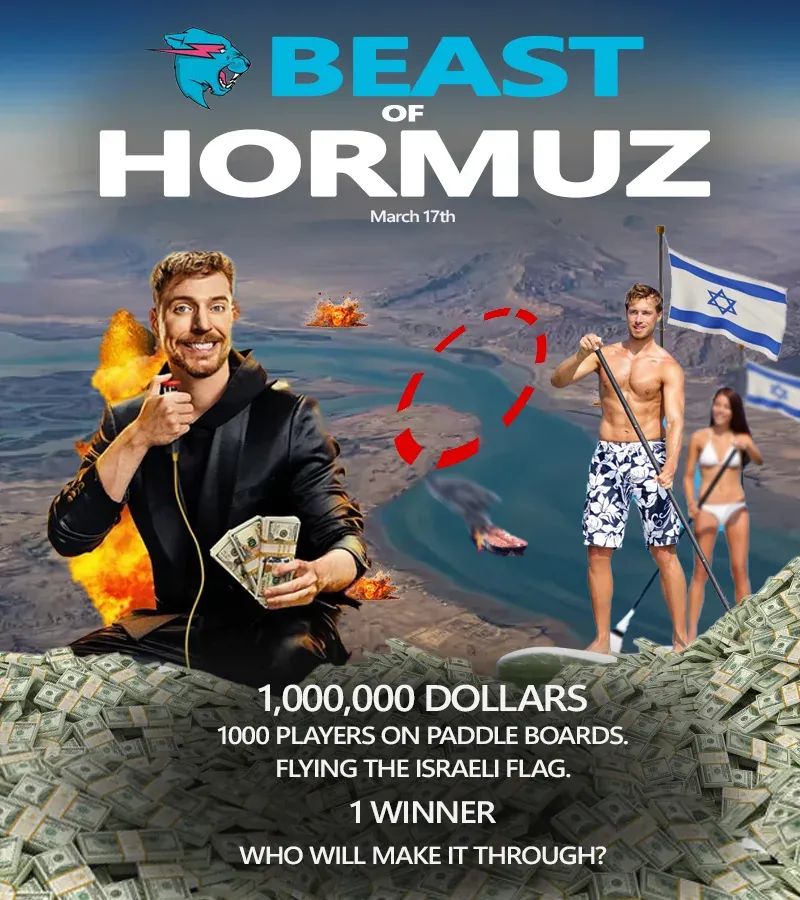
This meme relies on Neo-Dadaist principles by pastiche-ing a historical event with surreal, modern internet humor. It combines the image of a wealthy pirate captain—often referred to as "The Beast of Hormuz"—with absurd imagery like people paddleboarding Israeli flags across a body of water, creating an ironic collision between high-stakes fortune and triviality. The text mocks this effort by stating that 1000 players are flying that tiny flag against gravity on millions of dollars of prize money.
detailed-analysis (gemma3_27b-it-q8_0)
Okay, let's unpack this bizarre image through a Neo-Dadaist lens, touching upon relevant theoretical frameworks where appropriate. It's a ripe canvas for such analysis, being a chaotic collision of symbols and absurd propositions.
Understanding Neo-Dadaism as a Framework
Before diving in, let's quickly frame Neo-Dadaism. Emerging after WWII, it was less a unified style and more a spirit of anti-art, rejecting traditional aesthetic values. It embraced chance, absurdity, appropriation, and a critique of consumerism and established power structures. It built on Dada’s rejection of logic and reason, but often incorporated elements of Pop Art and performance. Key features include collage, assemblage, readymades, and an overall feeling of instability and fragmentation. Neo-Dada often utilized humor, provocation, and a deliberate lack of "good taste" to disrupt expectations.
Visual Description
The image is a digital collage, a central tenet of Neo-Dada. It presents a jarring juxtaposition of elements. MrBeast, a YouTube personality known for elaborate stunts and large sums of money, is depicted “flying” through the air, grasping a wad of cash with flames emanating from his hand. Below him are a cluster of people on paddleboards, each holding an Israeli flag. The backdrop is a seaside scene, likely the Mediterranean, based on the landscape. Text overlays the image, advertising a $1,000,000 contest involving these paddleboards and flags, culminating in a single "winner."
The aesthetic is aggressively digital and maximalist. The colours are vibrant and saturated, and the composition feels deliberately unbalanced. The image feels less about “communication” and more about the collision of disparate elements. This mirrors the Dadaist interest in the accidental and disruptive.
Postmodernism
This image is a quintessential postmodern artifact. It embodies several key postmodern tenets:
- Hyperreality: The contest itself is performative. The “reality” of the event is constructed through its media representation (MrBeast’s YouTube video). The spectacle becomes the reality.
- Pastiche/Intertextuality: It's a remix. MrBeast is a recognizable pop culture figure, the imagery evokes elements of action movies (the flying hero with money), and the Israeli flag inserts a geopolitical layer. It’s drawing on and remixing existing cultural codes without any pretense of originality.
- Fragmentation and Loss of Meaning: The connection between MrBeast, the money, the paddleboards, and the flags is deliberately ambiguous. There's no clear narrative or logical rationale connecting these elements. Meaning becomes unstable and subjective.
- Simulation: The image simulates a 'contest,' but the purpose is not purely competitive. It’s spectacle, attention, and content generation for MrBeast’s platform. It’s a simulation of a contest, divorced from traditional notions of fairness or achievement.
Marxist Conflict Theory
While not immediately obvious, a Marxist reading can be applied. The image is fundamentally about the display of wealth – a blatant spectacle of capital. MrBeast represents capital, and his "flying" with money signifies its power and reach.
The contest, framed as an opportunity for "1000 players," is, in a Marxist sense, a highly controlled and unequal distribution of resources. The promise of a single winner masks the exploitation of the labor (and risk) of the 999 who will not win. The contest is, therefore, a microcosm of capitalist competition – a zero-sum game where only a few benefit at the expense of the many.
The inclusion of the Israeli flags adds a layer of complexity. It’s possible to interpret this as the commodification of national identity. The flags become props in a spectacle of wealth and entertainment, turning political symbolism into just another element of the contest.
Critical Theory
Applying Critical Theory (particularly the Frankfurt School), the image can be seen as a manifestation of the "culture industry." MrBeast and his content are part of a system that produces standardized, commercially driven entertainment that pacifies and distracts the masses.
The spectacle of the money and the contest serves to reinforce existing power structures. It offers a superficial sense of possibility and empowerment (the chance to win) while simultaneously masking the underlying inequalities and systemic issues. The image's absurdity also serves to numb critical thinking, making it less likely that viewers will question the status quo.
Foucauldian Genealogical Discourse Analysis
From a Foucauldian perspective, the image represents the workings of power/knowledge. The contest is not merely about money; it's about establishing a specific discourse around success, competition, and visibility.
MrBeast, as the dispenser of wealth, holds a position of power. He defines the rules of the game, and he dictates what constitutes "winning." The image itself is a form of discourse, shaping our understanding of wealth, opportunity, and even national identity. The selection of the Israeli flags is not arbitrary; it signifies a conscious insertion of a geopolitical element into the spectacle, potentially serving to normalize or reinforce certain narratives around Israel and its symbolism. The ‘who will make it through’ tagline subtly evokes themes of survival and competition, framing participants as subjects within a power dynamic.
Neo-Dadaist Interpretation: A Deliberate Disruption
Ultimately, the image functions as a Neo-Dadaist gesture: a deliberately unsettling and illogical juxtaposition of elements designed to challenge conventional notions of art, meaning, and power. It is a visual "anti-statement" that resists easy interpretation. It does not offer a message; it is the message – a chaotic, fragmented, and absurd reflection of our hyper-capitalist, media-saturated world. The very act of trying to analyze it, to impose order on its chaos, is a futile attempt to reclaim control in a world that is increasingly resistant to control.
It’s an image that feels deeply of its time – a chaotic, attention-grabbing spectacle that embodies the instability and fragmentation of the digital age. And like much of Neo-Dada, its strength lies in its ability to provoke discomfort and question the underlying assumptions of our culture.
Disclaimer: This analysis is based on the provided image and the theoretical frameworks outlined. Interpretations may vary depending on individual perspectives and deeper contextual knowledge.
simple-description (llama3.2-vision_11b)
The meme is a satirical commentary on the concept of "Neon Dadaism" - a genre of art that combines the absurdity of Dadaism with the visual and audio elements of modern electronic music. The meme features an image of a man holding a sign that reads "I am a Dadaist" and is surrounded by a "Neo-Dadaist" logo. The text in the image reads: "I am a Dadaist" and "I am a Dadaist" and "I am a Dadaist". The meme is a satirical commentary on the concept of "Neon Dadaism" - a genre of art that combines the absurdity of Dadaism with the visual and audio elements of modern electronic music.