First Seen
2024-08-27T07:50:36.113444+00:00
simple-description (llama3.2-vision_11b)
The meme is a screenshot of a Twitter post that reads: "I'm a 30-year-old man who still eats cereal for breakfast, still plays video games for 12 hours straight, and still thinks the best way to resolve conflicts is with a fight." The image is overlaid with a caption that says "Millenihilism: when you're too old for your parents' basement but too young for your own apartment." The meme is a humorous take on the struggles of transitioning from adolescence to adulthood, poking fun at the challenges of navigating the in-between stage of life.
detailed-analysis (gemma3-27b-vision)
Okay, here's an analysis of the provided Twitter thread, broken down into sections as requested. I'll only include sections that actually apply – I won't force a fit where it doesn't exist. Given the subject matter, there's a surprising amount to unpack.
1. Visual Description
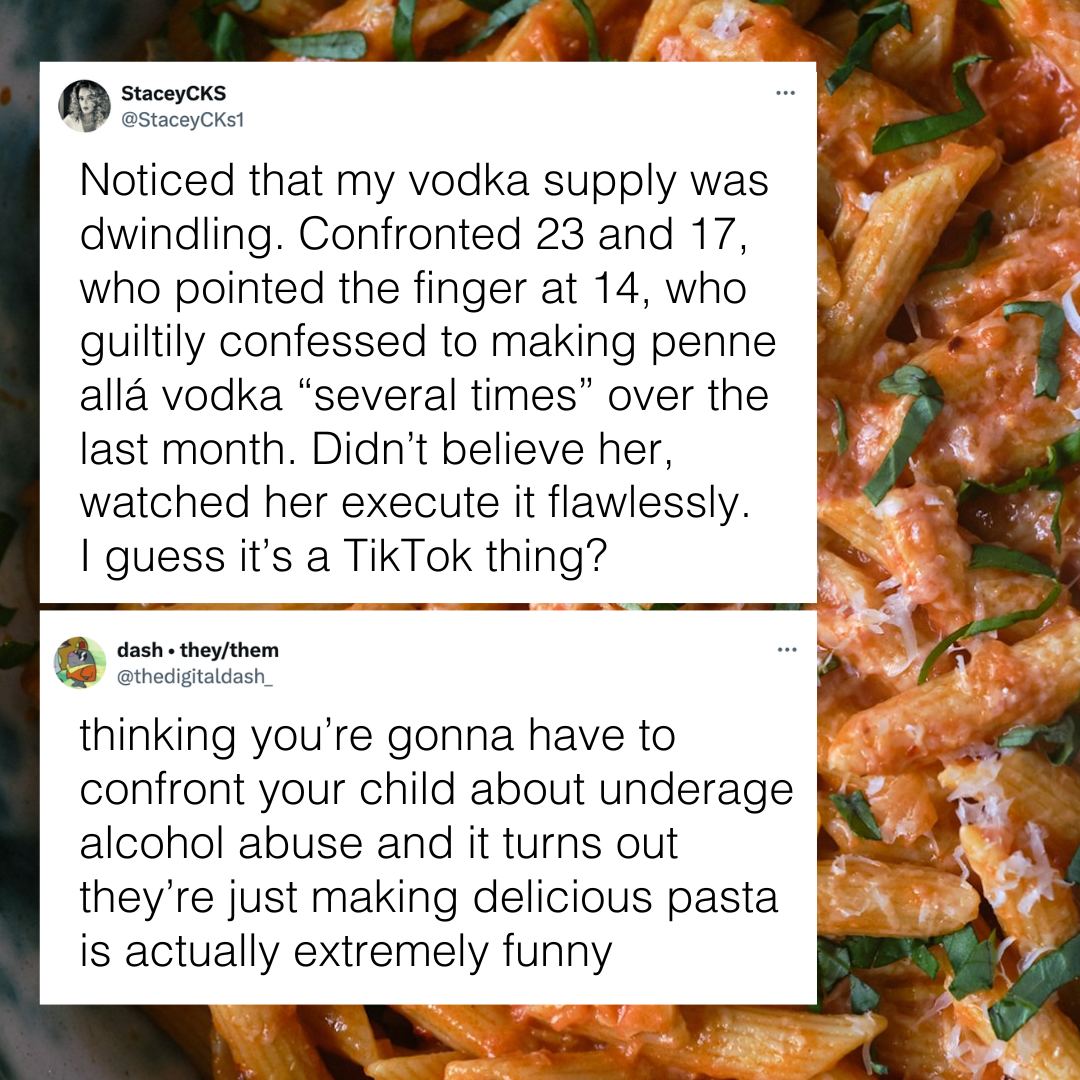
The image is a close-up photograph of a bowl of vibrant pink pasta. It appears to be penne pasta in a creamy, heavily-colored sauce, possibly tomato-based with beets or another pink ingredient contributing to the color. There are visible flecks of something (perhaps herbs or spices) within the sauce. The pasta is brightly lit, suggesting a casual, home-cooked meal rather than a professionally styled food photograph. The quality of the photo is typical of social media – quick, unpolished, but focused on capturing the meal.
2. Foucauldian Genealogical Discourse Analysis
This is where things get interesting. The thread is fascinating from a Foucaultian perspective because it reveals how discourses around childhood, alcohol, and culinary trends have shifted and intersected, creating a specific, surprising situation.
Discipline and Normalization: Historically, childhood has been constructed (via discourse) as a period of innocence and protection. Alcohol is associated with adulthood, transgression, and potentially harmful behavior. The initial assumption of the parent – that dwindling vodka supply must* indicate underage drinking – is deeply rooted in this disciplinary construction. This expectation enforces norms around age and appropriate behavior.
* Genealogy of "Penne Alla Vodka": The dish itself – penne alla vodka – has a genealogy. It’s not a traditional Italian dish, but a 1980s American creation. Tracing its origins reveals a history of cultural appropriation, culinary innovation, and the rise of specific food trends. The parent's initial shock is linked to the expectation that any use of vodka would be associated with adult consumption.
The Role of TikTok: TikTok is presented as the disruptor. It’s the site where seemingly transgressive behavior (using vodka in a non-alcoholic way) becomes normalized through a new set of rules. TikTok's algorithmic logic creates communities where unexpected practices can gain traction and spread. The parent is grappling with the realization that the children's behavior is not a violation of established norms but a participation in a new* norm established through digital culture.
Power/Knowledge: The parent initially assumes they know* what the dwindling vodka means, exercising power over the children based on this presumed knowledge. The revelation of the pasta recipe disrupts that power dynamic, showing the limits of parental authority in a rapidly changing cultural landscape.
3. Critical Theory
This thread lends itself to critical examination through the lens of the culture industry.
* Commodification of Culture: The TikTok trend represents a form of commodification of culture. Culinary practices are reduced to easily digestible, shareable content, stripped of their original context, and circulated for entertainment and social validation. The parent’s surprise highlights the way in which this can lead to a disconnect between lived experience and mediated reality.
* False Consciousness: The parent’s initial assumptions about the vodka could be interpreted as a form of “false consciousness”. They were operating within established ideological frameworks about age and alcohol, unable to recognize the possibility of alternative meanings.
* The Spectacle: The entire scenario can be viewed as a spectacle. The parent's reaction, the children's confession, and the reveal of the pasta are all elements of a dramatic performance designed for (potential) online consumption.
4. Queer Feminist Intersectional Analysis
While not overtly central to the thread, a queer feminist reading offers some nuance.
* Subversion of Expectations: The scenario subtly subverts traditional gendered expectations about cooking and alcohol. The children (specifically the 14-year-old) are presented as creative, innovative cooks who are experimenting with ingredients. This challenges the historical association of cooking with femininity and passivity.
* Reclaiming and Recontextualizing: By using vodka in a non-traditional way, the children are recontextualizing a substance often associated with patriarchal social norms. They are taking something potentially harmful and turning it into something creative and playful.
* The Value of Play & Creative Expression: The thread implicitly highlights the importance of allowing young people space for creative expression and experimentation, even if it challenges conventional norms. The parent's eventual amusement suggests a recognition of the children’s agency and imagination.
In Summary
The Twitter thread, while seemingly lighthearted, offers a surprisingly rich text for critical analysis. It reflects broader trends in culture, technology, and the shifting dynamics of family life. The initial parental concern, contrasted with the playful outcome, reveals the complexities of navigating a world where norms are constantly being challenged and redefined.
simple-description (llama3.2-vision)
The meme is a humorous comparison between a person's frustration with their dwindling vodka supply and a child's ability to escape their parents' rules. The text reads: "I'm at the point where I'm considering letting my kid watch 17 minutes of a video about the dangers of drinking. I mean, it's not like I'm going to let them drink. I'm just going to let them watch a video about how to drink. They're going to be fine. They're going to be fine. They're going to be fine."