First Seen
2023-05-10T21:03:36+00:00
simple-description (llama3.2-vision_11b)
The meme is a screenshot of the "Angry" emoji from the Meta Reactions category, with the image of a cartoonish, red-faced emoji with a scowl. The text "I can smell the desperation" is overlaid on top of the emoji.
detailed-analysis (gemma3-27b-vision)
Okay, let's break down this image through the lenses you've requested. It's a fairly layered visual with potential for complex analysis.
Visual Description
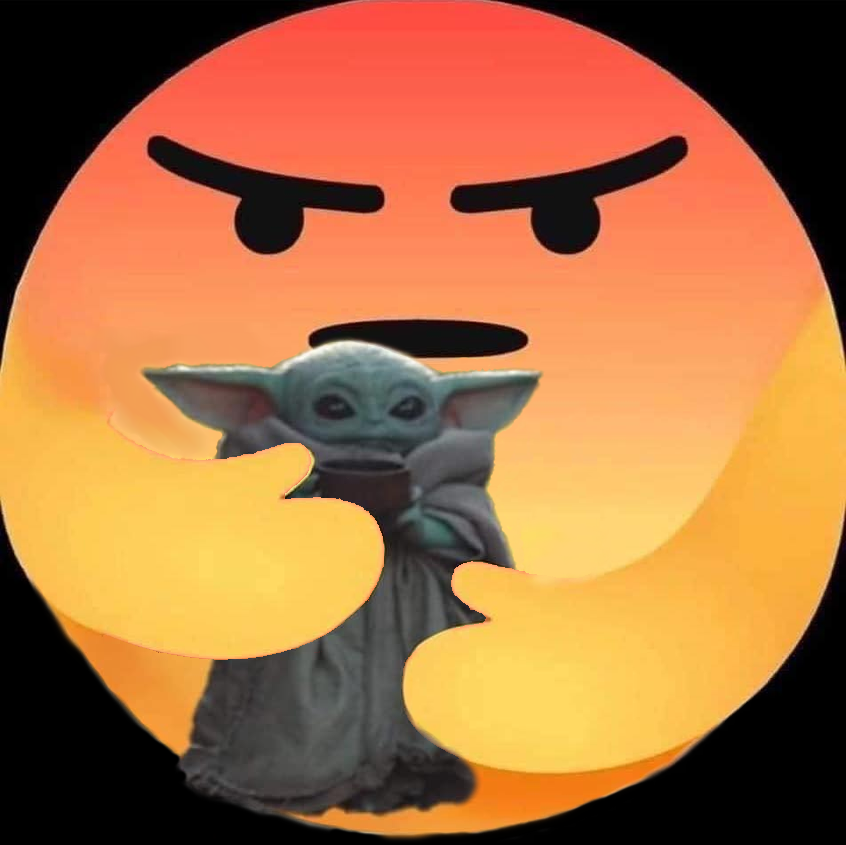
The image depicts a digital manipulation centered around "Baby Yoda" (Grogu) from The Mandalorian. Grogu, a small, green alien infant, is positioned within a large, orange, circular shape that is mimicking a frustrated or angry emoji face. The emoji face features two large, black, angled eyebrows and a downward turned mouth, creating an expression of displeasure or irritation. The orange background is gradient with the darkest tone at the edge of the circle and lighter towards the center. The entire composition is set against a black background, making the orange and green elements more prominent. The image employs a juxtaposition of a cute, beloved character with an aggressive emotional symbol.
Foucauldian Genealogical Discourse Analysis
This image can be analyzed through a Foucauldian lens by exploring the discourses surrounding Grogu and the use of emojis.
- Discipline & Power: The emoji, as a modern form of communication, disciplines expression. It limits complex emotions to pre-defined visual symbols. The image subverts this discipline. By placing Grogu within the angry emoji, it creates a tension. Grogu is often associated with innocence and vulnerability. Associating him with anger disrupts the expected "cuteness" narrative and challenges the power of the emoji to completely define emotional expression.
- Genealogy of 'Cutness': A genealogical approach could trace the historical development of "cuteness" as a cultural force, particularly in the context of merchandising and fan culture. Grogu is a prime example of a character designed to elicit a nurturing and protective response, maximizing merchandising potential. The image could be viewed as a critique of this commodification of emotion, highlighting how even something ostensibly innocent like a cute character can be manipulated within consumer culture.
- The Discourse of 'Mood' & 'Expression': In the age of social media, "moods" and emotional expression are often flattened and performed for an audience. The image could be read as a commentary on this phenomenon, suggesting that even the most adorable characters can be subjected to the demands of online performance.
Critical Theory
The image lends itself to interpretation through a critical theory lens, focusing on the critique of contemporary culture and power structures.
- Culture Industry & Commodity Fetishism: Grogu is a product of the "culture industry" (Adorno & Horkheimer). The image ironically highlights this by positioning the character within an emotional symbol used for instant gratification and online engagement. This reinforces the idea that even deeply felt emotions are becoming commodified. The image itself is a further commodification – a meme or digital artwork created for circulation and engagement.
- Spectacle & Simulation: (Debord) The image can be seen as part of the "spectacle," where images and representations have become more real than reality. The emotional state represented by the emoji is arguably a simulation of genuine feeling, and Grogu's placement within it underscores the flattening of experience in the age of media.
- False Consciousness: The image, through the association of a vulnerable character with anger, could be interpreted as a reflection of underlying societal anxieties. It implicitly acknowledges the pervasive sense of frustration and discontent that often lies beneath the surface of seemingly innocent pop culture phenomena.
Marxist Conflict Theory
From a Marxist perspective, the image can be interpreted through the lens of class struggle and the control of cultural narratives.
- Ideology & Hegemony: The image subtly critiques the dominant ideology that prioritizes consumerism and superficial emotional expression. Grogu's association with the angry emoji highlights the way in which even beloved characters are used to reinforce capitalist values. The image challenges the notion that happiness can be achieved through the purchase of products or the consumption of media.
- Alienation: The emoji represents a form of alienated emotional expression. The image implicitly suggests that genuine feeling is being replaced by simplified, pre-packaged symbols. This can be seen as a reflection of the broader alienation experienced by individuals in capitalist society.
- Control of Narrative: The producers of The Mandalorian and the purveyors of emoji technology have a level of control over the narrative surrounding Grogu and emotional expression. The image subtly challenges this control by re-contextualizing the character and subverting the intended meaning of the emoji.
Postmodernism
The image embodies several key tenets of postmodernism.
- Pastiche & Intertextuality: The image is a pastiche, combining elements from different cultural contexts (Star Wars, emoji culture, digital art). It relies on the viewer's prior knowledge of these contexts to create meaning.
- Deconstruction of Meaning: The juxtaposition of Grogu and the angry emoji disrupts the traditional meaning of both elements. Grogu is typically associated with innocence and vulnerability, while the emoji represents anger and frustration. By combining these elements, the image challenges the viewer to question the conventional associations and meanings.
- Simulation & Hyperreality: The image blurs the boundaries between reality and simulation. The emoji is a representation of an emotion, and Grogu is a fictional character. By placing the character within the emoji, the image creates a hyperreal experience where the lines between reality and representation are blurred.
- Meta-commentary: The image comments on itself as a digitally created artifact. It's a self-aware piece that recognizes its own constructed nature.
Queer Feminist Intersectional Analysis
While less immediately obvious, an intersectional analysis can still be applied:
- Subversion of Gendered Emotional Expression: Traditional gender roles often dictate acceptable emotional displays. Women, for example, are often expected to be nurturing and emotional, while men are expected to suppress anger. The image subverts these expectations by associating a seemingly innocent character (Grogu) with an expression of anger, challenging the notion that anger is inherently masculine or unacceptable.
- Play with Innocence & Power: Grogu represents innocence, and the angry emoji implies a challenge to power or authority. An intersectional analysis might explore the ways in which vulnerability and anger are often intertwined for marginalized groups, particularly women and queer individuals who are often expected to be submissive or accommodating.
- Deconstructing Representation: The image can be interpreted as a critique of the way in which characters in popular culture are often portrayed in limited or stereotypical ways. By challenging the conventional associations of Grogu and the emoji, the image opens up space for more nuanced and complex representations of emotion and identity.
Let me know if you'd like me to elaborate on any of these analyses or explore other theoretical frameworks!
simple-description (llama3.2-vision)
The meme features a photo of a character from the Star Wars franchise, Baby Yoda, with a shocked and disapproving expression. The image is overlaid with a text bubble that reads "When you're 30 and still living in your parents' basement". The meme is a humorous commentary on the challenges of adulting and the difficulties of transitioning from childhood to adulthood.
tesseract-ocr
!~- —<N