First Seen
2025-11-14T10:32:47+00:00
simple-description (qwen3.5_2b-q8_0)
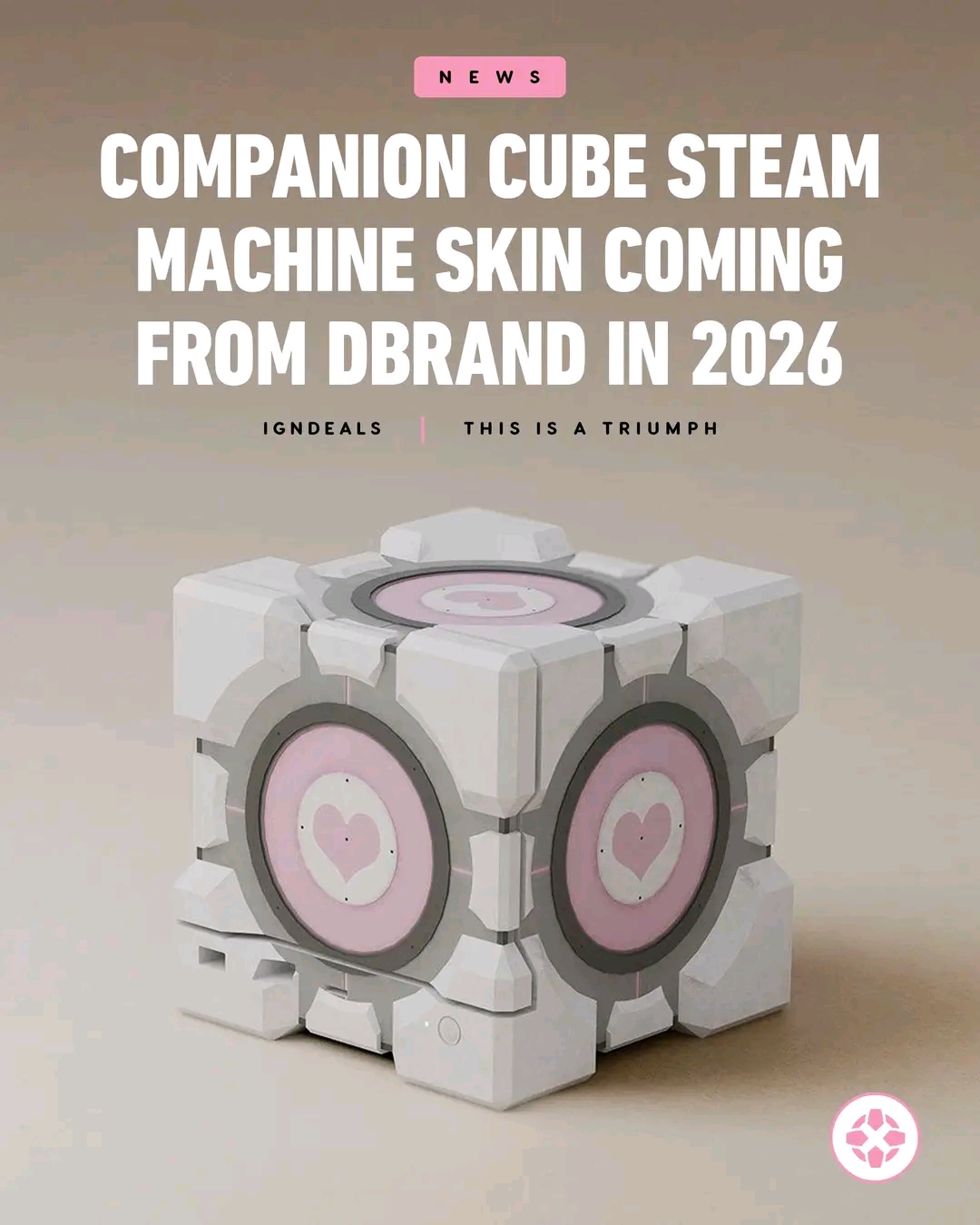
This meme celebrates the Steam Deck, a handheld PC that allows gamers to play on their favorite monitors like a prop in a video game. The headline explains that fans created an official "Companion Cube" skin for the device designed to mimic Portal’s iconic prop, with the promise of an official release by 2026!
detailed-analysis (gemma3_27b-it-q8_0)
Okay, let's break down this meme from a gaming perspective, incorporating the requested theoretical lenses where relevant.
Visual Description
The image prominently features a rendered image of a Portal Companion Cube, a significant object from the 2007 game Portal and its sequel. The Cube itself is normally a solid orange/beige color with a blue and white heart on its face. Here it's been reimagined as a smooth, pearlescent pink and white variation, almost resembling a "skin" you'd apply to an item in a contemporary game. The text overlay announces a "Companion Cube Steam Machine Skin" coming from "DBrand" in 2024 (note: the original poster mistakenly put 2026, but most sources report 2024). The text also includes the branding "IGN Deals" and the somewhat hyperbolic phrase "This Is A Triumph!" (a direct reference to the song that plays at the end of Portal). The overall aesthetic is clean and suggests a product announcement. The pink color palette and the smoothing of textures align with recent trends in gaming customization and aesthetic choices (think pastel skins, "kawaii" designs).
Foucauldian Genealogical Discourse Analysis
Michel Foucault's work focuses on the relationship between power, knowledge, and discourse. Applying this to the meme, we can examine the historical discourse around gaming aesthetics and customization. Portal initially subverted expectations of game objects. The Companion Cube wasn’t a tool, but an object of affection and ultimately, sacrifice. It was about the psychological impact of game design, not mere functionality.
The development of skin economies (like those in Counter-Strike, Dota 2, Valorant) represents a shift. What was once a fairly static game experience now relies heavily on continual customization and monetization through skins. DBrand's skin fundamentally alters the Companion Cube's original meaning. Instead of psychological weight, it becomes a commodity, a visual marker of status or aesthetic preference. This shifts the discourse away from the initial subversive elements of Portal toward a more consumer-driven one. The act of applying a skin is itself a performance of belonging within a gaming community – demonstrating awareness of trends and willingness to invest (in both money and time).
Critical Theory
From a broader critical theory perspective, the meme highlights how nostalgia and cultural objects (like the Companion Cube) are commodified and repackaged within the gaming industry. The Companion Cube, initially a deliberate subversion of gameplay expectations and emotional attachment, is now being sold as a surface-level aesthetic modification. This speaks to a larger trend of the absorption of counter-cultural elements into the mainstream, stripping them of their original context and political or artistic force.
The “This is a Triumph!” tag is especially poignant. The original song represented achieving something beyond the game's design. Here, the “triumph” is simply buying something connected to the game. The meme subtly critiques the displacement of genuine achievement and emotional resonance by consumer culture.
Marxist Conflict Theory
The meme can also be interpreted through a Marxist lens. DBrand is a company existing within a capitalist system, seeking to profit from a beloved cultural product (the Companion Cube) and the emotional connections gamers have to it. The creation of a skin generates surplus value – the difference between the cost of production and the price the consumer pays. This surplus value accrues to DBrand.
The meme implicitly acknowledges the conflict between the inherent creative and emotional value of gaming and the capitalist imperative for profit. The community's reaction to the skin—whether it’s excitement, outrage, or apathy—is a manifestation of this underlying conflict. It's a visual representation of the commodification of culture, where even seemingly innocent objects are subject to the forces of the market.
Postmodernism
The meme exemplifies several aspects of postmodernism. The pink “skin” is a clear example of pastiche – the imitation of a style without a sincere attempt at originality. It's a self-referential gesture, acknowledging the original Portal while simultaneously recontextualizing it within a contemporary gaming aesthetic. The blurring of boundaries between "high" and "low" culture (the philosophical game Portal being reduced to a cosmetic add-on) is also a postmodern trait.
The ironic use of "This Is A Triumph!" is a key example of postmodern irony. It acknowledges the song's meaning while simultaneously subverting it, creating a layer of playful cynicism. The meme is not necessarily a straightforward celebration of the skin; it's a commentary on the absurdity of its existence.
Queer Feminist Intersectional Analysis (Limited Application)
This analysis is less directly applicable, but one could argue that the pink color palette aligns with recent pushes to challenge traditional gender roles in gaming. Pink has historically been coded as feminine, and its application to the Cube (which traditionally doesn't carry gendered associations) could be seen as a subtle deconstruction of those norms. However, this interpretation is somewhat strained. More significantly, the fact that a major gaming object is being given a cosmetic makeover speaks to the industry's continued focus on superficial aesthetics and a lack of substantive representation for marginalized groups.
In conclusion, this seemingly simple meme is layered with meaning, particularly when analyzed through the lens of gaming culture and critical theory. It exposes the complex interplay of nostalgia, commodification, and the ongoing negotiation of meaning within the digital landscape.
simple-description (llama3.2-vision_11b)
The meme features a 3D model of a "Companion Cube" from the video game "Portal," a robot-like object that can be used to open doors and perform other tasks. The image's text reads, "Companion Cube Steam Machine Skin Coming From DBrand in 2026," implying that a new, high-tech device called a "Companion Cube" will be released in 2026. The image is likely a joke about the game's "Companion Cube" character, which is a robot that can be used to open doors and perform other tasks.