First Seen
2025-12-22T20:12:51.330862+00:00
simple-description (qwen3.5_2b-q8_0)
This meme explains that players are surprisingly disappointed by how Starfield was actually making improvements. The text notes that while fans were hoping for standard updates, Bethesda is rumored to be prepping a massive redesign, but humorously dismisses this as "not a Cyberpunk 2.0 scale update." This highlights the visual shock factor: since the graphics here look gritty and industrial rather than typical futuristic sci-fi, it suggests the game's art style has been completely overhauled in ways most gamers hadn't anticipated.
detailed-analysis (gemma3_27b-it-q8_0)
Okay, let's break down this image/news snippet within the context of the gaming category, specifically Starfield. Given the text, the visual, and the overall gamer culture surrounding Bethesda games, here's an analysis across potential theoretical frameworks.
Visual Description
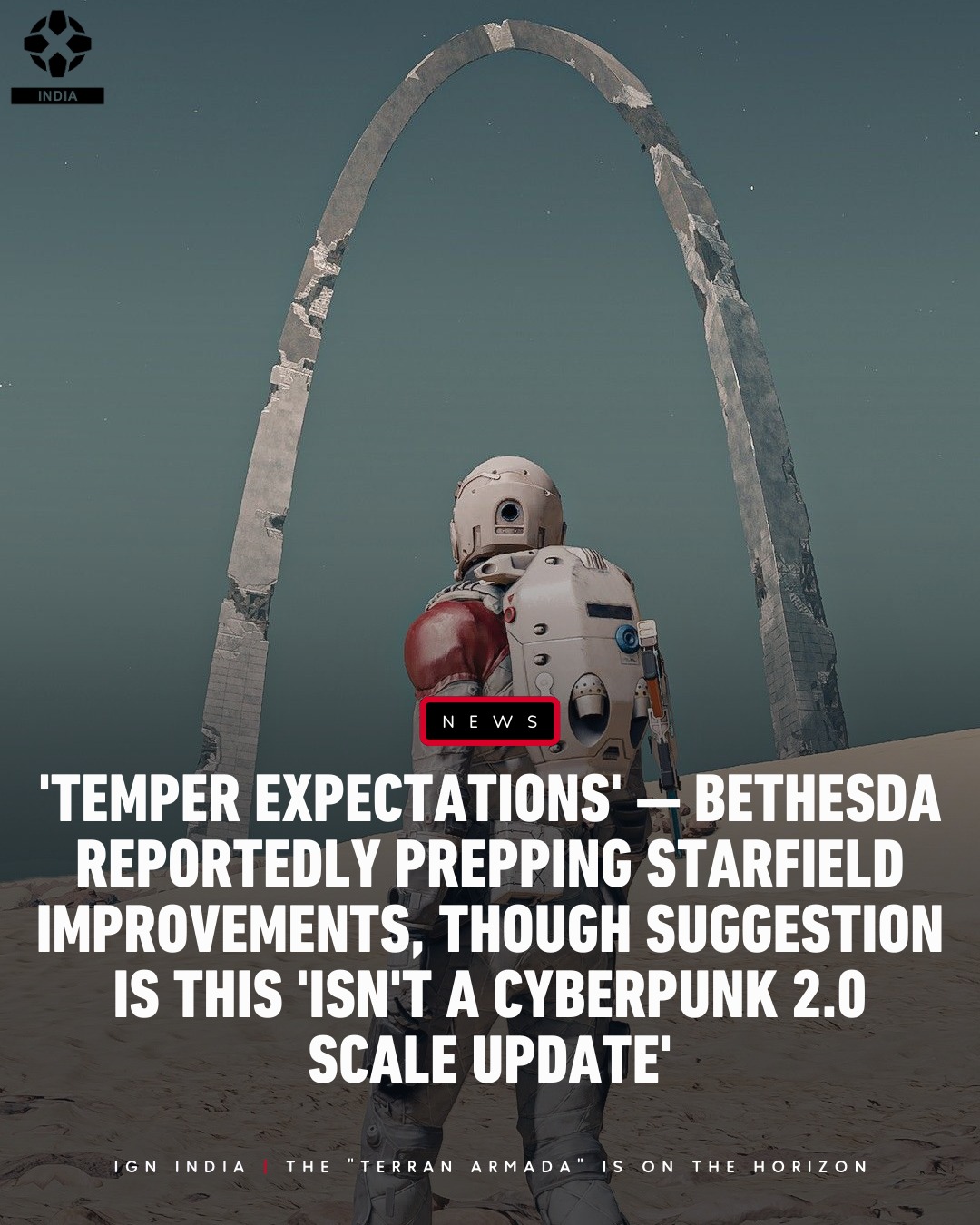
The image depicts a character in a spacesuit standing in front of a colossal, arch-like structure on a desert planet. The structure has a vaguely ancient, monolithic quality – hinting at past civilizations or grand, forgotten structures. The character is facing away from the viewer, presenting a sense of exploration or contemplation. The color palette is muted, dominated by browns and beiges, creating a desolate, almost melancholic atmosphere. The text overlay states Bethesda is prepping improvements for Starfield, but cautions that it's not a scale update similar to what was seen in Cyberpunk 2077 after its disastrous launch. The tagline "The Terran Armada is on the Horizon" is suggestive of a coming significant content release/update.
Foucauldian Genealogical Discourse Analysis
This image speaks to the discourse around game launches and player expectations. Foucault would examine how the "truth" of a game’s quality is constructed through various power dynamics.
- Historical Context: The launch of Cyberpunk 2077 set a powerful precedent. It created a discourse where players became hyper-sensitive to unfulfilled promises and technical issues at launch. CD Projekt Red (the developer) became a case study in how not to launch a AAA game.
- Power/Knowledge: Bethesda, as a major game developer, holds significant power in shaping this discourse. The text “Temper Expectations” is an attempt by Bethesda to manage the discourse. They are trying to preemptively control the narrative by acknowledging potential issues and setting limits on what players should expect. The reference to Cyberpunk is a direct acknowledgement of that power dynamic.
- Genealogy: The image shows how game launches are constantly compared to past failures. Cyberpunk 2077’s troubled launch has become a genealogical “ancestor” to all future AAA game releases, casting a long shadow and creating anxieties about repeating that experience. The comparison isn’t simply about game quality, but also about the discourse surrounding quality, promises, and accountability.
Critical Theory
From a critical theory perspective, the image and text highlight the commodification of experiences within gaming.
- Culture Industry: Starfield, like many AAA games, is a product of the “culture industry.” This industry prioritizes profit and mass appeal over artistic integrity or genuine player satisfaction. The "improvements" mentioned aren’t about fundamentally changing the game’s core design but rather about polishing a product to maximize sales.
- False Consciousness: The text subtly reinforces a form of "false consciousness" – it encourages players to accept imperfections and “temper expectations” instead of demanding higher standards. It suggests that significant improvement (like a Cyberpunk scale update) is unrealistic, normalizing a lower level of quality.
- Ideology: The very idea of "tempering expectations" as a legitimate response to a potentially flawed product reinforces an ideology that prioritizes developer well-being and corporate stability over consumer rights and creative fulfillment.
Marxist Conflict Theory
A Marxist reading would see a conflict between the developers (Bethesda, representing the means of production) and the consumers (players, representing the labor force that generates revenue).
- Exploitation: Players invest time and money into Starfield, essentially contributing their “labor” to Bethesda’s profit. The text subtly suggests that players shouldn't expect too much in return for that investment. This can be seen as a form of exploitation.
- Class Struggle: The difference between the developer's perspective (managing expectations, mitigating risk) and the player's perspective (expecting a polished, engaging product) represents a class struggle. Players want a return on their investment, while developers want to protect their bottom line.
- Commodification of Leisure: The game itself, and the time spent playing it, are commodified. Even the act of hoping for a better experience is being monetized.
Postmodernism
The image fits a postmodern aesthetic through its intertextuality and self-awareness.
- Simulacra & Simulation: Starfield itself is a simulation, a constructed reality. The image references another simulation (Cyberpunk 2077), creating a layer of artificiality. It's a simulation referencing a simulation.
- Meta-Narrative: The text breaks the fourth wall, acknowledging the discourse surrounding game launches and player expectations. It’s a commentary on the game industry as much as it is about the game itself.
- Fragmentation & Deconstruction: The image’s aesthetic—the desolate landscape, the monolithic structure, the isolated character—suggests a fragmentation of meaning. The "Terran Armada" hint points towards an open ending narrative that offers more questions than answers.
In conclusion:
This image isn't simply a news announcement. It's a concentrated dose of gaming culture, reflecting anxieties about game quality, developer accountability, and the commodification of entertainment. It draws upon the recent history of the industry, acknowledges power dynamics, and subtly reinforces a status quo that often prioritizes corporate interests over player satisfaction. It’s a message delivered with a carefully curated visual, designed to resonate with a gaming audience deeply aware of the pitfalls of modern AAA game development.
simple-description (llama3.2-vision_11b)
The meme is a screenshot from a gaming news article about the game Starfield, a new game from the creators of the popular game series The Elder Scrolls. The article is reporting on the game's development, specifically that it's not going to be a "Cyberpunk 2070" style game, but rather a "Star Trek" style game. The article is saying that the game's "Starfield" is going to be a "Star Trek" style game, which is a "Star Trek" style game, which is a "Star Trek" style game, which is a "Star Trek" style game.