First Seen
2026-03-15T02:02:29+00:00
simple-description (qwen3.5_2b-q8_0)
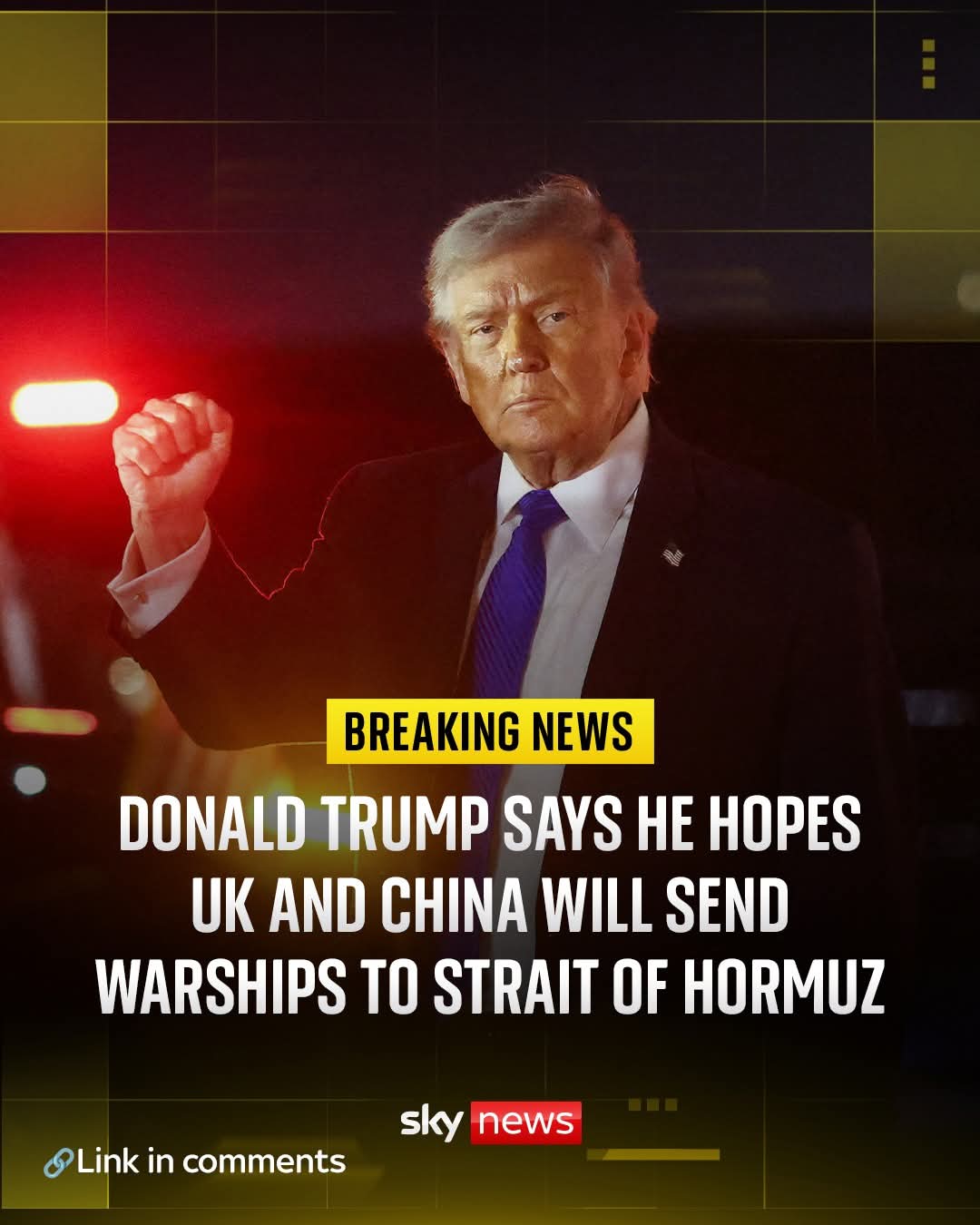
This meme features Donald Trump appearing with a "Breaking News" tag, claiming he hopes Britain and China will send warships to the Strait of Hormuz. The text conveys a sense of diplomatic urgency or bluffing regarding a strategic situation in the Middle East. For someone in the anti-Trump category context, this image serves as a source of mockery, highlighting his perceived incompetence and out-of-touch nature on foreign policy, where he attempts to manufacture urgency around events rather than recognizing the gravity of the geopolitical tensions.
detailed-analysis (gemma3_27b-it-q8_0)
Okay, let's break down this meme from the perspective of an "Anti-Trump" category context, using the frameworks you've requested where applicable.
Overall Framing:
The meme's purpose within an "Anti-Trump" framework is to highlight what's perceived as Trump's recklessness, potentially dangerous foreign policy impulses, and willingness to escalate international tensions. It's presented not as objective news reporting, but as an instance of behavior worthy of criticism and derision.
---
1. Visual Description
The image features a close-up of Donald Trump, appearing to speak with emphatic hand gestures. The color scheme is dominated by reds and blacks, creating a sense of urgency and potentially danger. The framing, with Trump filling most of the space, emphasizes him as the subject of the "breaking news." The Sky News logo is present, but the overall aesthetic is typical of meme-style content – a bold, direct presentation of a statement intended to be shared and reacted to. The "breaking news" banner is ironic given the overall critical framing. The "Link in comments" prompt indicates the original source material is available for verification, but this may be used to deflect criticism.
---
2. Foucauldian Genealogical Discourse Analysis
From a Foucaultian perspective, this meme operates within a discourse on leadership, international relations, and the figure of the "strongman." Trump consistently constructed a discourse that centered around his authority, decisive action, and willingness to challenge established norms. This meme deconstructs that discourse by presenting his call for increased naval presence as potentially reckless or even destabilizing.
The meme isn't necessarily arguing against interventionism per se, but it's challenging the legitimacy of Trump’s authority to make such calls. It implies that his judgment is flawed, his motives suspect, and that his pronouncements should be viewed with skepticism.
Foucault would argue that the meaning of "leadership," "strength," and "security" aren't inherent but are constructed through historical power relations. The meme implicitly challenges Trump’s construction of these concepts.
---
3. Critical Theory
Critical Theory, particularly in the Frankfurt School tradition, focuses on power structures and the role of ideology in maintaining those structures. This meme participates in a critique of the ideology of American exceptionalism and the belief in the United States' right to exert influence globally.
Trump’s statement – as presented in the meme – suggests a desire for assertive action, potentially aligning with a neo-conservative foreign policy stance. The meme acts as a counter-narrative, suggesting that such assertive action is not necessarily in the best interests of global stability and may even be driven by ego or a desire for spectacle.
It operates as a form of demystification, stripping away the veneer of legitimacy from Trump’s pronouncements and exposing the potential dangers inherent in his approach to international relations.
---
4. Marxist Conflict Theory
From a Marxist lens, this meme can be interpreted as relating to the inherent conflicts of capitalist expansion and imperialism. The Strait of Hormuz is a strategically vital waterway for global oil transport—a key component of the capitalist world system. Trump’s call for increased naval presence suggests a willingness to potentially defend capitalist interests in the region through military force.
The meme subtly critiques this potential defense of capital, implying that Trump’s actions are motivated by economic interests rather than genuine concern for security or stability. It implicitly frames Trump as representing the interests of the capitalist class, willing to escalate tensions to protect profit margins. The conflict isn't just between nations, but between classes and their conflicting interests.
---
5. Postmodernism
Postmodernism emphasizes the rejection of grand narratives and the acceptance of multiple, often conflicting perspectives. The meme itself functions as a form of pastiche, taking a news snippet and re-contextualizing it within a critical framework. It doesn't present a single, definitive "truth" about Trump's statement but rather offers a specific interpretation – one that is explicitly positioned as anti-Trump.
The meme highlights the subjective nature of truth and the role of media in shaping perceptions. The ironic use of the "breaking news" format suggests a distrust of mainstream media’s framing of events.
---
6. Queer Feminist Intersectional Analysis
This framework isn’t directly and obviously applicable to the content, but a tangential connection can be made. Trump’s rhetoric and policies have often been seen as hostile to marginalized groups, including women and LGBTQ+ individuals. While the meme doesn’t explicitly address these issues, the broader anti-Trump sentiment is often rooted in a rejection of his patriarchal and exclusionary politics. The meme can be seen as a small part of a larger resistance to systems of oppression.
---
In conclusion:
The meme's power within an "Anti-Trump" context comes from its ability to concisely encapsulate and amplify criticisms of Trump’s leadership style, foreign policy, and broader political ideology. It uses visual and textual cues to position Trump as a potentially dangerous and irresponsible actor on the world stage. The effectiveness of the meme relies on the audience already sharing a critical perspective on Trump, and it serves to reinforce and validate that perspective.
simple-description (llama3.2-vision_11b)
The meme features an image of Donald Trump with a caption that says "Donald Trump says he hopes UK and China will send warships to Strait of Hormuz." The meme is likely intended to be humorous or satirical, as it's unlikely that Trump would actually hope for warships from the UK and China to be sent to the Strait of Hormuz, a strategic waterway in the Middle East. The meme is likely meant to be a commentary on Trump's foreign policy or his relationship with the UK and China.