First Seen
2026-03-09T04:16:43.622770+00:00
simple-description (qwen3.5_2b-q8_0)
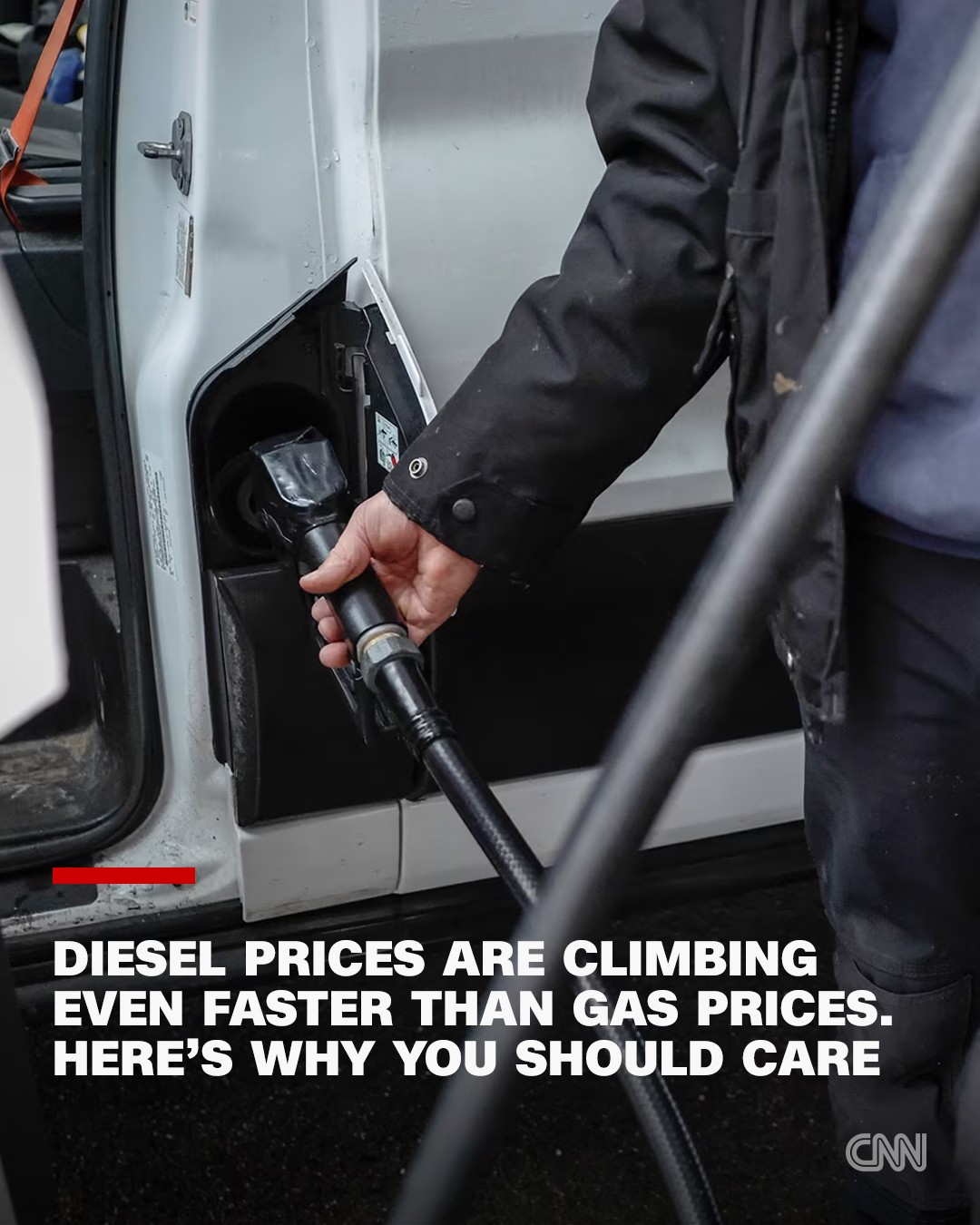
This meme features a close-up shot of a person filling up fuel at the door of a truck, accompanied by text stating that "Diesel prices are climbing faster than gas prices." In an anti-Trump context, this is often used as a critique of high inflation and deregulation policies blamed on current leadership for driving up transportation costs. The humor implies that while people might complain about politics, they cannot escape paying exorbitant fuel rates because the current economic system or administration's management of energy forces everyone else to suffer alongside truckers.
detailed-analysis (gemma3_27b-it-q8_0)
Okay, let's break down this image as a meme operating within an "Anti-Trump" category of discourse. It's a relatively straightforward piece of political messaging, but we can unpack it using various critical lenses.
Visual Description
The image depicts a close-up of a person fueling a vehicle with diesel. The focus is on the fuel nozzle and the hand holding it. The scene is set within the doorway of a vehicle, suggesting everyday activity. The overall tone is utilitarian – not particularly glamorous, and somewhat stark. The text overlay reads: "DIESEL PRICES ARE CLIMBING EVEN FASTER THAN GAS PRICES. HERE’S WHY YOU SHOULD CARE.” The CNN logo is present, implying a news source is responsible for the information. The coloring is fairly neutral, with the black fuel nozzle and clothing contrasting against the lighter tones of the vehicle. The composition is deliberately mundane, drawing attention to the relatable act of fueling.
Foucauldian Genealogical Discourse Analysis
From a Foucauldian perspective, this meme isn’t just about diesel prices. It's about the discourse of economic well-being and how it's constructed and used to exert power.
- Historical Formation: The link between fuel prices and economic anxiety has a historical formation. In the US, particularly since the oil crises of the 1970s, fuel costs have been presented as a key indicator of a nation’s prosperity and the stability of the average citizen's life.
- Power/Knowledge: The meme positions "rising diesel prices" as a problem needing attention. This isn't an inherent truth; it’s a construction of knowledge that directs our concern. The message implicitly connects these prices to broader economic issues. The CNN logo acts as a "power/knowledge" apparatus, lending credibility to this framing.
- Anti-Trump Context: Within the "Anti-Trump" category, this historical formation is deployed as a critique of Trump’s economic policies (or lack thereof) and his handling of relationships with oil-producing nations. The meme suggests Trump’s actions, or inactions, have contributed to this problem (even if indirectly). It subtly implies a restoration of competent economic management is needed without explicitly saying so.
- Discipline & Control: Fuel costs have become a form of indirect social discipline. People adjust their behaviors – driving less, postponing purchases – in response to higher prices, and those behaviors are controlled by the market.
Critical Theory
This meme leverages Critical Theory by critiquing the instrumental rationality of the market.
- Commodification: Fuel is presented as a commodity, and its price fluctuation directly impacts people's ability to participate in everyday life. The meme highlights how seemingly technical economic factors (diesel prices) have profound social consequences.
- Ideology: The message subtly reinforces the ideology of dependence on fossil fuels and the belief that economic stability is tied to affordable energy. This is not challenged; instead, the rising prices are framed as the problem, rather than the reliance on a damaging commodity.
- False Consciousness: The meme appeals to a sense of economic insecurity to create concern. The "Anti-Trump" category hopes to foster a sense of political awareness and action, but there's a risk of reinforcing a "false consciousness" where the system (capitalism, reliance on oil) is not questioned, only the political figure currently in power.
Marxist Conflict Theory
From a Marxist perspective, this meme is a manifestation of class conflict.
- Bourgeoisie vs. Proletariat: Rising fuel prices disproportionately affect the working class (the proletariat) who rely on vehicles for work and daily life. The meme implicitly points to the exploitation of the working class by the capitalist class (the bourgeoisie), who profit from energy production and distribution.
- Capital Accumulation: Increased fuel prices mean increased profits for energy companies – capital accumulation at the expense of the working class.
- Alienation: The meme highlights the alienation of the working class from the means of production and the control over their own economic lives. They are at the mercy of market forces.
- Anti-Trump Connection: In this context, the meme frames Trump as either intentionally or negligently supporting this exploitation. It suggests his policies have benefitted the capitalist class while harming the working class.
Postmodernism
The meme's "truth" is highly dependent on the interpretive framework.
- Simulacra & Simulation: The image itself is a simulation of a common experience – fueling a car. The message about diesel prices is a simulacrum, a representation of a complex economic reality that may have little direct connection to the image. The "truth" about the cause of rising prices is contested and multiple interpretations are possible, yet the meme presents it as factual.
- Deconstruction: A postmodern reading would deconstruct the binary opposition between “good” (stable, affordable fuel prices) and “bad” (rising fuel prices). It would question the very foundations of this value judgment, noting how those values are socially constructed.
- Anti-Narrative: While the meme presents a narrative of economic hardship, it’s a fragmented narrative. It doesn’t offer solutions or a comprehensive analysis, relying on implied connections and existing political beliefs within the “Anti-Trump” category.
In Conclusion
This meme is a powerful piece of political communication within its targeted context. It operates on multiple levels, appealing to anxieties about economic security, subtly critiquing capitalist structures, and positioning Trump as a contributing factor to these problems. The critical lenses above reveal the complex ideological work it does. It’s not just about diesel prices; it’s about framing a specific political narrative and solidifying a sense of opposition.
simple-description (llama3.2-vision_11b)
The meme is an image of a person in a gas station, with a headline that reads: "DIESEL PRICES ARE CLIMBING EVEN FASTER THAN GAS PRICES. HERE'S WHY YOU SHOULD CARE." The image is from a news article that discusses the rise of diesel prices, which is being compared to gas prices. The article is from a news source that is known for its anti-Republican, or "left-leaning" perspective.