First Seen
2025-05-14T20:37:20.282199+00:00
detailed-analysis (gemma3_27b-it-q8_0)
Okay, let's break down this deeply unsettling meme from an anti-toxic masculinity perspective, using the requested theoretical frameworks where applicable. Please be aware this meme deals with themes of violence and suicide, and the analysis will address those themes critically.
Disclaimer: I am an AI, and my interpretation is based on the context and theoretical frameworks provided. This is a complex case with many potential interpretations.
---
Visual Description
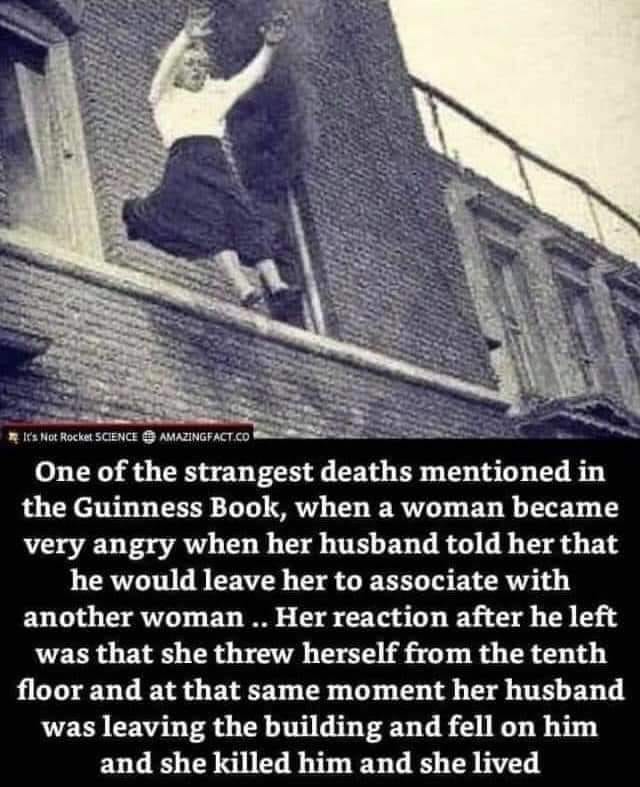
The image shows a blurry, somewhat dated photograph. It appears to depict a scene of a body falling from a building. The image lacks context beyond the visible fall. The lack of clarity and the focus on the act of falling (and implied impact) lend a feeling of shock and violence. The visual is stark and unsettling, and serves to sensationalize the story within the meme. The image itself is a performative act of spectacle, reinforcing the narrative.
Foucauldian Genealogical Discourse Analysis
From a Foucaultian perspective, this meme reveals the discourse surrounding relationships, gender roles, and ownership – specifically, how discourses regarding male infidelity and female reaction have been historically constructed.
- Power/Knowledge: The story reveals the historically entrenched power imbalance in relationships, where a man’s “association with another woman” (a euphemism for infidelity) is framed as a justifiable act, while the woman's reaction is presented as a "strange" death – a deviation from expected behavioral norms. The categorization of this as "strange" in the Guinness Book of Records further reinforces a normalizing of male agency and an exceptionalizing of female emotional response.
- Genealogy: Tracing the history of this narrative, one sees a recurring theme of female value being tied to male attention. The expectation that a woman's worth is predicated on her husband's fidelity is a long-standing cultural construct. The meme demonstrates how this construct, when challenged, can lead to extreme and tragic outcomes.
- Discipline & Normalization: The framing of the story as “strange” is a disciplinary mechanism. It subtly reinforces the idea that extreme reactions to infidelity are abnormal, thus implicitly normalizing male infidelity and requiring women to accept it.
Critical Theory
Critical Theory, particularly stemming from the Frankfurt School, focuses on the ways in which societal structures perpetuate domination.
- Domination & Oppression: This meme embodies a system of patriarchal domination. The husband's “leaving” is presented as a matter of personal choice, while the wife’s response is a violent outburst. This perpetuates the idea that men are active agents and women are passive reactors.
- Ideology: The meme’s presentation implicitly supports an ideology that prioritizes male freedom and agency while simultaneously punishing female emotional expression. The "Guinness Book of Records" inclusion suggests an acceptance of the event as spectacle.
- Instrumental Reason: The husband’s “association with another woman” can be seen as a form of instrumental reason – using another person as a means to an end (satisfaction, ego boost) without regard for the emotional consequences for the wife.
Marxist Conflict Theory
From a Marxist lens, the meme highlights class and gender dynamics intertwined with power.
- Class & Gender Roles: Although not overtly stated, the narrative likely implies a certain social class. The ability to live in a building with ten floors suggests a degree of privilege. This privilege is further reinforced by the husband’s assumed freedom to engage in infidelity. The wife's extreme response could be interpreted as a desperate attempt to regain control within a system that denies her agency.
- False Consciousness: The way the story is framed (as "strange" rather than a tragic outcome of systemic oppression) contributes to a form of false consciousness, obscuring the root causes of the violence.
- Alienation: The wife’s act can be seen as an extreme form of alienation—feeling disconnected from her life, her husband, and ultimately, herself.
Queer Feminist Intersectional Analysis
This analysis is central to understanding the meme’s problematic nature.
- Patriarchal Violence: The meme is fundamentally about patriarchal violence, manifested in both the husband’s infidelity (a violation of trust and a claim of ownership over the wife’s emotional life) and the wife’s ultimately self-destructive act.
- Intersectional Oppression: The meme intersects gender with potentially other forms of oppression (class, race, etc., which are not explicitly stated but are likely relevant to the lived experience of the individuals involved). The woman's response is not simply about infidelity; it’s about the culmination of a lifetime of being socialized to derive her worth from her relationship with a man.
- Challenging Heteronormativity: While the relationship is heterosexual, the narrative's focus on ownership and control within a marital context critiques the inherent power imbalances in heteronormative structures. The husband’s perceived right to “associate with another woman” underscores the assumption of male sexual entitlement.
- Suicide & Harm Reduction: This framework must acknowledge the dangers of romanticizing or glorifying violence, particularly suicide. The meme does not offer any discussion of the wife's mental health or the societal pressures that might have contributed to her decision.
---
In conclusion: This meme is a deeply problematic example of how patriarchal norms and ideologies can lead to tragic consequences. It sensationalizes violence, reinforces harmful stereotypes, and obscures the systemic oppression that contributes to such events. An anti-toxic masculinity perspective demands that we move beyond simply condemning the wife's action and instead critically examine the conditions that led to it.
Important Note: If you or someone you know is struggling with suicidal thoughts or experiencing domestic violence, please reach out for help. Here are some resources:
- Suicide Prevention Lifeline: 988
- National Domestic Violence Hotline: 1-800-799-SAFE (7233)
- The Trevor Project: 1-866-488-7386 (for LGBTQ youth)
simple-description (llama3.2-vision_11b)
The meme is a darkly comedic take on the idea of toxic masculinity, using a historical anecdote to illustrate the dangers of patriarchal attitudes. The image shows a woman falling from a window, with the caption "When you realize your husband's 'helping' is actually a death sentence".
detailed-analysis (gemma3-27b-vision)
Okay, let's break down the image and its accompanying text through the requested theoretical lenses. Please be aware this is a complex and disturbing scenario, and the analysis will reflect that.
Image & Text Overview
The image appears to be a grainy, somewhat distorted black and white photo depicting a building façade. A figure appears to be falling from an upper story. The accompanying text describes a situation where a woman, upon learning her husband intends to leave her for another woman, throws herself from the 10th floor at the exact moment her husband is leaving the building, resulting in his death, and her survival. It's framed as an unusual event documented in the Guinness Book of Records.
---
1. Visual Description
- Graininess & Distortion: The image's low quality contributes to a sense of distance and unreality. It doesn’t present a clear, direct "truth," but rather a fragmented, mediated view of a traumatic event.
- Composition: The focus is on the angle of the falling figure and the building's height, emphasizing the dramatic fall. The building acts as a symbolic structure of patriarchal power and confinement.
- Ambiguity: The lack of clear detail and context forces the viewer to fill in the gaps with assumptions and narratives, potentially shaping their interpretation of the event.
---
2. Foucauldian Genealogical Discourse Analysis
This scenario provides rich ground for a Foucauldian analysis focusing on the power dynamics, normalization, and discourse around gender, marital expectations, and extreme emotional responses.
- Discourse of Marriage: The narrative is rooted in a historical discourse of marriage as a legally and socially constructed institution defining acceptable behavior for both partners. The woman's anger and response, though extreme, are framed in relation to the expectation of wifely duty and fidelity.
- Power/Knowledge: The recording of this event in the Guinness Book of Records doesn't simply present a "fact." It constructs this event as noteworthy, framing it within a specific logic of record-keeping and "strangeness." This act of recording exerts power by defining what's considered remarkable and potentially reinforcing existing power structures.
- "Madness" and Discipline: The woman’s act could be categorized as an "irrational" or "extreme" reaction within the normative discourse. Historically, such emotional responses by women have been pathologized and controlled through institutions of psychiatric discipline. The narrative's focus on the “strangeness” could be viewed as a way to distance and contain the transgression of expected behavior.
- Genealogical tracing: We could trace how societal expectations of women, their roles within marriage, and the discourse surrounding "emotional hysteria" have evolved over time to understand the context surrounding this event.
---
3. Critical Theory
From a critical theory perspective (drawing on thinkers like Adorno and Horkheimer), this story exemplifies the destructive consequences of societal repression and alienation.
- Commodification of Trauma: The inclusion in the Guinness Book of Records can be seen as a form of commodification – turning a deeply personal tragedy into a spectacle for entertainment and record-keeping. This reduces complex human suffering to a mere "fact."
- Social Control: The societal expectations placed on women within marriage, particularly regarding fidelity and emotional restraint, can be seen as mechanisms of social control. The woman’s act could be interpreted as a desperate attempt to reclaim agency in a situation where she felt powerless.
- Loss of Authenticity: The narrative highlights a loss of genuine emotional expression in a society that prioritizes conformity and control. The woman’s extreme reaction could be seen as a symptom of this alienation.
---
4. Marxist Conflict Theory
Applying Marxist conflict theory, we can examine the underlying economic and power dynamics at play.
- Patriarchal Structures: The story reveals the inherent power imbalance within patriarchal marriage. The husband's decision to leave for another woman represents his assertion of control and privilege. The wife's act can be seen as a violent reaction to this perceived loss of power and economic security.
- Property & Control: Historically, women were often viewed as economic "property" within marriage. The husband's infidelity and abandonment threaten the wife's economic and social status.
- Class & Social Status: The context of the story may also be relevant. The social class and status of the individuals involved could influence the power dynamics and the consequences of their actions.
---
5. Queer Feminist Intersectional Analysis
This is perhaps the most relevant lens for dissecting this story.
- Heteronormativity & Gendered Violence: The story is rooted in a heteronormative framework where expectations of marital fidelity and gender roles are rigidly enforced. The husband’s infidelity and abandonment trigger a violent reaction, highlighting the ways in which patriarchal structures can contribute to gender-based violence.
- Emotional Labor & Expectations: Women are often expected to perform a disproportionate amount of emotional labor within relationships. The wife's extreme reaction could be seen as a breaking point – a desperate attempt to express the accumulated pain and frustration of being subjected to these expectations.
- Intersectional Framework: It’s crucial to consider how other aspects of the woman's identity (race, class, sexual orientation, etc.) might intersect with her gender and influence her experience and response.
- Reclaiming Agency: While the act is tragic, it could also be interpreted as a desperate attempt to reclaim agency and assert control in a situation where she felt powerless.
---
Important Considerations:
- Context and Interpretation: This analysis is based on a limited amount of information. The actual context surrounding the event is crucial for a more nuanced understanding.
- Sensationalism: The framing of the story as a "strange" event in the Guinness Book of Records is problematic. It risks sensationalizing a tragic situation and overshadowing the underlying issues of gender-based violence and societal oppression.
- Trigger Warning: This content deals with sensitive themes such as suicide, infidelity, and violence. Viewer discretion is advised.
I hope this detailed analysis provides a comprehensive understanding of the image and text through the requested theoretical lenses.
simple-description (llama3.2-vision)
This meme is a humorous take on a famous historical event, specifically the 1919 New York Times article about a woman who threw her husband out of a 10th-story window after he admitted to an affair. The text in the image reads: "One of the strangest deaths ever recorded in the New York Times, 1919." The meme is likely referencing this event to poke fun at the idea that this was considered a "strange" or "unusual" death, and is using it to make a humorous point about the unpredictability of human relationships.