First Seen
2026-04-02T05:23:20+00:00
simple-description (qwen3.5_2b-q8_0)
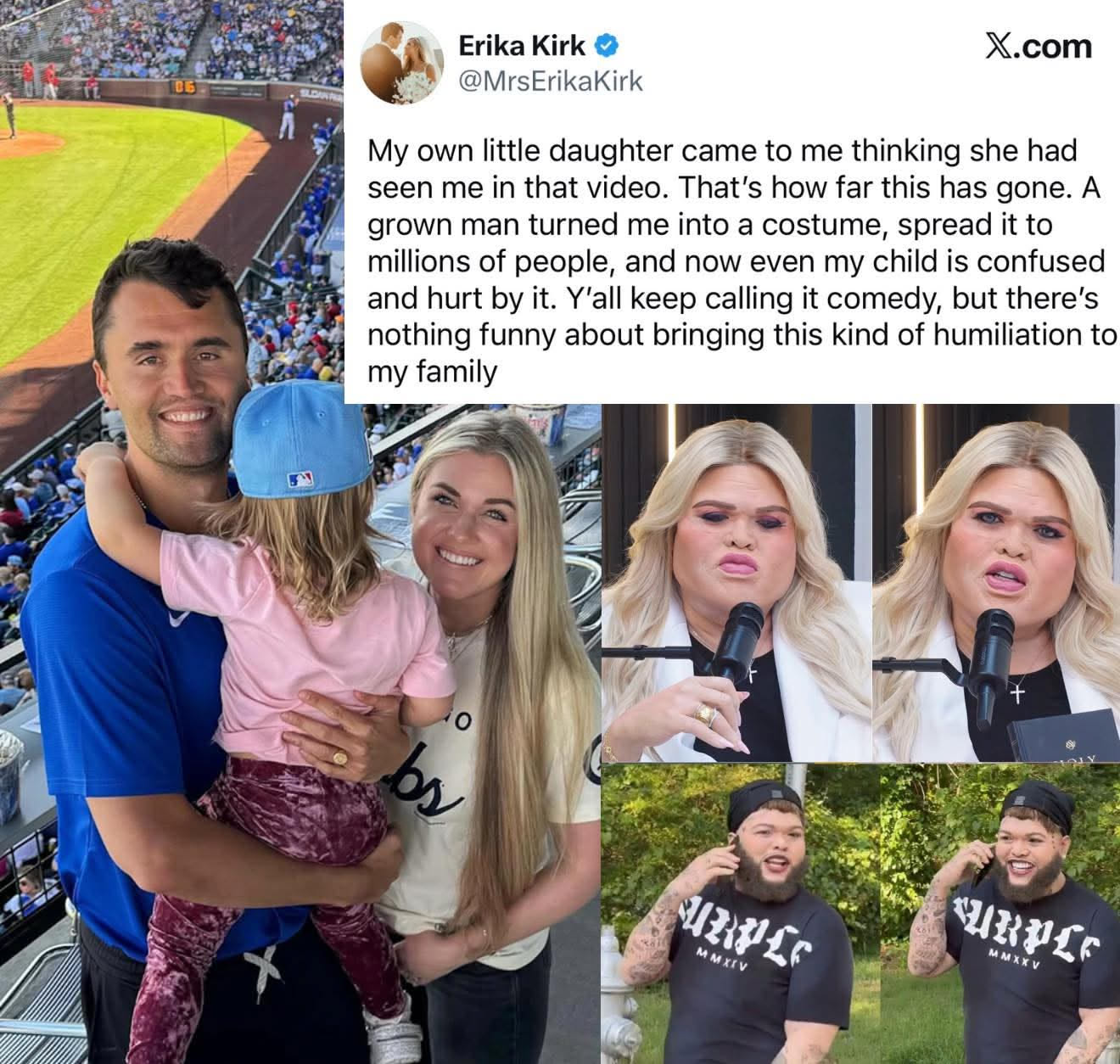
This meme features a tweet from Erika Kirk (X.com/@MrsErikaKirk) complaining that her own daughter saw her in a video where she wore heavy eyeliner and lipstick. The image also includes the viral "Eriksburg" clips of her changing into an exaggerated feminine persona, alongside images of her husband (Justin Jefferson) and other men in similar settings.
From an anti-reactionary perspective, this content serves as a critique of the trend itself—specifically mocking Erika for using heavy makeup and microphones to get likes on social media. By showing that she is now the victim of exactly the same viral behavior she once criticized, it highlights the absurdity of internet reactionary groups targeting their own family members for dramatic responses online.
detailed-analysis (gemma3_27b-it-q8_0)
Okay, let's break down this meme through the lens of an "Anti-Reactionary" category, incorporating the requested theoretical frameworks where relevant. This is a complex case, deeply entangled with contemporary online culture, gender dynamics, and political positioning.
Understanding the "Anti-Reactionary" Category First
Before diving in, it's crucial to define what "Anti-Reactionary" signifies here. This isn't simply about opposing any form of conservatism. It's a specific position that actively critiques the affect and the strategy of contemporary reactionary movements (often online, associated with the "Manosphere", the Alt-Right, and increasingly mainstreamed conservative figures). Anti-reactionaries see these movements as actively seeking to reinstate hierarchical power structures, often through cynical exploitation of nostalgia, manufactured grievances, and the weaponization of irony. They see reactionary movements relying on deliberately provoking outrage and then framing themselves as victims. They are obsessed with attacking progressive and leftist spaces.
Here's a breakdown of the meme as an "Anti-Reactionary" would perceive it, incorporating relevant theoretical frameworks:
---
Visual Description
The image is a four-panel layout. The first panel shows a smiling family at what appears to be a baseball game – a classic "wholesome family" aesthetic. The father is wearing a Los Angeles Dodgers cap and a royal blue shirt. His wife is in a light dress and the daughter is between them. The next three panels show a man (Ryan Chapman, a personality within a reactionary online space) performing a lewd and exaggerated pantomime of an oral act with a microphone as a prop. This performance is occurring at a rally-style event. The panels show close-ups of his increasingly frantic and provocative performance. The final panel shows the man with a t-shirt with the word ‘Purple’ on it, likely a reference to the infamous scandal involving him.
The stark contrast between the initial "wholesome" framing and the explicit performance is deliberately jarring. This juxtaposition is central to the meme's meaning, especially from an Anti-Reactionary perspective.
---
Foucauldian Genealogical Discourse Analysis
This meme functions as a dissection of how power operates through discourse. Foucault's genealogy looks at the historical emergence of concepts and the power relations embedded within them.
- The "Family Values" Discourse: The first panel invokes a very specific, heavily coded discourse: "traditional family values." This is a cornerstone of reactionary rhetoric, used to present a particular ideal of social order as natural and inherently good.
- The "Irony Bro" & Performance of Subversion: Ryan Chapman represents a figure common within reactionary online spaces - the "irony bro." These figures use ironic performance of ‘transgressive’ acts to signal belonging within a group and to test the boundaries of acceptable discourse, simultaneously claiming innocence. This is precisely the tactic being exposed. Chapman attempts to cloak his performance in irony, arguing it is harmless “comedy”, while simultaneously engaging in and reveling in shocking imagery.
- The Deconstruction of Authenticity: The meme dismantles the idea that this performance is genuinely subversive. From an Anti-Reactionary standpoint, it’s not "challenging" norms; it’s reinforcing a very specific power dynamic. The performance aims to provoke outrage from those it deems its enemies, thus confirming the performer’s (and his audience's) sense of moral superiority.
- The Weaponization of “Harmless Fun”: The meme directly addresses the claim that this is “harmless fun”. Erika Kirk, the poster of the meme, directly states the harm this is causing to her family and her daughter.
---
Critical Theory
From a Critical Theory perspective, this meme exposes the ways in which cultural products can reinforce and legitimize oppressive social structures.
- The Culture Industry: Chapman’s performance is a product of the culture industry, and the meme reveals how that industry can be used to disseminate harmful ideologies. The virality of the original video and the subsequent meme highlight the power of online platforms to amplify reactionary messages.
- Commodification of Transgression: The performance turns transgression (lewdness, the disruption of social norms) into a commodity—something to be consumed for entertainment and social signaling. It commodifies transgression without any genuine critique of the power structures it seemingly gestures towards.
- The Reproduction of Patriarchy: The central act depicted is deeply rooted in patriarchal power dynamics. The performance centers male sexual desire and objectifies the female body (even if it’s only implied through the pantomime).
- The Production of Anxiety: Chapman’s performance is designed to provoke anxiety in those who don’t subscribe to his worldview.
---
Postmodernism
The meme engages with postmodern themes of simulacra and hyperreality.
- The Simulation of Rebellion: Chapman’s performance appears to be a rebellion against good taste and social norms, but it's a simulated rebellion – a performance that lacks any genuine commitment to social change. It's "rebellion" for its own sake, intended to signal identity within a specific online subculture.
- The Loss of the Real: The meme challenges the idea of a "real" or authentic self. Chapman is constructing a persona, a hyperreal image of provocative masculinity that exists primarily online.
- The Deconstruction of Meaning: The meme's effectiveness lies in the collision of disparate images and discourses. It forces the viewer to question the meaning of "family," "comedy," and "transgression."
---
Queer Feminist Intersectional Analysis
From this perspective, the meme is a potent critique of the ways in which reactionary movements target and harm marginalized groups.
- The Reinforcement of Toxic Masculinity: Chapman's performance embodies and celebrates a particularly aggressive and performative form of masculinity that is often linked to misogyny and violence.
- The Erasure of Female Desire: The performance focuses entirely on male sexual fantasy, silencing and erasing female subjectivity and agency.
- The Exploitation of the "Grooming" Panic: A key component of reactionary rhetoric is the falsely accusing the left of “grooming” children. This meme subverts this rhetoric by showing the actual harm being done to a child by someone who claims to be "just joking."
- The Interplay of Power: The meme illustrates how multiple forms of power—patriarchy, white supremacy, online influence—intersect to create a harmful environment for individuals and communities.
In conclusion, from an Anti-Reactionary standpoint, this meme is not just about one man’s offensive performance; it’s a dismantling of the rhetorical strategies and ideological underpinnings of a broader reactionary movement. It highlights how irony, manufactured outrage, and the exploitation of cultural anxieties are used to reinforce oppressive power structures and harm vulnerable individuals.
simple-description (llama3.2-vision_11b)
The meme is a tweet from Erika Kirk, a Christian pastor's wife, where she shares a story about her daughter's experience with a video of a man who was so enthusiastic about a video that he turned himself into a costume. The video was so popular that it was shared to millions of people. The tweet is meant to be humorous and ligh-hearted, but it also has a deeper message about the power of video content.