First Seen
2026-04-02T02:50:36+00:00
simple-description (qwen3.5_2b-q8_0)
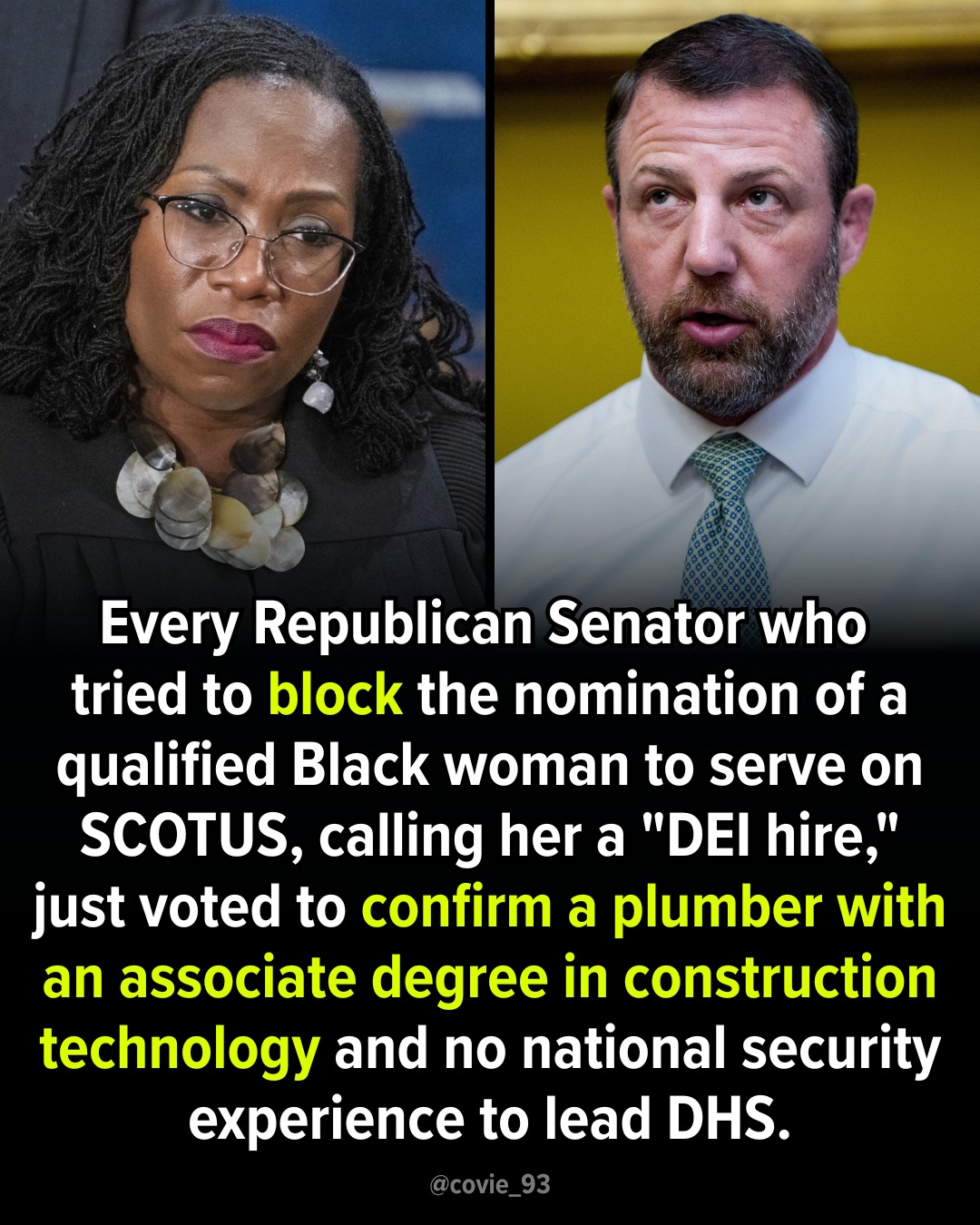
This meme acts as a biting critique of political hypocrisy, labeling it "anti-reactionary" by challenging the dominant narrative. It highlights the absurdity of opposing the appointment of Black women to high court positions while immediately appointing insecure individuals like plumbers to lead critical agencies like DHS. The accompanying text mocks this inconsistency and labels the behavior as absurd.
detailed-analysis (gemma3_27b-it-q8_0)
Okay, let's dissect this meme from an “Anti-Reactionary” perspective, using the requested analytical lenses where applicable. The overarching aim here is to understand how the meme functions as a critique of a specific political stance and its underlying ideology, particularly as it relates to power, representation, and the construction of narratives.
Understanding the "Anti-Reactionary" Framework
Before we start, let’s clarify “Anti-Reactionary”. This framework (often present in online progressive/leftist spaces) views reactionary politics as an attempt to restore a perceived “golden age” often based on hierarchical social structures, exclusionary identities, and a resistance to progressive social change. It opposes movements that seek to undo hard-won gains in areas like civil rights, gender equality, and social justice. Anti-reactionary content seeks to expose and dismantle these attempts at rollback.
---
1. Visual Description
The meme presents a stark diptych. On the left is a headshot of Ketanji Brown Jackson, the first Black woman nominated to the Supreme Court. The image conveys seriousness and competence. On the right is a headshot of Alejandro Mayorkas, the Secretary of Homeland Security. The overall effect of the image contrasts the apparent qualifications and perceived legitimacy of Jackson with the seemingly incongruous credentials of Mayorkas for his position. The text is centrally positioned and creates a direct parallel between the two events, accusing Republican senators of hypocrisy.
2. Foucauldian Genealogical Discourse Analysis
From a Foucauldian perspective, this meme is an intervention within a discourse – specifically, the discourse surrounding meritocracy, qualifications, and legitimate authority. The meme points out a contradiction in the deployment of power/knowledge.
- Genealogy: The "DEI hire" accusation against Jackson invokes a historical construction of merit—a notion deeply intertwined with racial and gender biases. The concept of meritocracy itself is not neutral; it has been historically used to exclude marginalized groups, framing their achievements as anything but earned. The meme traces this lineage of power, revealing how a supposedly objective standard (merit) is actually a tool for maintaining existing hierarchies.
- Discursive Formation: The meme challenges the Republican narrative of what constitutes “qualified” leadership. They constructed Jackson’s qualifications as illegitimate, tying them to "DEI" (Diversity, Equity, and Inclusion) as a negative. This framing devalues her experience and expertise. The meme, in turn, constructs Mayorkas's appointment as evidence of a double standard, revealing the instability of the "merit" discourse when applied consistently. It highlights how power operates through the very definitions of what it deems “competent” or “qualified.”
3. Critical Theory
The meme’s core argument aligns with central tenets of Critical Theory, especially concerning ideology and power.
- Ideology Critique: The meme deconstructs the ideology of “meritocracy.” It exposes how seemingly neutral principles are embedded with power relations and serve to legitimize existing inequalities. The accusation of a "DEI hire" isn’t about genuine concern for qualifications; it’s about resisting the inclusion of a Black woman in a traditionally white, male space.
- Hegemony: The meme challenges the hegemonic notion that the Republican Party genuinely prioritizes competence and experience. By highlighting the contradiction in their actions, it seeks to erode their authority and reveal their motivations—which are framed as rooted in preserving a certain power structure.
- Instrumental Reason: The meme implicitly critiques the reduction of individuals to their qualifications or credentials. Focusing solely on those elements ignores the broader context of systemic bias and historical disadvantage.
4. Marxist Conflict Theory
While not explicit, a Marxist reading can be applied.
- Class and Power: The meme can be viewed as an expression of conflict between differing interests and ideologies. The implicit argument is that the Republican party's actions serve the interests of a dominant group (those who benefit from existing power structures) at the expense of marginalized groups (like Black women).
- False Consciousness: The meme suggests that those who accept the Republican narrative about Jackson’s supposed lack of qualifications are operating under “false consciousness”—they are unaware of the underlying power dynamics at play.
- The State: The appointment to SCOTUS and DHS are both linked to the state, and represent crucial power structures.
5. Queer Feminist Intersectional Analysis
This is a strongly relevant lens for interpreting the meme.
- Intersectionality: The meme directly centers the experience of a Black woman and how she is simultaneously subjected to both racial and gender discrimination. The "DEI hire" accusation isn’t simply about race or gender separately; it's about the intersection of those identities and how they are used to delegitimize her claim to authority.
- Patriarchy and White Supremacy: The meme implicates both patriarchy and white supremacy as operating forces in this situation. The resistance to a Black woman on the Supreme Court is seen as a manifestation of patriarchal structures that historically exclude women from positions of power, combined with white supremacist ideologies that devalue Black achievement.
- Deconstruction of Norms: The meme challenges the norms surrounding what constitutes a "qualified" leader. It suggests that these norms have been historically defined by those in power and are therefore inherently biased.
6. Postmodernism
While the meme's form isn’t explicitly postmodern, the underlying logic has elements of it.
- Deconstruction of Grand Narratives: The meme questions the “grand narrative” of meritocracy—the idea that success is solely based on individual effort and ability. It exposes the power dynamics that shape this narrative and undermine its claims to objectivity.
- Relativism (in context): It subtly suggests that “qualifications” are not absolute but are constructed and contested within specific power relations. What is considered “qualified” varies depending on who is doing the evaluating and what their vested interests are.
In summary, from the “Anti-Reactionary” standpoint, this meme functions as a pointed critique of hypocrisy, an exposure of power dynamics, and a challenge to dominant ideologies. It uses a simple, direct format to dismantle narratives that seek to maintain existing inequalities and resist progressive social change. It's a digital act of resistance against the perceived rollback of hard-won progress.
simple-description (llama3.2-vision_11b)
The meme is a commentary on the hypocrisy of some Republicans' actions. It references the recent confirmation of Ket