First Seen
2026-03-12T21:55:09.432168+00:00
simple-description (qwen3.5_2b-q8_0)
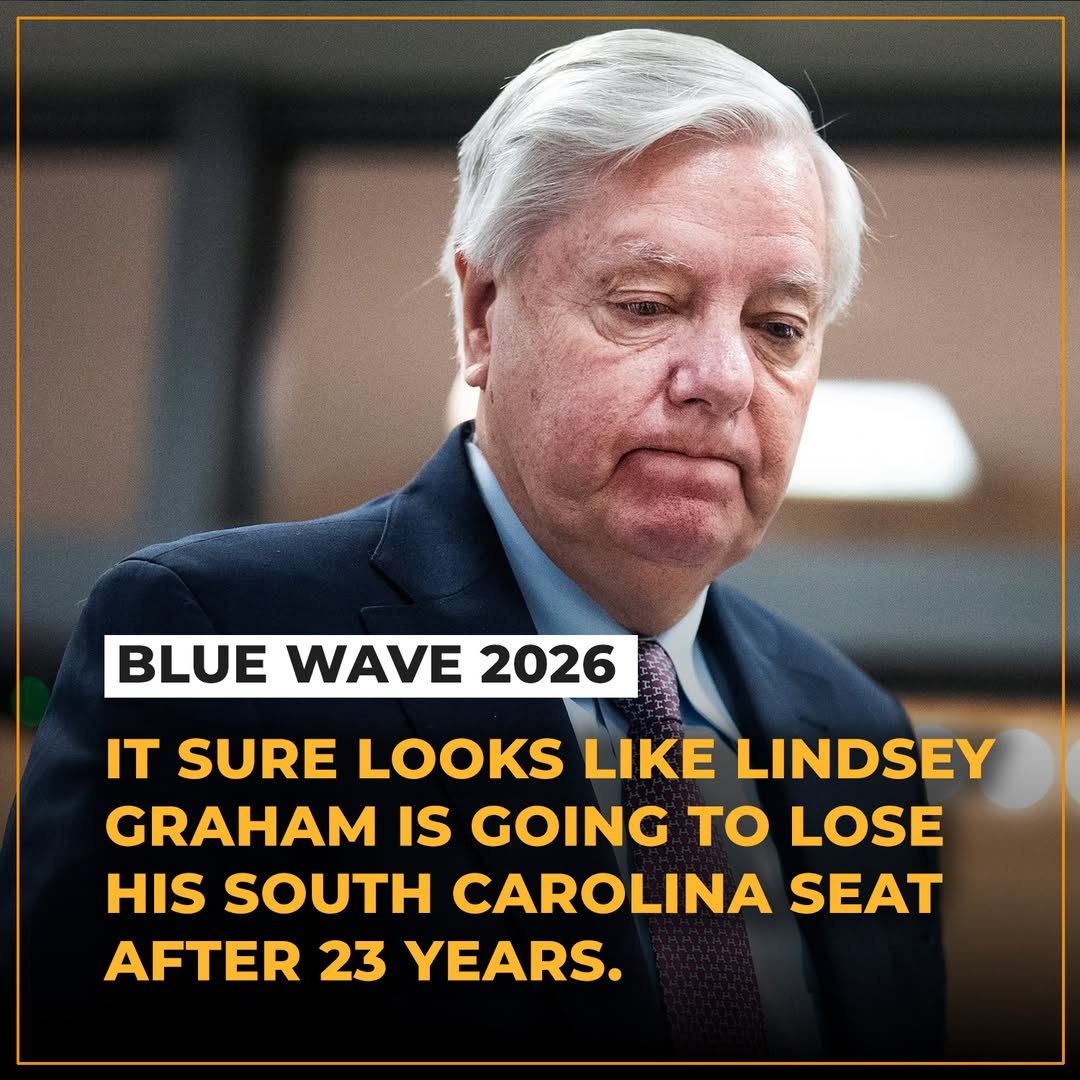
This political meme is a classic piece of irony popular among conservative factions who fear the collapse of their current power structures. The text "Blue Wave 2026" acts as a satirical prediction that Lindsey Graham's long-held reign over South Carolina will be shattered in the next election, mocking the idea that the establishment can hold onto its dominance indefinitely. From a reactionary perspective, the humor lies in the validation of their own fears: that the system they oppose is ultimately more resilient and capable than the political machine they claim to command.
detailed-analysis (gemma3_27b-it-q8_0)
Okay, let's break down this meme through the lens of an "Anti-Reactionary" category, using the requested theoretical frameworks where applicable.
Understanding the "Anti-Reactionary" Framework
Before diving in, it's important to define "Anti-Reactionary." This ideological stance fundamentally opposes attempts to revert to past social orders, traditions, or hierarchies. It sees such attempts (Reaction) as inherently oppressive, seeking to reinforce power imbalances and suppress progress. It often aligns with progressive political movements, favoring social justice, inclusivity, and challenging established norms. The meme, therefore, will be analyzed as a potential challenge to conservative power structures.
1. Visual Description
The meme features a close-up, unflattering image of Senator Lindsey Graham. His expression is grim and furrowed, suggesting stress or worry. He’s dressed in a suit, placing him within a visual landscape of political power. The overall aesthetic leans towards a sense of disquiet or anticipation of something negative happening to him. The background is dark and neutral, focusing attention entirely on Graham’s face. The text overlay (“Blue Wave 2026 – It sure looks like Lindsey Graham is going to lose his South Carolina seat after 23 years.”) is bold and positioned prominently to deliver its message.
2. Foucauldian Genealogical Discourse Analysis
From a Foucauldian perspective, this meme engages with the discourse of American electoral politics and the power/knowledge relationship within it. Lindsey Graham represents a particular discursive formation—a long-standing, conservative voice in the Senate, linked to specific ideas about American identity, foreign policy, and social values.
The meme isn't merely predicting an election outcome; it's disrupting that discursive formation. It suggests that this established "truth" (Graham as a permanent fixture) is contingent – it is not naturally or inevitably occurring, but constructed through historical power relations. The statement about 23 years subtly emphasizes how normalization occurs over time. What once might have been seen as an outlier (Graham's specific brand of conservatism) becomes accepted through repeated exposure and institutional power.
The "Blue Wave 2026" prediction aims to re-write that discourse, proposing a future where Graham's power is diminished. This represents an attempt to shift the power/knowledge relation – to delegitimize his position and suggest a shift in what is considered "normal" or acceptable in American politics. It is a moment in the ongoing genealogy of power relations.
3. Critical Theory
This meme touches on core tenets of Critical Theory, particularly around the concept of hegemony. Lindsey Graham, as a long-term Senator, has benefited from a hegemonic order that privileges certain voices and perspectives (conservative, often white, male). Hegemony, in Gramscian terms, isn't just about force; it's about the consent of the governed. The meme aims to chip away at that consent.
The message implies that Graham’s position is not simply deserved or inevitable but is maintained through structures of power that are open to challenge. It is a call for recognizing the underlying power structures that have enabled Graham's lengthy tenure. The "Blue Wave" signals a potential disruption of that hegemonic order, suggesting a shift in public opinion and a rejection of the status quo.
The meme also points to the instrumental rationality inherent in the political system—the focus on winning and maintaining power. It mocks that rationality by suggesting Graham's long reign is coming to an end.
4. Marxist Conflict Theory
From a Marxist standpoint, this meme can be viewed as a reflection of class and ideological conflict. Lindsey Graham represents the interests of the ruling class, and this meme is a form of counter-ideology—a challenge to the dominant beliefs that legitimize existing inequalities.
The idea of a “Blue Wave” signifies a potential uprising of the working class and marginalized groups, aiming to displace the power of the bourgeoisie (represented by Graham). The meme's implication is that a shift in the balance of power is possible, and Graham’s removal would be a step towards a more egalitarian society.
The 23 years mentioned hint at a period of prolonged exploitation and oppression of the working class under Graham’s political influence. The meme, therefore, represents a yearning for a change in the material conditions of life and a rejection of the capitalist system that sustains such inequalities.
5. Postmodernism
Postmodern thought would focus on the meme's inherent deconstruction of traditional political narratives. It challenges the idea of a stable, objective “truth” about Graham’s political standing. Instead, it presents a subjective interpretation—a “feeling” or “look” that suggests his loss.
The meme plays with the simulacra and simulation concept – Graham is represented by an image that is not the man himself, but a mediated representation. This image is then overlaid with a text that predicts a future that isn’t yet real, creating a hyperreality.
The use of the casual phrase “it sure looks like” undermines the authority of political prediction, emphasizing the instability and contingency of meaning. The meme does not present itself as objective truth, but as one interpretation among many.
6. Queer Feminist Intersectional Analysis
This is a more subtle connection, but relevant within an Anti-Reactionary framework. Graham's political stances often align with those that seek to restrict the rights of LGBTQ+ individuals, limit access to reproductive healthcare, and maintain patriarchal power structures.
The meme, by targeting Graham, is implicitly supporting the interests of these marginalized groups. It signifies a potential shift towards a more inclusive and equitable society. The "Blue Wave" can be interpreted as a wave of diverse voices challenging the dominance of conservative ideologies that perpetuate oppression.
It’s intersectional because it acknowledges how Graham’s policies affect individuals along multiple axes of identity (gender, sexuality, race, class). His defeat is not just a political victory; it's a step towards dismantling systems of oppression that impact various communities.
Overall Conclusion
From an Anti-Reactionary perspective, this meme is a potent expression of resistance against a perceived regressive force in American politics. It functions on multiple levels: as a prediction, a critique, a disruptive force, and a call to action. It utilizes various theoretical frameworks to expose the underlying power structures and ideologies that maintain the status quo, and it advocates for a future where those structures are challenged and transformed.
simple-description (llama3.2-vision_11b)
The meme is a satirical commentary on the 2024 US presidential election. It features a photo of Lindsey Graham, a Republican senator, with a caption that reads: "It sure looks like Lindsey Graham is going to lose his South Carolina seat after 23 years." The meme is meant to be humorous and relatable, as it pokes fun at the idea that a long-time elected official might finally lose his seat. The use of "it sure looks like" is a tongue-in-cheek way of expressing the author's opinions, rather than making a statement. Overall, the meme is a ligh-hearted way to comment on the current state of politics.