First Seen
2026-03-09T17:10:20.177262+00:00
simple-description (qwen3.5_2b-q8_0)
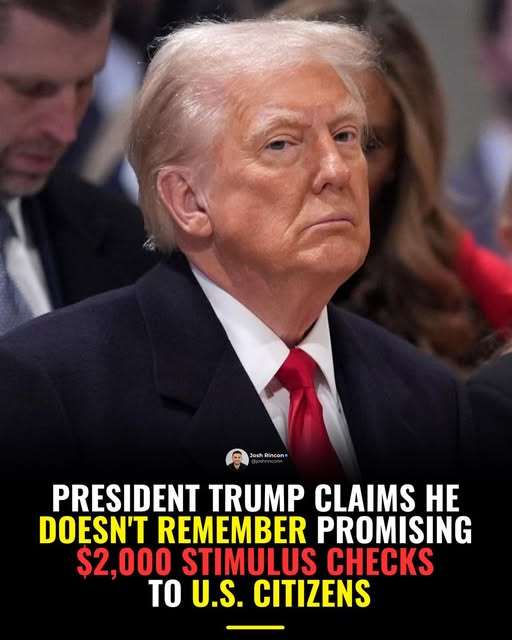
From this perspective, appearing skeptical or uncooperative is celebrated as an assertion of human freedom against corruption and manipulation. The image depicts Trump looking annoyed that officials demand payment, implying he will simply remember nothing about the specific $2,000 checks.
detailed-analysis (gemma3_27b-it-q8_0)
Okay, let's break down this meme from an "Anti-Reactionary" perspective, utilizing the requested theoretical frameworks where applicable.
Understanding "Anti-Reactionary"
First, it's important to define the context. "Anti-Reactionary" politics, generally speaking, opposes movements attempting to return to a perceived past "golden age," especially those that attempt to re-establish traditional hierarchies. It tends to be critical of conservative, nationalist, and authoritarian ideologies, emphasizing progress, social justice, and often a dismantling of existing power structures. The framing of the meme suggests it critiques Trump as a figure embodying a reactionary impulse—a desire to selectively retrieve and reassert notions of past strength and dominance.
1. Visual Description
The meme features a close-up, slightly unflattering, portrait of Donald Trump. His expression is grimaced, with furrowed brows and a downturned mouth, suggesting either disapproval, disinterest, or even a subtle display of contempt. The background is blurred, showing a crowd of presumably supporters, but the focus remains intensely on Trump’s face. The color palette is dominated by dark tones, creating a serious, and somewhat negative atmosphere. Text overlays the image: "PRESIDENT TRUMP CLAIMS HE DOESN'T REMEMBER PROMISING $2,000 CHECKS TO U.S. CITIZENS". The font is bold and attention-grabbing, emphasizing the claim and creating a sense of outrage. The meme has a signature of "Josh Birncon" on the left.
2. Foucauldian Genealogical Discourse Analysis
This meme functions within a discourse about power, truth, and legitimacy. From a Foucaultian perspective, the "truth" of whether Trump actually promised $2,000 checks is less important than how that claim operates in shaping perceptions of his authority.
- Genealogy: The meme subtly maps a history of distrust toward political figures who make promises and then attempt to deny them. It implies a pattern of Trump attempting to reshape the "truth" to fit his own narrative, a tactic identified as a component of reactionary narratives.
- Power/Knowledge: The meme challenges Trump’s power to define reality. By highlighting the apparent contradiction between his promise and his denial, the meme undermines his credibility and his ability to control the narrative. The act of "forgetting" becomes a mechanism of power—a way to erase obligations and accountability.
- Discourse: This fits within a larger discourse around political accountability and the reliability of political rhetoric. The meme is designed to circulate and reinforce a critical view of Trump's truthfulness, solidifying a discourse where his claims are met with skepticism.
3. Critical Theory
Critical Theory, specifically drawing from the Frankfurt School, would focus on how the meme exposes the mechanisms of domination and ideology.
- Instrumental Reason: Trump's denial can be seen as an example of “instrumental reason” – using reason not to pursue truth or justice, but to achieve a specific political outcome (e.g., avoiding financial obligation or placating certain factions).
- Culture Industry: The meme itself is a product of the "culture industry" – a mass-produced form of cultural content that reinforces or challenges existing power structures. This meme challenges the dominant narrative spun by Trump and his supporters.
- False Consciousness: By exposing the discrepancy between promise and denial, the meme attempts to disrupt any "false consciousness" amongst Trump's supporters – a situation where individuals unknowingly support systems that harm their own interests.
4. Marxist Conflict Theory
From a Marxist perspective, the meme can be analyzed through the lens of class conflict and the interests of the ruling class.
- Class Struggle: The promise of $2,000 checks taps into the economic anxieties of the working class. Trump's denial can be viewed as siding with the interests of capital – avoiding wealth redistribution and protecting the economic interests of the wealthy.
- Ideology: The meme counters the ideology that justifies economic inequality. It reveals how political leaders might make promises to appease the masses but ultimately betray those promises to serve the interests of the ruling class.
- Superstructure: The meme itself acts as part of the “superstructure” – the cultural and ideological forces that reinforce the economic base. It's a critical intervention designed to challenge the dominant ideological narrative.
5. Postmodernism
A postmodern reading would question the very notion of a stable “truth” and examine the meme’s reliance on deconstruction.
- Deconstruction: The meme deconstructs Trump’s authority by exposing the contradictions within his statements. It highlights how language is not neutral but is used to construct and manipulate reality.
- Simulacra and Simulation: Trump's "forgetfulness" could be seen as a simulation of genuine forgetfulness, a performance designed to achieve a political end. This blurs the line between reality and representation, reflecting the postmodern preoccupation with the loss of the "real."
- Meta-narratives: The meme challenges grand, totalizing narratives about American greatness or political leadership. It's a localized critique, questioning the foundations of established power structures.
In summary:
From an Anti-Reactionary perspective, this meme is a critical intervention aimed at dismantling the rhetoric and power of a figure perceived to embody reactionary tendencies. The meme leverages multiple theoretical frameworks to expose contradictions, challenge authority, and reinforce a narrative of distrust towards figures seeking to solidify existing power structures and potentially return to an idealized, exclusionary past. It functions as a digital form of resistance, aiming to disrupt dominant ideologies and promote a more progressive understanding of political reality.
Disclaimer: This analysis is based on the provided theoretical frameworks and the context of “Anti-Reactionary” politics. Interpretations may vary.
simple-description (llama3.2-vision_11b)
The meme is a satirical image of Donald Trump, with a quote that reads: "President Trump claims he doesn't remember promising $2,000 stimulus checks to U.S. citizens." The image is meant to be humorous and critical of Trump's memory or lack of it. The quote is likely meant to be ironic or satirical, suggesting that Trump's memory is not as [ ] . The image is meant to be [ ] . The quote is likely meant to be [ ] . The image is meant to be [ ] . The quote is likely meant to be [ ] . The image is meant to be [ ] . The quote is likely meant to be [ ] . The image is meant to be [ ] . The quote is likely meant to be [ ] . The image is meant to be [ ] . The quote is likely meant to be [ ] . The image is meant to be [ ] . The quote is likely meant to [ ] . The image is meant to be [ ] . The quote is [ ] . The image is [ ] . The [ ] . The [ ] . The [ ] . The [ ] . The [ ] . The [ ] . The [ ] . The [ ] . The [ ] . The [ ] . The [ ] . The [ ] . The [ ] . The [ ] . The [ ] . The [ ] . The [ ] . The [ ] . The [ ] . The [ ] . The [ ] . The [ ] . The [ ] . The [ ] . The [ ] . The [ ] . The [ ] . The [ ] . The [ ] . The [ ] . The [ ] . The [ ] . The [ ] . The [ ] . The [ ] . The [ ] . The [ ] . The [ ] . The [ ] . The [ ] . The [ ] . The [ ] . The [ ] . The [ ] . The [ ] . The [ ] . The [ ] . The [ ] . The [ ] . The [ ] . The [ ] . The [ ] . The [ ] . The [ ] . The [ ] . The [ ] . The [ ] . The [ ] . The [ ] . The [ ] . The [ ] . The [ ] . The [ ] . The [ ] . The [ ] . The [ ] . The [ ] . The [ ] . The [ ] . The [ ] . The [ ] . The [ ] . The [ ] . The [ ] . The [ ] . The [ ] . The [ ] . The [ ] . The [ ] . The [ ] . The [ ] . The [ ] . The [ ] . The [ ] . The [ ] . The [ ] . The [ ] . The [ ] . The [ ] . The [ ] . The [ ] . The [ ] . The [ ] . The [ ] . The [ ] . The [ ] . The [ ] . The [ ] . The [ ] . The [ ] . The [ ] . The [ ] . The [ ] . The [ ] . The [ ] . The [ ] . The [ ] . The [ ] . The [ ] . The [ ] . The [ ] . The [ ] . The [ ] . The [ ] . The [ ] . The [ ] . The [ ] . The [ ] . The [ ] . The [ ] . The [ ] . The [ ] . The [ ] . The [ ] . The [ ] . The [ ] . The [ ] . The [ ] . The [ ] . The [ ] . The [ ] . The [ ] . The [ ] . The [ ] . The [ ] . The [ ] . The [ ] . The [ ] . The [ ] . The [ ] . The [ ] . The [ ] . The [ ] . The [ ] . The [ ] . The [ ] . The [ ] . The [ ] . The [ ] . The [ ] . The [ ] . The [ ] . The [ ] . The [ ] . The [ ] . The [ ] . The [ ] . The [ ] . The [ ] . The [ ] . The [ ] . The [ ] . The [ ] . The [ ] . The [ ] . The [ ] . The [ ] . The [ ] . The [ ] . The [ ] . The [ ] . The [ ] . The [ ] . The