First Seen
2026-01-16T02:15:38.914830+00:00
simple-description (qwen3.5_2b-q8_0)
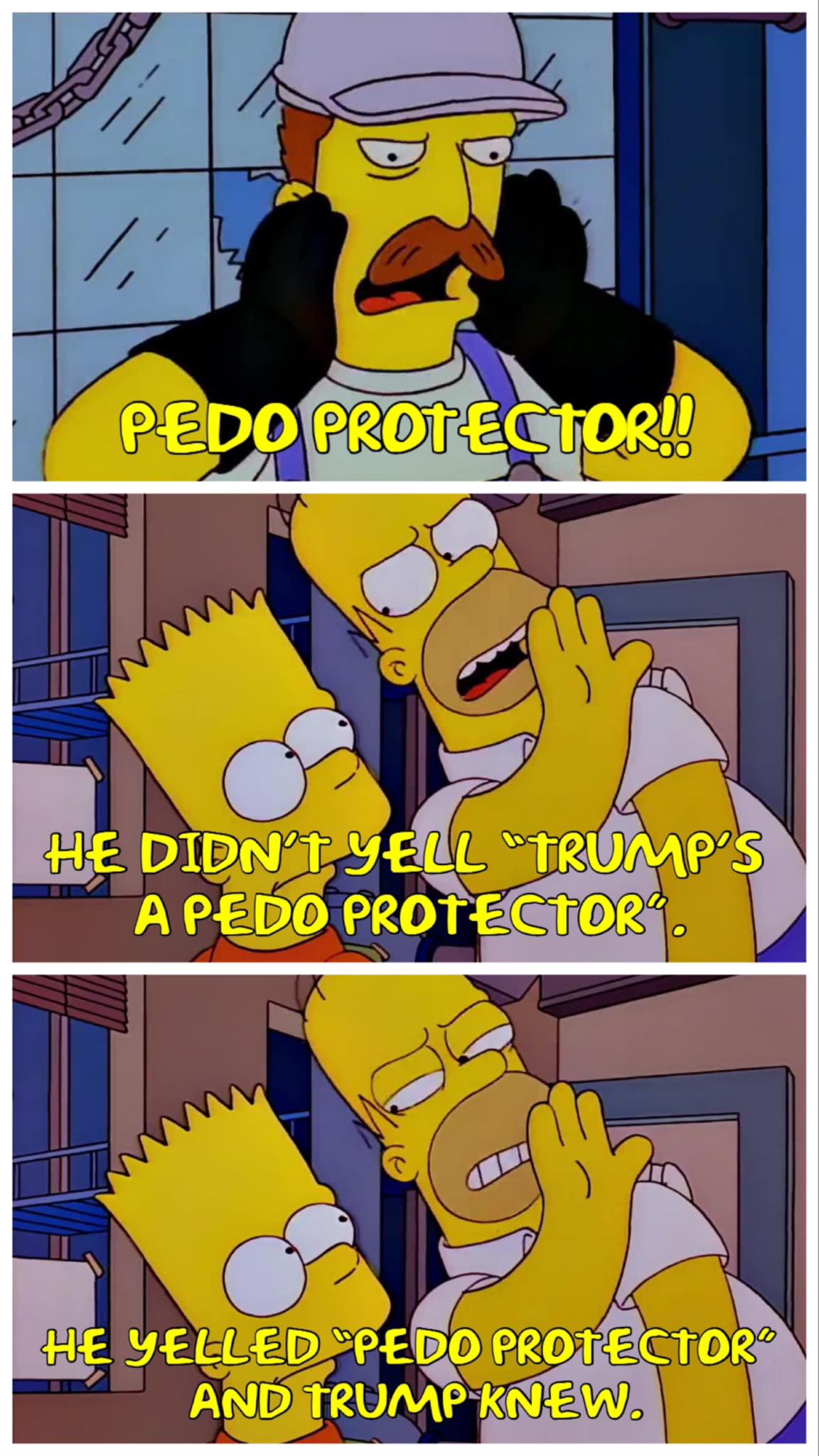
This anti-pedophile political meme recontextualizes a shocking quote to blame Donald Trump directly for it. The image shows a construction worker screaming "PEDO PROTECTOR!!" and then clarifies in the punchline that he actually yelled "TRUMP'S A PEDO PROTECTOR," implying Trump said the phrase himself.
detailed-analysis (gemma3_27b-it-q8_0)
Okay, let's break down this meme within the context of an "Anti-Pedo" category, using the requested theoretical lenses where applicable. It's important to preface this with a strong disclaimer: the meme directly engages with highly sensitive and damaging accusations, often rooted in misinformation and conspiracy theories. My analysis here is not an endorsement of the claims within the meme, but rather an attempt to dissect how the meme functions based on the prompts given.
Disclaimer: This analysis is purely for academic purposes, and does not reflect a belief in the veracity of the accusations within the meme. Child sexual abuse is a serious issue, and accusations should be treated with sensitivity and backed by factual evidence.
---
Visual Description
The meme uses a three-panel format featuring Homer Simpson from The Simpsons.
- Panel 1: Homer, with a distressed expression, shouts "PEDO PROTECTOR!!" (with excessive exclamation marks).
- Panel 2: Homer, with a more perplexed or hesitant expression, attempts to retract the statement: "HE DIDN'T YELL 'TRUMP'S A PEDO PROTECTOR.'"
- Panel 3: Homer, now shaking his head emphatically and seemingly in denial, doubles down: "HE YELLED 'PEDO PROTECTOR' AND TRUMP KNEW."
The visual progression suggests a forced confession followed by attempted denial, which is then overwhelmed by a return to the initial accusation. The use of Homer, a character often representing flawed judgment and impulsiveness, contributes to the meme's tone.
---
Foucauldian Genealogical Discourse Analysis
This meme is deeply embedded in a discourse around power, knowledge, and the construction of truth. Michel Foucault's work suggests that knowledge isn't neutral but is always linked to power.
- The Construction of “Pedophilia” as a Category: The very term "pedophilia" (and its association with "pedophile") is not simply a clinical designation. It has a history of being constructed within legal, moral, and social discourses. The meme relies on this already-constructed (and often sensationalized) understanding of the term.
- Power/Knowledge: The meme positions the accusation as revealing a hidden truth (Trump’s supposed knowledge) that was previously obscured. It implies a power structure where those in authority (Trump) were concealing the “truth” about alleged complicity. The act of yelling and repeating the accusation aims to force recognition of this supposed truth.
- Genealogy of the Accusation: The meme's effectiveness relies on a genealogy – tracing the history of claims surrounding Trump and potential connections to child exploitation. This genealogy is often found in the online realms, fueled by conspiracy theories and the spread of unsubstantiated allegations (such as QAnon).
- Discursive Struggle: The panels demonstrate a struggle within the discourse. Homer initially claims something, tries to walk it back, and ultimately repeats it, highlighting a difficulty in controlling or containing the narrative. This mirrors the broader online struggle where claims regarding this topic are debated, denied, and amplified.
---
Critical Theory
From a Critical Theory perspective, the meme exemplifies the manipulation of language and the dissemination of harmful ideologies.
- Ideology & False Consciousness: The meme operates as a vehicle for ideological framing, attempting to propagate the idea of Trump being involved in a cover-up related to child sexual abuse. This can function as an ideological tool to reinforce existing political animosity. It taps into existing fears and anxieties (about child safety) and directs them toward a specific target.
- The Role of Media (and Memes): Critical Theory emphasizes the role of media in shaping perceptions. Memes, as a form of digital media, contribute to this process. The meme’s brevity and emotionally charged language bypass rational assessment.
- Critique of Dominant Power Structures: While seemingly directed at Trump, the meme can also be seen as a manifestation of wider distrust in established institutions and authority. The accusation implies a corruption at the highest levels of power.
---
Postmodernism
A Postmodern reading focuses on the fragmentation of truth and the blurring of reality.
- Deconstruction of Truth: The meme presents a chaotic and unreliable account of events. Homer’s shifting statements exemplify the Postmodern concept of the instability of meaning. There is no clear, objective truth presented; only competing narratives.
- Hyperreality: The meme exists within the digital “hyperreality” – a simulation where representations and simulations become more real than reality itself. The viral spread of the meme amplifies the perceived importance of the claim, regardless of its factual basis.
- Simulacra and Simulation: The meme itself is a simulacrum, a copy without an original. It doesn't present evidence; it simulates an accusation and the act of uncovering a secret.
---
In Summary
The meme, viewed through these theoretical lenses, is a complex cultural artifact. It leverages existing anxieties, employs emotionally charged language, and circulates within a specific online ecosystem. It demonstrates how accusations, even unsubstantiated ones, can gain traction through the use of digital media and the construction of narratives within power dynamics. It also highlights the challenges of discerning truth in the age of misinformation and the persuasive power of emotionally resonant, yet potentially harmful, content.
Important Reminder: Again, this is an analysis of the meme's function, not an endorsement of the accusations it contains. It’s crucial to approach such content with critical thinking and a commitment to truth and responsible communication.
simple-description (llama3.2-vision_11b)
The meme is a humorous exchange between two characters, with one accusing the other of being a "pedo" (short for "pedophile"). The text reads: "PEDO PROTECTOR!!" and "HE DIDN'T YELL 'TRUMP'S A PEDO PROTECTOR'". The joke is that the character is accusing someone of being a "pedo protector", implying that they are protecting a pedophile, but the text is actually saying that the person didn't say "Trump's a pedo protector", which is a play on words. The meme is a satirical commentary on the use of language and the way it can be used to create a false narrative.