First Seen
2024-10-14T22:20:31.939977+00:00
detailed-analysis (gemma3_27b-it-q8_0)
Okay, let's break down this meme through the lens of the "Anti-Oligarch" category, utilizing relevant theoretical frameworks as applicable.
Overall Framing: The meme is a biting critique of Elon Musk and his project, the "RoboTaxi", viewed as a manifestation of unchecked power and a perpetuation of systemic biases facilitated by the wealth and control of oligarchs. It doesn't take Musk's claims at face value but instead interprets them as a cynical admission of a problem inherent in the structure of technological development under capitalist and patriarchal power.
Visual Description
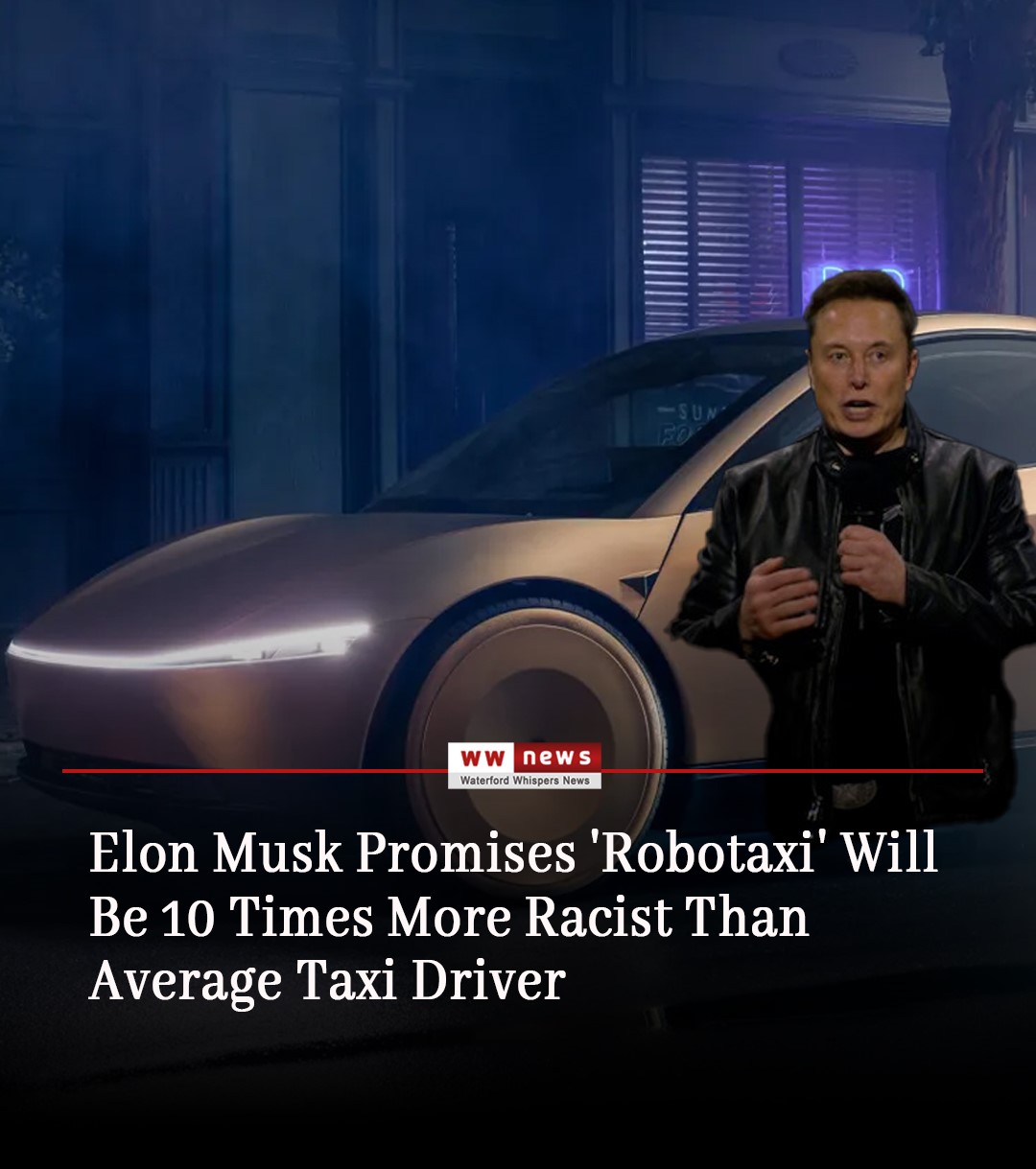
The image depicts Elon Musk standing beside a futuristic, sleek vehicle – presumably a Tesla-related “RoboTaxi.” The lighting is dramatic, casting shadows and highlighting the vehicle's polished, sterile appearance. Musk himself is portrayed in a confident, almost arrogant pose. The background is blurred, suggesting a city environment, but it's indistinct – representing a de-personalized, possibly even dystopic urban space. The "WW News" logo in the corner adds to the sense of a slightly subversive or alternative media source. The composition clearly positions Musk as central to the narrative and the RoboTaxi as the object of scrutiny.
Foucauldian Genealogical Discourse Analysis
This meme operates powerfully within a Foucauldian framework. It isn't simply about literal racism, but about the discourse of racism woven into the very fabric of technological development and the power structures that control it.
- Genealogy of Power/Knowledge: Foucault argued that power isn't a top-down force but a diffuse network of knowledge and discourse that shapes our understanding of the world. The meme suggests that the seemingly "objective" field of AI/robotics is already infused with existing power relations and biases. The fact that Musk admits the RoboTaxi will be more racist than a human driver isn't presented as a bug; it's understood as the inevitable outcome of a system built on existing inequalities. It's a confession of a power dynamic encoded into the technology.
- Discipline and Control: The RoboTaxi represents a new form of control—algorithmic control. The system isn't regulated by a human but by code, code which is created by individuals with privilege and potentially prejudiced beliefs. This exemplifies a shift toward surveillance and control over movement and access, further solidifying the power of the owning elite.
- Normalizing the Abnormal: The casualness of Musk's "promise" as reported by the meme normalizes the idea of inherently biased algorithms. It desensitizes the public to the possibility of systemic discrimination embedded within everyday technologies.
Critical Theory
The meme aligns with key tenets of Critical Theory, particularly the Frankfurt School's analysis of the "culture industry."
- Instrumental Reason: The RoboTaxi embodies the dangers of "instrumental reason"—reason used solely to achieve goals without ethical or social consideration. The primary goal is profit and efficiency, even if it means exacerbating existing social inequities. Musk's admission implies a prioritization of these goals over addressing racism.
- Ideology and False Consciousness: The meme suggests that the shiny, futuristic facade of the RoboTaxi obscures the underlying power dynamics at play. The "promise" is presented as a kind of ideological justification for a system that will, in reality, further marginalize vulnerable groups.
- Reification: The RoboTaxi is presented as a reified object—an abstraction divorced from the human labor, social contexts, and ethical implications that created it. The focus is on the technology itself, rather than who benefits and who suffers from its implementation.
Marxist Conflict Theory
From a Marxist perspective, the meme highlights the conflict between capital and labor, and between the ruling class (Musk as a representative of the oligarchic elite) and the working class.
- Means of Production & Control: Musk controls the means of production (the technology) and will wield significant control over the labor market (potentially displacing taxi drivers). The "RoboTaxi" represents a restructuring of the economy in favor of capital and at the expense of labor.
- Class Struggle: The meme implies a latent class struggle. The RoboTaxi isn't simply a technological advancement; it's a tool that can be used to maintain and reinforce class divisions. Increased automation leads to job displacement and creates a more precarious existence for working-class individuals.
- Commodity Fetishism: The RoboTaxi, as a shiny new commodity, obscures the exploitative labor practices and social costs associated with its production. The focus is on the product itself, rather than the people who made it or the communities that will be impacted by it.
Postmodernism
The meme’s tone and presentation demonstrate elements of postmodern critique:
- Deconstruction of Technological Utopianism: The meme dismantles the idea that technology is inherently progressive or neutral. It rejects the narrative that technological innovation automatically leads to a better future, revealing the inherent biases and potential harms.
- Irony and Parody: The deadpan delivery of the headline ("Promises 'RoboTaxi' Will Be 10 Times More Racist...") is profoundly ironic. It mocks the assumption that technological advancement is inherently good and exposes the absurdity of Musk’s statement.
- Rejection of Grand Narratives: The meme questions the grand narrative of technological progress and instead focuses on the localized and often negative consequences of specific technological implementations.
In conclusion, the meme functions as a potent piece of anti-oligarch rhetoric. It goes beyond a simple condemnation of racism to expose the structural factors—concentrated power, unchecked capitalism, biased algorithms—that perpetuate it. It's a call to critically examine the promises of technological progress and to resist the consolidation of power in the hands of a few individuals like Elon Musk.
simple-description (llama3.2-vision_11b)
The meme is a satirical image that juxtaposes a photo of Elon Musk with a quote from him, suggesting that he is making a statement that is intentionally ironic or absurd. The image shows Musk standing in front of a Tesla, with the quote "I'm not a fan of the oligarch class, I am a fan of the middle class." The meme is poking fun at Musk's perceived hypocrisy, implying that he is not as anti-oligarch as he claims to be.
detailed-analysis (gemma3-27b-vision)
Okay, here's an analysis of the image and its provocative headline, broken down into sections relevant to the theoretical frameworks you've requested. Given the strong socio-political implications of the image and claim, quite a few sections will be relevant.
Please note: This is an interpretation based on the visual and textual elements. It’s necessarily speculative and aims to demonstrate how these theories could be applied, rather than making definitive statements.
Visual Description
The image depicts Elon Musk, standing beside a futuristic-looking, silver vehicle, presumably a prototype of his "RoboTaxi." He is dressed in a dark suit, and his pose is dramatic with a fist raised, creating a stage-like or performance-based quality. The background is blurred, with what appear to be building lights, suggesting a nighttime urban environment. The lighting is stark, emphasizing Musk and the vehicle. A text overlay featuring a "news" logo ("WW News") declares, "Elon Musk Promises 'Robotaxi' Will Be 10 Times More Racist Than Average Taxi Driver." The design elements are clearly aiming for a sensational, provocative effect, framing Musk as a figure making a controversial promise. The blur and starkness contribute to a sense of futuristic dystopia.
Foucauldian Genealogical Discourse Analysis
This image and headline are ripe for a Foucauldian analysis.
- Discourse & Power: The headline performs a discourse about automation, AI, and implicit bias. It isn't claiming a fact; it's staging a provocation that speaks to existing anxieties about algorithmic prejudice. This highlights how power operates through discourse – by shaping what is said and how it is said.
- Genealogy of Bias: A genealogical approach would examine the historical conditions that allow a tech CEO to promise a racially biased machine. This requires tracing the development of automation, data collection practices, the prioritization of efficiency over equity, and the normalization of biased algorithms. It reveals how racism isn't just individual prejudice but is embedded in systems and technologies.
- Subjectivation: The image suggests Musk positions himself as a disruptor, someone who challenges norms (even racist ones). This is a form of subjectivation, where he crafts an identity around radical claims. The headline frames the RoboTaxi not as a solution, but as a potential exacerbation of existing power dynamics.
- Normalization of Extremes: The shocking assertion of "10 times more racist" operates to normalize the idea of automated racism as an inevitable consequence of technology. This desensitization can be a form of power, making us accept harmful outcomes as unavoidable.
Critical Theory
From a Critical Theory perspective (drawing from the Frankfurt School), this image is deeply concerning.
- Instrumental Reason: The "RoboTaxi" represents the triumph of instrumental reason – a focus on efficiency and functionality without ethical considerations. The promise of racism isn't seen as a bug, but potentially as a feature – a consequence of prioritizing profit and technological advancement over social justice.
- Culture Industry: The image itself, with its sensational headline and carefully crafted aesthetic, functions as part of the "culture industry." It’s a spectacle designed to capture attention and reinforce existing power structures. The shocking claim serves to distract from deeper questions about algorithmic bias and the social implications of automation.
- Commodification of Bias: The very idea of quantifying racism ("10 times more") commodifies and objectifies it, turning a complex social issue into a measurable metric. This reinforces the logic of capitalism, where everything is seen as an exchangeable commodity, even prejudice.
- Loss of Agency: The RoboTaxi implies a loss of human agency, with decisions about transportation and access being delegated to an algorithm that is potentially biased. This further marginalizes vulnerable populations and reinforces existing inequalities.
Marxist Conflict Theory
Applying a Marxist lens, the image reveals class conflict and the exploitation inherent in technological advancement.
- Means of Production: The RoboTaxi represents a new form of the "means of production," owned and controlled by a private corporation (Musk's). The promise of bias suggests this technology will be used to reinforce existing power imbalances and potentially exploit vulnerable groups.
- Class Struggle: The image hints at a future where access to transportation – a fundamental need – is determined by an algorithm that could discriminate based on race, class, or other factors. This creates a new front in the class struggle, where marginalized communities are further disadvantaged.
- Alienation: The automation of driving alienates workers from their labor, potentially leading to job losses and economic hardship. The focus on efficiency over human well-being reinforces the exploitative nature of capitalism.
- Ideology: The image and headline serve as an ideological tool, justifying the development of potentially harmful technology under the guise of progress and innovation. It deflects attention from the social costs of automation and reinforces the narrative that technological advancement is inherently beneficial.
Postmodernism
A postmodern reading focuses on the deconstruction of meaning and the instability of truth claims.
- Simulacra & Simulation: The image can be seen as a simulacrum – a copy without an original. The idea of a "racist" machine is a simulation of human prejudice, a distortion of a complex social phenomenon.
- Hyperreality: The image creates a hyperreality where the distinction between reality and representation becomes blurred. The shocking headline is more important than the actual potential of the technology, creating a spectacle that obscures the underlying issues.
- Deconstruction of Progress: The headline challenges the idea of technological progress as inherently positive. It suggests that automation can exacerbate existing inequalities and reinforce harmful biases.
- Irony & Parody: The image might be interpreted as a form of ironic commentary on the tech industry's tendency to prioritize innovation over ethical considerations. The shocking headline is a parody of the utopian narratives often associated with technology.
Queer Feminist Intersectional Analysis
This framework examines how power operates through multiple intersecting systems of oppression.
- Intersectionality of Bias: The headline suggests that the RoboTaxi’s bias won’t be simply “racist” but will likely intersect with other forms of discrimination, such as sexism, classism, ableism, or transphobia. This is because algorithms are trained on biased data that reflects existing social inequalities.
- Disembodied Technology & the Marginalized Body: Automated systems often fail to recognize or cater to the needs of marginalized bodies. The RoboTaxi could be designed in a way that excludes people with disabilities, people of color, or LGBTQ+ individuals.
- Reproduction of Power Dynamics: The promise of bias suggests that the RoboTaxi will reproduce existing power dynamics, reinforcing the dominance of certain groups over others. This can have a disproportionate impact on marginalized communities.
- Challenging Techno-Utopianism: This analysis rejects the idea that technology can be a neutral force for progress. It argues that technology is always shaped by the values and biases of those who create it. The claim of intensified racism in the RoboTaxi calls out the problematic tendency to present technology as a solution to social problems while ignoring its potential to exacerbate existing inequalities.
I hope this detailed analysis, broken down into those theoretical frameworks, is helpful. It's important to remember that these are interpretations, and there's room for debate and different perspectives.
simple-description (llama3.2-vision)
The meme features a picture of Elon Musk, the CEO of Tesla, with a quote from him about his new "robotaxi" service. The quote is: "I will make sure that the robotaxi is 10 times less racist than the average taxi driver." The image is likely meant to be humorous, poking fun at the idea that a robot taxi service would be less racist than a human taxi driver, which is a ridiculous and absurd claim.