First Seen
2025-09-26T16:16:39+00:00
simple-description (qwen3.5_2b-q8_0)
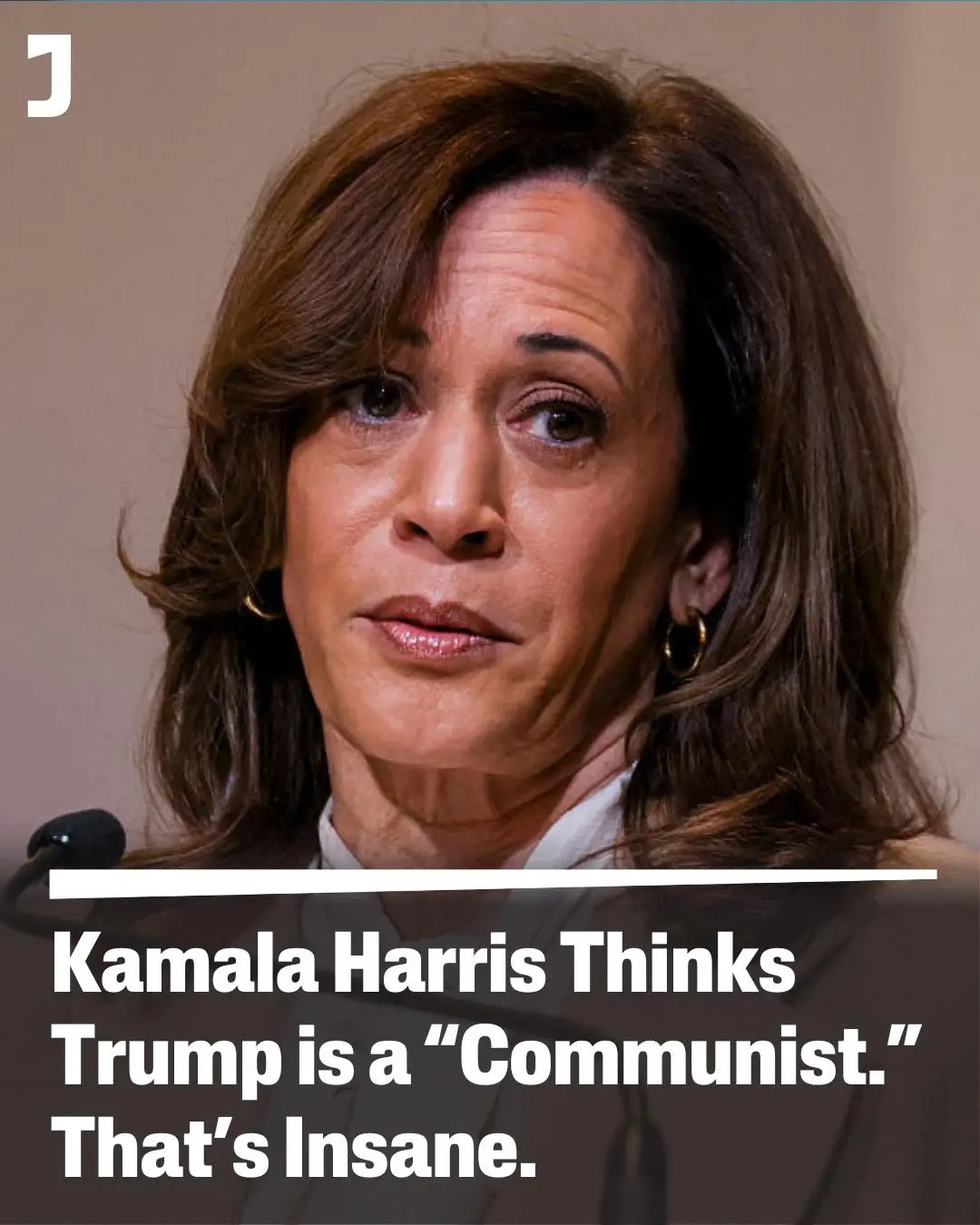
This meme satirizes Kamala Harris's significant drift from her original Democratic position on immigration and the economy, suggesting she has crossed into territory considered extreme by mainstream conservatives. From an Anti-Neoliberal perspective—which typically advocates for free-market capitalism—calling Trump a "Communist" is viewed as an ideological outlier that contradicts traditional economic theory. The text in the image highlights this radical stance with the caption "That's Insane," humorously implying that holding views seen as far-reaching and dangerous to market-based governance is highly controversial.
detailed-analysis (gemma3_27b-it-q8_0)
Here's an analysis of the meme, geared towards an Anti-Neoliberal perspective, broken down into sections as requested. Note that some sections will be more relevant than others, and I'll explain why a particular framework isn’t as strong a fit if needed.
Overall Framing: From an Anti-Neoliberal perspective, this meme functions as critique of the political establishment and the way it mislabels and weaponizes ideological terms. It is a commentary on the perceived absurdity of mainstream political discourse and its inability to grasp the genuine issues driving discontent. It aims to expose the hypocrisy inherent in labeling someone like Trump—a figure demonstrably serving capitalist interests—as a "communist."
Visual Description
The image is a close-up of Kamala Harris with a skeptical or even incredulous facial expression. This isn't a "glamorous" portrait; it feels more like a caught-in-a-moment snapshot. Her gaze is directed slightly off-camera, suggesting she’s responding to something being said, lending weight to the text. The overall aesthetic is fairly simple, contributing to a sense of direct and unvarnished critique.
Foucauldian Genealogical Discourse Analysis
This is a key lens for an Anti-Neoliberal approach. The meme deconstructs the discourse around “communism”. Foucault would be interested in how the term "communist" has been historically constructed and deployed as a power tactic.
- Power/Knowledge: The use of "communist" is less about objective description and more about a tool of power. The establishment utilizes this term to automatically delegitimize an opponent, invoke fear, and reinforce the status quo. The meme highlights the absurdity of this, suggesting the label lacks any grounding in reality when applied to Trump.
- Genealogy: We can trace a history where “communism” was used to justify massive intervention in global politics (Cold War), domestic repression (McCarthyism), and the solidification of capitalist dominance. By ironically applying it to Trump, the meme exposes the hollow core of the term when used to simply stifle dissent.
- Normalization: The meme suggests that the normalization of the word communist for the purpose of denigration is insane, and it exposes how power functions through normalization.
Critical Theory
Critical Theory, specifically the Frankfurt School tradition, is very relevant.
- Ideology Critique: The meme serves as an ideology critique. It's not necessarily arguing for communism itself; instead, it's challenging the dominant ideology that prevents a clear-eyed analysis of power structures. The claim that Trump is a "communist" is a distorted representation designed to obscure the fact that his policies overwhelmingly benefit capital.
- Instrumental Reason: The meme implicitly critiques "instrumental reason," the idea that reason is solely a tool for achieving goals, often without regard for ethics. The political class applies the label "communist" not to understand Trump's actions, but to achieve a political outcome (delegitimization).
- Culture Industry: The meme critiques the "culture industry" and its role in perpetuating false narratives. The mainstream media's framing of Trump and his policies are complicit in the manipulation of public perception.
Marxist Conflict Theory
This is foundational to an Anti-Neoliberal outlook.
- Class Struggle: The meme speaks to the fundamentally unresolved class struggle. The label of "communist" is a way to avoid addressing the material conditions that fuel resentment towards capitalism and the ruling class.
- False Consciousness: The meme suggests that those who believe Trump is a “communist” are operating under “false consciousness”—a belief in ideas that serve the interests of the ruling class. They are blinded to the reality of Trump’s pro-capital policies.
- Capitalist Restoration: Even if Trump’s policies aren’t classically communist, they represent a specific form of capitalist restoration—a return to harsher, more exploitative conditions. Labeling this as communism completely misrepresents the dynamics at play.
Postmodernism
While not central, some aspects of postmodernism are applicable.
- Deconstruction of Language: The meme participates in a deconstruction of language. It questions the stability of meaning and how labels can be used to obscure reality. The term "communist" loses its referential power when applied so ironically.
- Simulacra and Simulation: You could argue Trump himself is a simulacrum – a copy without an original. The application of “communist” adds to the simulated reality, further distancing us from actual material conditions. However, this is less direct than the other analyses.
Queer Feminist Intersectional Analysis
This framework is less directly applicable. While Anti-Neoliberalism often intersects with these perspectives, this particular meme is not primarily about gender, sexuality, or intersectional oppression. One could stretch a connection by arguing that the weaponization of "communist" relies on broader systems of social control (the same systems that oppress marginalized groups), but it's not a central point of the meme's critique.
In conclusion: This meme, viewed through an Anti-Neoliberal lens, is a sharp critique of the establishment's control over discourse, its obfuscation of class dynamics, and its use of ideological labels to maintain power. It’s a call to see past the manufactured narratives and to engage with the real material conditions driving political discontent. It's not necessarily a defense of communism but a rejection of the shallow and manipulative logic of mainstream politics.
simple-description (llama3.2-vision_11b)
The meme is a photo of Kamala Harris with a quote "Kamala Harris Thinks Trump is a Communist. That's Insane." The meme is likely from a conservative or right-wing source, and the context is that Kamala Harris, a Democrat, is being criticized for her comments on Trump, implying that she is anti-Neoliberal. The meme is likely used to criticize or mock Kamala Harris's views on Trump, and the quote is likely from a conservative or right-wing source.