First Seen
2025-07-23T22:26:17+00:00
simple-description (qwen3.5_2b-q8_0)
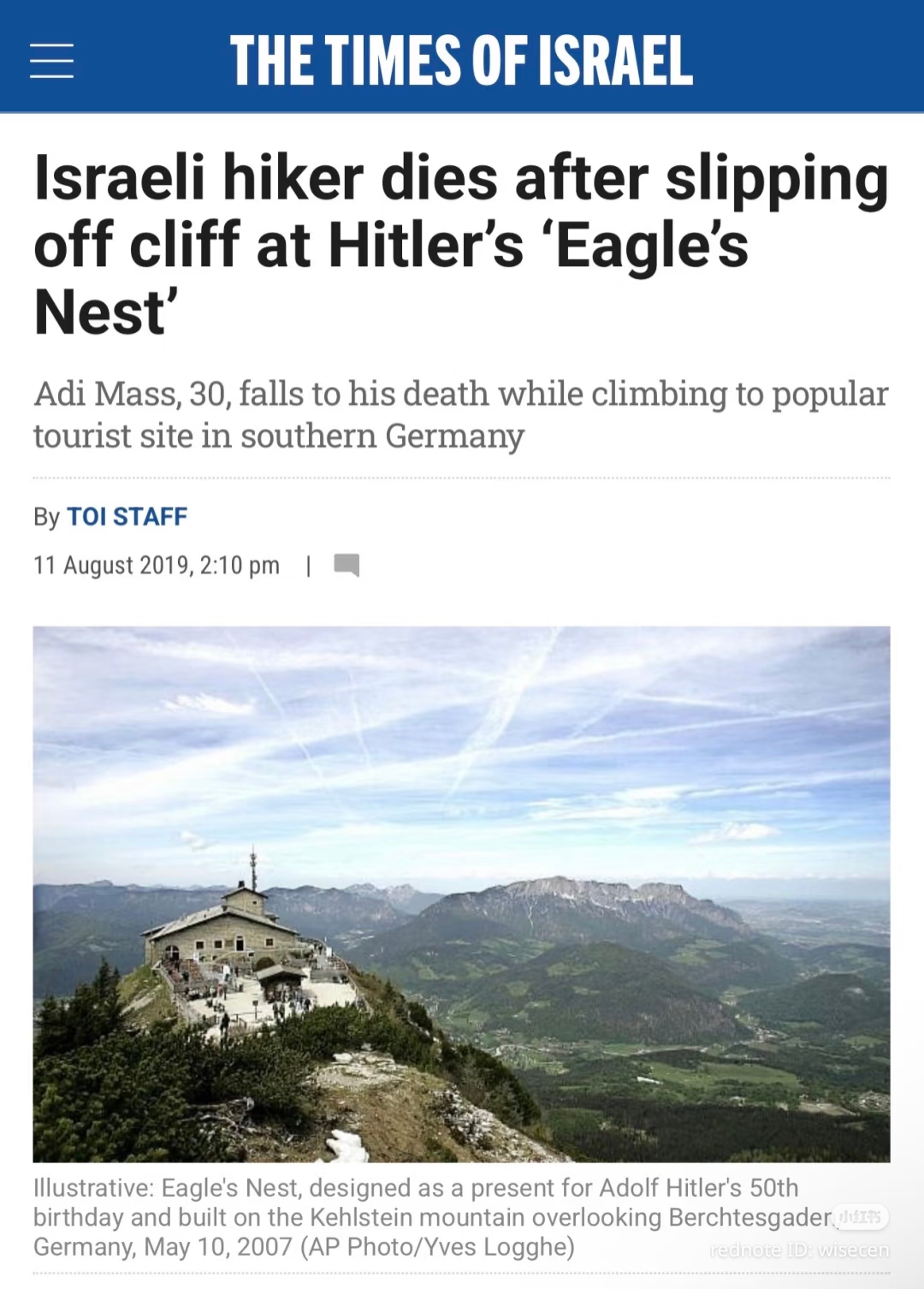
This meme relies on historical irony because the Eagle's Nest was originally a gift designed to glorify Adolf Hitler’s regime as a present for his birthday. In an anti-fascist context, this spot is personified as an object of hate and controversy, representing the peak of Nazi ambition and propaganda. The title references it by attaching Hitler’s name directly to the location, acknowledging the controversial history attached to the site which was intended to mock Germany and its Fascist leadership.
detailed-analysis (gemma3_27b-it-q8_0)
Here's an analysis of the image and article from the perspective of Anti-Fascism, broken down into relevant sections. It's a complex image, and the dark humor within it demands a sensitive but critical reading.
Please note: Analyzing tragic events through a theoretical lens can be uncomfortable. The goal here is not to diminish the loss of life but to examine the power dynamics and historical resonance embedded within the situation.
Visual Description
The image shows a mountainous landscape in southern Germany, dominated by a white building perched on a cliff edge. This is the Kehlsteinhaus, more commonly known as the "Eagle's Nest," a building commissioned by the Nazi Party and presented to Adolf Hitler for his 50th birthday. It stands as a symbol of power and Nazi architecture. The image is taken from a low angle, making the Eagle's Nest appear imposing and almost precarious. The overcast sky adds to a sense of foreboding. The building’s stark white stands in contrast to the dark green of the mountains and the gray of the sky. A small line of people can be seen heading toward the building. The news headline juxtaposes this with the report of an Israeli hiker falling to his death while visiting the site.
Foucauldian Genealogical Discourse Analysis
Michel Foucault’s genealogical method focuses on power relations and how discourses construct knowledge and subjectivity. In this context, the Eagle’s Nest is a crucial site of power. It’s not merely a building but a materialized discourse of Nazi ideology – dominance, racial superiority, and the will to power. The very act of constructing it on such a prominent, geographically challenging location symbolizes the Nazis' assertion of control over nature and their intended dominance.
The headline reporting the death of the hiker can be seen as a disruption within this discourse. It introduces an element of chance and vulnerability into a space designed to represent invincibility. The hiker's fall represents a fracturing of the seemingly solid narrative of Nazi power. However, it's important to note this doesn't erase the original discourse; rather, it layers another meaning onto it – a chilling reminder of the consequences of that power and the potential for tragic irony.
Further, the very act of tourism to the Eagle's Nest today is a form of discourse. How is this site remembered and presented to visitors? Is it critically examined, or is it simply a scenic attraction? The death of the hiker forces a confrontation with the dark history embedded in the landscape.
Critical Theory
From a Critical Theory perspective (rooted in the Frankfurt School), the Eagle’s Nest represents the “instrumental reason” that drove the Nazi project – the cold, calculating logic of domination and control. It's a physical manifestation of the Enlightenment’s emphasis on reason decoupled from ethical considerations, leading to horrific consequences.
The tragic death of the hiker underscores the continued relevance of critical analysis of this past. The site, despite being a tourist attraction, remains deeply imbued with the trauma of the Holocaust and the dangers of unchecked power. The ironic juxtaposition of a tourist, seeking experience and perhaps even aesthetic enjoyment, dying at a place built to celebrate a genocidal ideology is a brutal illustration of how history is not simply “over” but continues to haunt the present. The site becomes a place where the contradictions of modernity—progress alongside barbarism—are sharply revealed.
Marxist Conflict Theory
While not the primary lens, a Marxist reading can highlight the historical context of class and political power that enabled the Nazi regime. The Eagle’s Nest was a project of the ruling elite—a display of wealth and dominance intended to consolidate their control over the working class.
The hiker's death, while tragic, can be seen, in a broad sense, as the individual caught within larger historical forces. It's a reminder of how individuals can be affected by the legacies of systemic power imbalances, even decades after the initial conflict.
Postmodernism
A postmodern approach might focus on the deconstruction of the Eagle's Nest's intended meaning. The Nazis aimed to create a symbol of eternal power, but time and history have eroded that meaning. The tourist attraction, the hiker’s death, and the layers of interpretation added to the site all contribute to a destabilization of the original, monolithic Nazi narrative.
Postmodernism would also highlight the ambiguity of the situation. There’s no single, straightforward interpretation. The image is rife with irony and paradox – a place of death celebrating a dictator, a tourist seeking pleasure finding tragedy. This multiplicity of meanings challenges any attempt to provide a definitive explanation.
Anti-Fascist Implications
The core relevance to an Anti-Fascist framework is that the Eagle’s Nest remains a warning. It's not just a historical relic; it's a potent symbol of the dangers of unchecked ideology, the allure of authoritarianism, and the need for constant vigilance against the resurgence of fascist ideas.
The hiker’s death, in this context, is tragically ironic. It's a somber reminder that the ghosts of the past continue to linger, and that even in seemingly innocuous contexts, the legacy of fascism can have devastating consequences. It emphasizes the importance of education, memory, and active resistance against all forms of oppression. The site demands more than mere tourism; it demands critical engagement and a firm commitment to preventing such atrocities from ever happening again.
Important Disclaimer: This is a complex analysis, and interpretations can vary. The intention is to apply relevant theoretical frameworks to understand the deeper meaning and implications of the image and article within an Anti-Fascist context. The tragic death of the hiker should always be acknowledged with respect and sensitivity.
simple-description (llama3.2-vision_11b)
The meme is a screenshot of a news article from The Times of Israel, with the headline "Israeli hiker dies after slipping off cliff at Hitler's 'Eagle's Nest'". The article reports on the death of an Israeli hiker who fell to his death while hiking to a popular tourist site in southern Germany, which was once a Nazi-occupied site. The article's headline is ironic, as the site was used as a Nazi-occupied site during World War II, and the use of the word "Eagle's Nest" is a reference to the Nazi-occupied site's name, which is ironic given the context of the article's location.