First Seen
2026-01-23T21:42:11.909447+00:00
simple-description (qwen3.5_2b-q8_0)
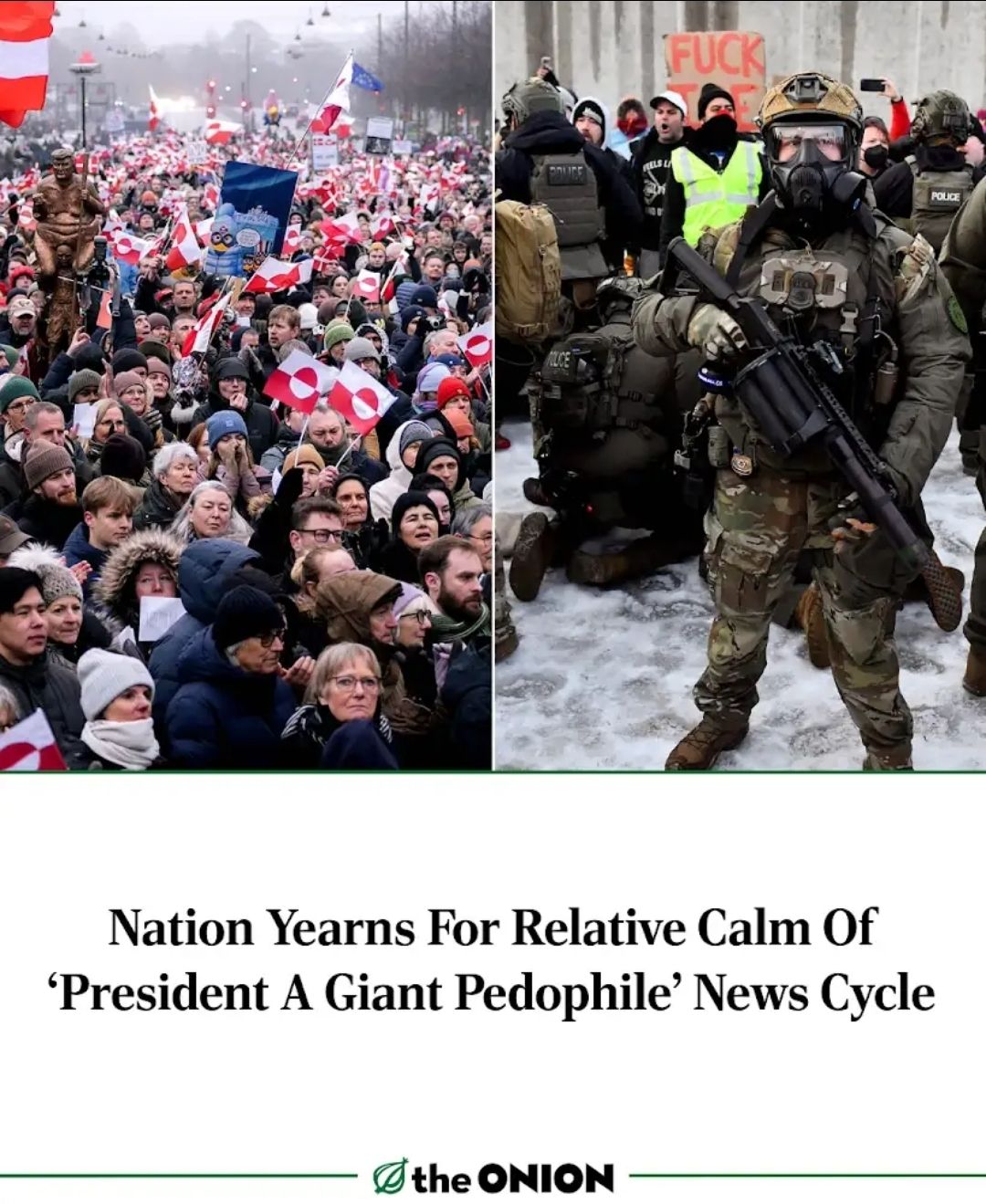
This image serves as a visual punchline for a specific type of online video trend where a person makes a wildly excessive, out-of-proportion reaction in response to a single vulgar insult.
On the left is a massive crowd participating in a rally, while on the right are armed security guards with gas masks holding weapons. This visual contrast is used to mock President Biden's news cycle, which reportedly mocked someone for calling him a "Giant Pedophile." The meme implies that the public's reaction to such an insult is so extreme that it borders on violence and absurdity, even as they remain peacefully gathering in a crowd behind armed forces.
detailed-analysis (gemma3_27b-it-q8_0)
Okay, let's break down this satirical meme from The Onion through the lens of Anti-Fascism, using the requested theoretical frameworks where applicable.
Overall Context & Core Argument:
The meme, at its core, critiques the normalization of far-right extremism and the bizarre desire some harbor for a return to seemingly "less chaotic" times – even if those times were defined by incredibly damaging and disturbing (albeit less visually explosive) events. The title, "Nation Yearns for Relative Calm of 'President A Giant Pedophile' News Cycle", is intentionally shocking. It suggests that even the scandal surrounding accusations of pedophilia is preferable to the overt, violent manifestation of fascist ideologies seen in the imagery. From an anti-fascist perspective, this is a direct commentary on the insidious nature of how fascism creeps into public consciousness and how people can become dangerously desensitized to its precursors.
1. Visual Description
The meme is a diptych (two-panel image).
- Left Panel: A large crowd of people, mostly white, are gathered in what appears to be a protest or rally. Many are carrying Canadian flags and signs. This suggests a connection to far-right protests related to COVID-19 restrictions ("Freedom Convoy") or other related movements. The crowd's sheer density and apparent enthusiasm signal organized, mass mobilization. The individuals seem mostly older and middle aged.
- Right Panel: Heavily armored police officers (in riot gear) are confronting a space, forming a line as if attempting to control or disperse a crowd. The officers' equipment suggests a high level of threat assessment and preparation for conflict. There is a figure to the right of the police wearing a t-shirt with a profanity.
- Overall Juxtaposition: The stark contrast between the seemingly "normal" crowd (despite their affiliations) and the militarized police presence underscores the escalation of tensions and the threat of violence inherent in far-right movements.
2. Foucauldian Genealogical Discourse Analysis
Michel Foucault’s work focuses on power, knowledge, and discourse. A genealogical approach would examine how the idea of “calm” has been constructed historically and how it’s linked to power dynamics.
- Power/Knowledge: The meme highlights how the discourse around “normalcy” and “stability” can be actively shaped by those in power. The desire for the “calm” of the pedophilia scandal isn’t organic; it’s a manufactured longing, perhaps cultivated by media outlets or individuals who downplay the dangers of escalating far-right extremism.
- Genealogy of "Calm": What does “calm” mean in this context? It's not the absence of harm, but the absence of visible disruption. The genealogy would trace how the idea of “order” (represented by the police presence) is often prioritized over justice or addressing the root causes of unrest. The meme points out the absurd prioritization of keeping things quiet over confronting profound moral and political issues.
- Discipline and Punishment: The police presence represents the disciplinary arm of the state, reacting to the challenges to its authority posed by the gathering crowd.
3. Critical Theory
Critical Theory, rooted in the Frankfurt School, aims to critique and challenge societal structures of power.
- Culture Industry: The meme subtly critiques the media's role in the “culture industry.” By presenting the pedophilia scandal as a preferable alternative, it suggests the media may be inadvertently normalizing or downplaying more dangerous forms of extremism by focusing on scandals. The meme mocks the spectacle of news cycles and their ability to distract from genuine threats.
- Instrumental Reason: The focus on maintaining "calm" at any cost represents a form of instrumental reason – prioritizing efficiency and order over ethical considerations. It's a rationalization of acceptance of harmful dynamics.
- False Consciousness: The "yearning" for the scandal’s relative calm might indicate a "false consciousness," where individuals are unaware of the underlying forces driving the escalation of far-right movements and the true nature of the threat they pose.
4. Marxist Conflict Theory
From a Marxist perspective, the meme reveals class dynamics and the struggle for power.
- Ideology and Hegemony: The desire for “calm” reflects a dominant ideology that prioritizes the preservation of the existing social order (and the interests of those who benefit from it) over challenging injustice. Hegemony, the dominance of one social group over others, operates by creating a consensus around certain ideas, like the prioritization of order above all else.
- Class Conflict: The protests depicted likely involve individuals experiencing economic anxieties or feeling disenfranchised. However, the far-right often co-opts these anxieties and channels them towards scapegoating minority groups rather than challenging the capitalist system that generates inequality. The meme implies that the "calm" of the pedophilia scandal was, in a way, a distraction from the real material conditions that fuel discontent.
- State Apparatus: The police (state apparatus) in the image represent the instruments by which the ruling class maintains its control.
5. Postmodernism
While perhaps not the central lens, postmodern thought can inform our understanding.
- Rejection of Grand Narratives: The meme rejects the idea of a simple, linear progression toward “progress” or “calm.” It shows how the “calm” of one era can be built on deeply problematic foundations.
- Simulacra and Simulation: The manufactured desire for the "calm" can be seen as a simulacrum – a copy without an original. The feeling of wanting things "back to normal" is based on a constructed, idealized image of the past that never truly existed.
- Deconstruction: The title's shocking juxtaposition forces a deconstruction of our assumptions about what constitutes "good" and "bad" news.
6. Queer Feminist Intersectional Analysis
This lens explores how intersecting systems of oppression (sexism, homophobia, racism, classism, etc.) shape experiences and power dynamics.
- Vulnerability & Violence: Far-right movements disproportionately target marginalized groups – LGBTQ+ individuals, people of color, women, etc. The meme's implicit critique of far-right escalation highlights the increased vulnerability and potential for violence faced by these communities.
- The Normalization of Harm: The longing for the “calm” of the pedophilia scandal represents a dangerous normalization of harm. It shows how societal biases can allow certain forms of abuse (like sexual abuse) to be downplayed or accepted when compared to more visible threats.
- Intersectional Oppression: The meme is a commentary on a dangerous situation where various forms of oppression may intersect. It subtly points out how an obsession with one type of scandal can distract from or even enable the growth of another, potentially more dangerous, form of extremism.
In conclusion, this Onion meme, through an anti-fascist lens, is a clever and disturbing commentary on how the normalization of extremism, the manipulation of public discourse, and the prioritization of “order” over justice can pave the way for a dangerous political future. It’s a warning about the insidious nature of fascist ideology and the importance of remaining vigilant.
simple-description (llama3.2-vision_11b)
The meme is a satirical commentary on the current state of the world, specifically the rise of fascist ideologies and the need for anti-fascist movements. The image juxtaposes a crowd of people holding anti-fascist signs and a police officer in a gas mask, with the text "Nation Yearns For Relative Calm Of 'President A Giant Pedophile' News Cycle". The meme is poking fun at the idea that the news cycle is so focused on the president's personal scandals that it's like a pedophile is in charge, implying that the nation is in a state of chaos and that the news is so focused on the president's personal scandals that it's like a pedophile is in charge.