First Seen
2025-10-11T07:31:03.302809+00:00
simple-description (qwen3.5_2b-q8_0)
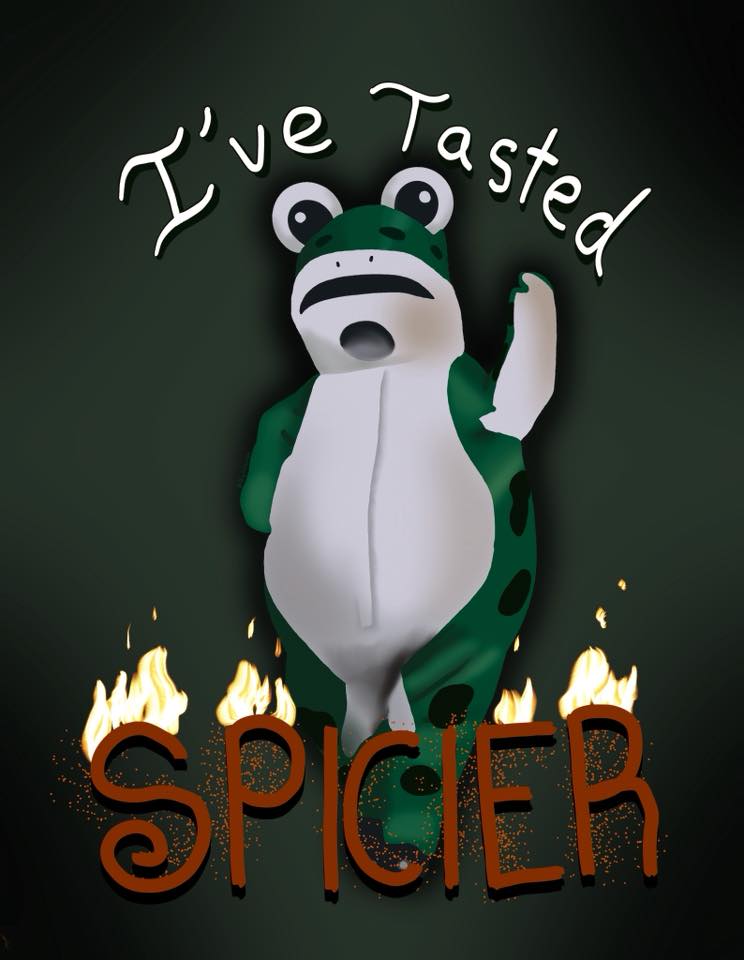
The image depicts a cartoon inflatable green frog wearing a costume, with flames erupting around the word "SPICIER" underneath it. The text at the top reads "I've Tasted..." and continues onto the bottom line as "...SPICIER." This meme originates from a famous political stunt used by resistance groups against communist or authoritarian regimes to infiltrate meetings under false pretenses. From an anti-fascist perspective, this visual attacks the state's safety and authority; by claiming "I've tasted Spicier," it implies that whatever actions are being taken (often involving fake arrests or infiltration) are even more dangerous and extreme than they appear on official propaganda. The fire around the word suggests a sense of danger or violence threatening the regime.
detailed-analysis (gemma3_27b-it-q8_0)
Okay, let's break down this meme within the context of Anti-Fascism, utilizing the requested theoretical frameworks where applicable.
Visual Description
The image depicts a cartoon frog, specifically a Pepe the Frog variant, a character with a complex history in internet culture. The frog is rendered in a somewhat simplified, rounded style, leaning into a more cuddly or naive aesthetic. It is positioned in a dynamic pose, seemingly mid-leap, with one arm raised in a gesture that can be interpreted as expressive or dramatic. Above the frog is the text “I’ve Tasted”. Below the frog, in a large, flaming font, is the word “SPICER”. The flames add a sense of intensity and heat. The overall color scheme is muted and dark, contrasting with the brightness of the flames and the frog’s pale green.
Foucauldian Genealogical Discourse Analysis
This meme operates within a network of power/knowledge relations. Pepe the Frog itself is a crucial element here. Originally a benign comic character, it was appropriated by the alt-right as a symbol of their ideology. Its subsequent "reclamation" by anti-fascists is a fascinating genealogical case. Foucault's work emphasizes how seemingly neutral concepts and symbols become invested with power through discourse.
The “I’ve Tasted” phrase, combined with “SPICER,” isn't literally about food. It's a coded reference to engaging with challenging or unsettling political ideas. The taste is the exposure to radical thought. "Spicer" acts as a descriptor for this idea or experience. It signifies something hot, challenging, and potentially dangerous—akin to the experience of confronting fascism and its underlying ideologies.
The meme attempts to disrupt the dominant discourse surrounding Pepe. By using the symbol against its original intended purpose, it destabilizes the alt-right’s ownership of the image and re-appropriates it for anti-fascist resistance. The "taste" represents the necessary discomfort and intellectual labor involved in unpacking fascist ideas and the consequences of inaction.
Critical Theory
From a Critical Theory perspective (specifically drawing from the Frankfurt School), this meme can be understood as an attempt to expose the underlying power structures that sustain fascism. The meme isn’t about objective “truth”; it's about challenging the ideologies that legitimize oppression.
The frog, as a symbol once co-opted by a reactionary movement, represents the seductive appeal of authoritarian thinking. The "taste of Spicer" symbolizes the experience of deconstructing those appeals. This is analogous to Adorno and Horkheimer’s concept of the "culture industry," where seemingly harmless symbols can be used to normalize and propagate harmful ideologies. The meme attempts to disrupt this process by exposing the ideological "spice" – the core tenets of fascism – and forcing a confrontation with them.
Marxist Conflict Theory
The meme reflects the ongoing class struggle inherent in Marxist thought, albeit in a more nuanced and cultural form. Fascism, from a Marxist perspective, is often seen as a tool of the ruling class to suppress dissent and maintain the status quo. "Spicer" here can represent the revolutionary thought and actions necessary to challenge that power structure.
The meme could be interpreted as a call to arms (intellectual and political) for those willing to confront the harsh realities of capitalist exploitation and oppression that often pave the way for fascist ideologies. The "taste" represents the initial, often unsettling, encounter with this revolutionary consciousness. The flames symbolize the potential for disruption and change.
Postmodernism
A postmodern reading highlights the meme's self-referentiality and its play with meaning. It's not seeking to present a singular, unified "truth" about fascism. Instead, it relies on ambiguity, irony, and allusion.
The use of Pepe, a character steeped in internet irony, is particularly postmodern. The meme embraces the fragmented and unstable nature of meaning in the digital age. The "taste of spicer" is a subjective experience, open to interpretation. It rejects grand narratives and embraces the idea that meaning is constructed through social and cultural context.
Queer Feminist Intersectional Analysis
This area is less directly present but still relevant. Fascism inherently relies on reinforcing binary oppositions (male/female, hetero/homo, "us" vs. "them") and hierarchical power structures. It actively seeks to suppress marginalized identities.
The "spice" metaphor, with its association with heat and intensity, can be linked to the passion and resistance of marginalized communities. Furthermore, the reclaiming of Pepe, a symbol previously used to harass and intimidate, can be seen as an act of defiance against patriarchal and heteronormative power. It demonstrates a refusal to let hateful ideologies dictate the terms of representation. The meme’s inherent ambiguity allows for multiple interpretations, potentially enabling intersectional readings that acknowledge the diverse experiences of those fighting against fascism.
In conclusion: This meme, while seemingly simple, is a dense artifact of internet culture and political struggle. It operates as a coded message, a reappropriation of a hateful symbol, and a call to action—all within the broader framework of anti-fascist resistance. Its strength lies in its ability to tap into existing cultural references and create a space for subversive meaning-making.
simple-description (llama3.2-vision_11b)
This meme features a character from the popular internet game "Minecraft" with a caption that says "I've tasted the fascism of the left and it's a bad taste." The character is a pig-like creature known as the "Pig" from the game, and it's being used to make a humorous commentary on the idea that even the left-wing ideology can be oppressive. The meme is poking fun at the idea that even the most liberal of ideologies can be "fascist" in some way.