First Seen
2026-02-09T20:44:54.680460+00:00
simple-description (qwen3.5_2b-q8_0)
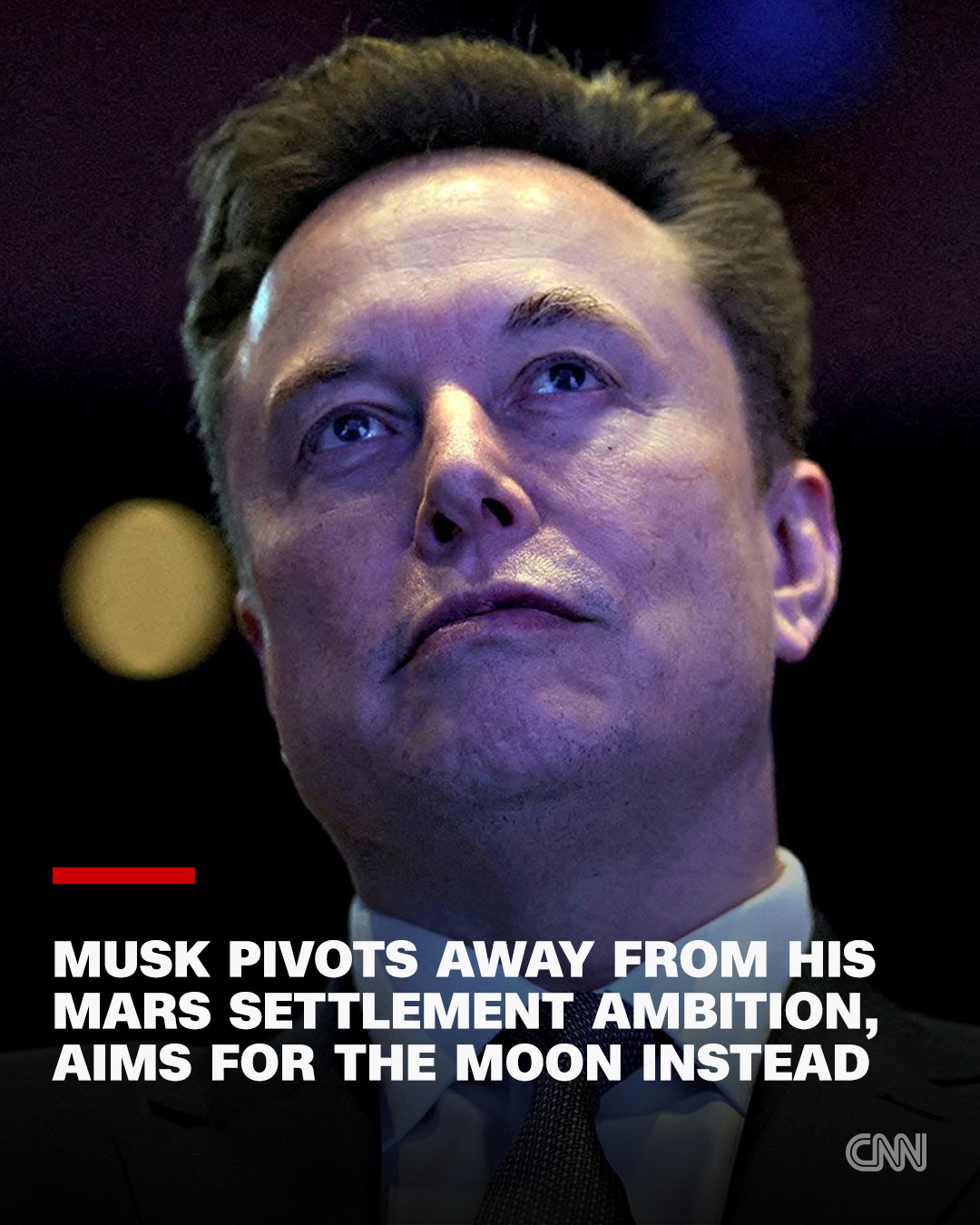
This image belongs to the Anti-Elon meme category because it uses a satirical headline to mock and criticize the technology billionaire Elon Musk. The text specifically accuses him of abandoning his ambitious goal for Mars in favor of aiming for the Moon, implying he has shifted away from radical spaceflight plans.
detailed-analysis (gemma3_27b-it-q8_0)
Okay, let's dissect this image and its implied critique from the perspective of an "Anti-Elon" category. Here's an analysis structured as you requested, hitting the relevant theoretical frameworks:
Visual Description
The image features a dramatically lit, low-angle shot of Elon Musk. He's looking upward, almost with a messianic gaze, which contributes to a sense of grandiose self-importance. The lighting emphasizes his features – his somewhat downturned mouth, the furrow of his brow – giving a slight impression of either pensiveness or disdain. The stark contrast between Musk’s face and the dark background draws immediate attention, centering him as the subject. The CNN logo in the corner marks the image as coming from a mainstream news source, subtly indicating an attempt to legitimize the critique. The bold, red text proclaims a shift in Musk's ambitions: from colonizing Mars to focusing on the Moon. The overall effect is one of highlighting Musk as an ambitious, potentially problematic figure.
Foucauldian Genealogical Discourse Analysis
From a Foucauldian perspective, this image isn't just about a change in space exploration goals. It's about the discourse of techno-utopianism and the power structures embedded within it. Elon Musk is a key figure in constructing a narrative of "saving humanity" through technological advancement (first Mars, now the Moon). This discourse isn’t neutral; it performs power.
- Genealogy: The idea of escaping Earth, of creating a new Eden in space, connects to historical fantasies of escape from societal problems (religious millenarianism, utopian movements). It ignores the root causes of those problems, instead offering a technological "fix" that is ultimately available only to a select few.
- Power/Knowledge: Musk’s wealth and platform give him the power to define what constitutes progress. This “knowledge” (that space colonization is essential) is not objective; it’s produced within a specific power structure. The image implicitly critiques this by pointing out the shift in focus – suggesting a lack of long-term planning or, even more cynically, a pursuit of whatever generates the most publicity/profit.
- Disciplinary Power: The narrative of space colonization disciplines thought, encouraging acceptance of extreme technologies and centralized control. (Who decides who goes to Mars/the Moon? What rules govern the colony?)
The meme deconstructs this discourse by showing Musk as a figure whose goals are fluid, suggesting his vision is less about saving humanity and more about personal ambition and branding.
Critical Theory
This image can be analyzed through the lens of Critical Theory, specifically Frankfurt School thought. Musk embodies the "instrumental reason" critiqued by thinkers like Adorno and Horkheimer.
- Commodification: Musk’s projects aren't about scientific advancement for its own sake; they're about commodifying space, turning it into a potential market, and maximizing profit. The shift to the Moon might be more financially viable or strategically advantageous for short-term gains.
- Culture Industry: Musk and his companies are part of the "culture industry" – manufacturing desires and projecting fantasies (of escaping Earth) that distract from real-world problems. The image subtly challenges this by highlighting the superficiality of the shift in goals.
- Enlightenment Dialectic: The pursuit of technological progress, initially seen as liberating, has become a form of domination. Musk’s drive to colonize space perpetuates this, reinforcing existing inequalities and diverting resources from addressing issues on Earth.
The meme subtly calls out the inherent contradictions of techno-capitalism and the illusion of progress it perpetuates.
Marxist Conflict Theory
This image, through the lens of Marxist Conflict Theory, highlights the class struggle inherent in space exploration, and Musk as a key player within that struggle.
- Means of Production: Musk controls the means of production (SpaceX) and, therefore, the direction of space exploration. This creates an imbalance of power.
- Class Interests: The colonization of space, even the Moon, isn’t about benefiting the working class. It’s about securing resources, expanding markets, and solidifying the wealth and power of the capitalist class (represented by Musk).
- Alienation: The focus on escaping Earth distracts from the alienation and exploitation experienced by workers on Earth. The image hints at this by framing Musk’s ambition as a personal pursuit, disconnected from the needs of the majority.
- False Consciousness: The idea of escaping Earth can create a "false consciousness" – a belief that technological solutions will resolve fundamental social and economic inequalities.
The meme can be interpreted as a critique of how Musk’s ambitions serve the interests of the ruling class at the expense of the proletariat.
Postmodernism
From a postmodern perspective, this image deconstructs the "grand narrative" of progress and the idea of a singular, overarching purpose (like saving humanity through space colonization).
- Simulacra and Simulation: Musk's vision of space colonization can be seen as a simulacrum – a copy without an original. It's a hyperreal representation of progress that lacks genuine substance.
- Deconstruction: The meme deconstructs the image of Musk as a visionary by showing him as a shifting, opportunistic figure. His ambition isn’t fixed but contingent on various factors.
- Relativism: Postmodernism challenges the notion of objective truth. The image subtly implies that Musk's goals are not driven by a rational, altruistic purpose but by subjective factors like ego and profit.
The image challenges the notion of a grand, unified vision for the future, suggesting that all narratives are constructed and open to deconstruction.
In summary, within the context of an “Anti-Elon” category, the meme is a subtle but potent critique of Musk’s techno-utopianism, his power dynamics, and his role in perpetuating inequalities. It uses visual cues and a shift in stated goals to dismantle the carefully constructed image of Musk as a savior of humanity and instead reveal him as an ambitious, potentially exploitative figure.
simple-description (llama3.2-vision_11b)
The meme is a satirical image of Elon Musk with a caption that suggests he is focusing on the Moon, but actually means to focus on Mars. The text "MUSK PIVOTS AWAY FROM HIS MARS SETTLEMENT AMBITION, AIMS FOR THE MOON INSTEAD" is a play on words, implying that he is now focused on the Moon, but it's actually a joke about him being distracted from his Mars goals.