First Seen
2026-04-02T05:34:39+00:00
simple-description (qwen3.5_2b-q8_0)
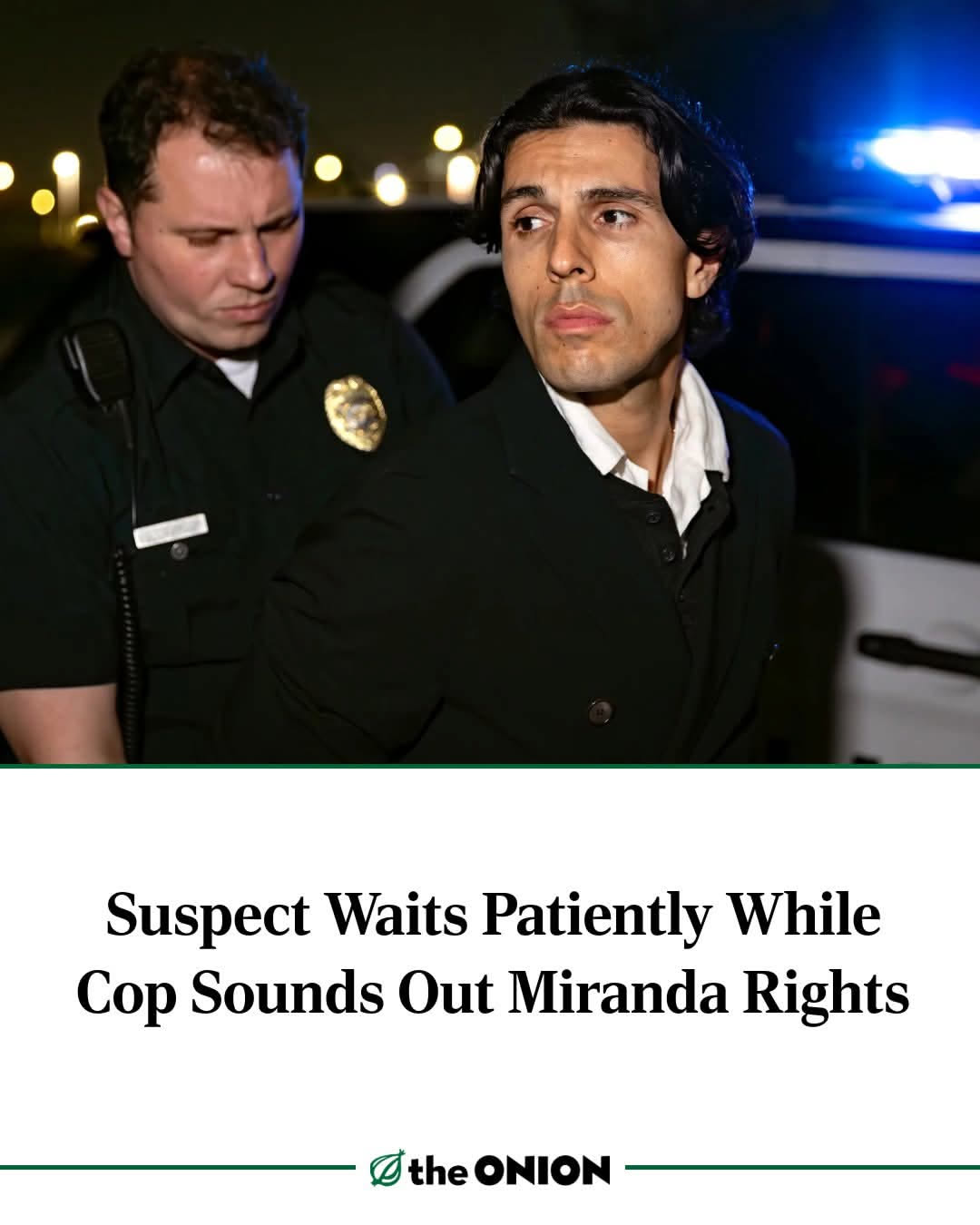
This meme roasts the absurdity of police procedures by juxtaposing a serious arrest scene with the mundane act of waiting for Miranda rights. It mocks the idea that people patiently wait for an officer to speak, when they just want it over. The caption plays on this trope with the phrase: "Suspect Waits Patiently While Cop Sounds Out Miranda Rights" - implying that if the suspect knew his rights were coming next, he wouldn't have to wait at all.
detailed-analysis (gemma3_27b-it-q8_0)
Okay, let's break down this satirical image from The Onion through the lens of an "Anti-Cops" meme category, applying relevant theoretical frameworks where applicable.
Visual Description
The image depicts a stark contrast. On the left, a uniformed police officer stands with a stern expression, hand resting near his duty weapon. He appears dominant, physically imposing. On the right, a man in a waiter's uniform looks with a patient, slightly bemused expression, directly at the viewer. He's captured mid-gesture, as if awaiting instructions. The background is a dark street scene with flashing police lights, reinforcing the setting. The officer's hand position is notably assertive, suggesting an expectation of control. The suspect's calm demeanor clashes with the typical depiction of someone being apprehended. The lighting emphasizes this contrast: the officer bathed in the harsher glow of the lights, the suspect more subtly lit.
Foucauldian Genealogical Discourse Analysis
This image operates powerfully within a Foucauldian framework. Michel Foucault explored how power operates through discourse—the rules, systems, and practices that shape how we understand the world. The scene perfectly illustrates the exercise of power by the police officer, specifically through the ritualized pronouncement of Miranda Rights.
- Discursive Formation: The Miranda warning isn't simply about protecting rights; it's a performative act of power. It asserts the state's authority to define criminality, to detain, and to interrogate. The suspect, though formally informed of his rights, is still subject to this disciplinary power.
- Genealogy: Foucault's genealogical method traces the historical emergence of concepts. The police officer’s role as a keeper of law and order, someone invested with the power to control, punish, and define deviance, has a history deeply tied to shifts in social and political norms. The image mocks the inherent power imbalance in this long-established system.
- Panopticon: The context of police lights can be interpreted as a symbolic parallel to Foucault’s concept of the Panopticon. Even without direct surveillance, the possibility of it influences behavior. The suspect appears compliant, potentially because of a consciousness of being under potential scrutiny, even if the officer isn't directly focusing on him.
Critical Theory
From a Critical Theory perspective (particularly influenced by the Frankfurt School), the image exposes the instrumental rationality within the legal system. The Miranda Rights, meant to guarantee individual freedoms, are often implemented in ways that serve the interests of state control.
- Ideology Critique: The image subtly critiques the ideology that frames the police as neutral guardians of justice. The officer’s stern demeanor and authoritative pose contrast with the suspect’s calmly waiting stance, suggesting that the "rights" being read are more about maintaining the system of control than actual protection.
- Domination: The meme points towards systemic domination. The police represent the state's power to define and enforce norms, while the suspect, regardless of guilt or innocence, is placed in a position of vulnerability and subordination. The waiter's uniform, suggesting service and subservience, reinforces this dynamic.
Marxist Conflict Theory
The image can be interpreted as highlighting class conflict and the role of the police in maintaining the status quo.
- The State as an Instrument of Class Rule: Marxist theory views the state (and its enforcement arm, the police) as serving the interests of the ruling class. The suspect, potentially a member of a marginalized group, is being subjected to the authority of the state, reinforcing existing power structures.
- Alienation: The suspect's passive acceptance of the situation could be seen as a form of alienation. He is detached from agency, reduced to an object of state control. The mundane setting (a street scene) further emphasizes the everyday nature of this power dynamic.
Postmodernism
Postmodernism isn't necessarily a direct fit, but the satire itself aligns with some postmodern tendencies.
- Deconstruction of Authority: The image actively deconstructs the traditional image of the authoritative police officer. The suspect’s calm response challenges the expected narrative of fear and resistance.
- Irony and Pastiche: The Onion's satirical style relies on irony. The humor stems from the incongruity of the situation – a waiter patiently waiting while being read his rights.
In the Anti-Cops Context
Crucially, the image's primary function within the "Anti-Cops" meme category is to undermine the legitimacy of police authority. It's designed to provoke skepticism and encourage critical thinking about the role of law enforcement. It's a visual argument that the police often abuse their power, that "rights" can be a performative formality, and that the system is inherently biased. The image doesn’t directly accuse this officer of wrongdoing, but rather satirizes the entire system. The humor derives from the absurdity of the power dynamic, which is all too real for many people. The waiter’s calm demeanour suggests a resignation and normalcy towards being confronted by police power.
Let me know if you’d like any of these analyses expanded or explored in more detail!
simple-description (llama3.2-vision_11b)
The meme features a police officer and a suspect in the background, with the text "Suspect Waits Patiently While Cop Sounds Out Miranda Rights" at the bottom. The image is likely a satirical commentary on the often-ridiculous situations that police officers and suspects find themselves in. The title suggests that the officer is taking his time to explain the suspect's rights, while the suspect appears to be waiting patiently, perhaps even expecting this to happen. The image is meant to be humorous and relatable, poking fun at the often-awkward interactions between law enforcement and those they are questioning.