First Seen
2024-07-17T22:52:08.565252+00:00
simple-description (llama3.2-vision_11b)
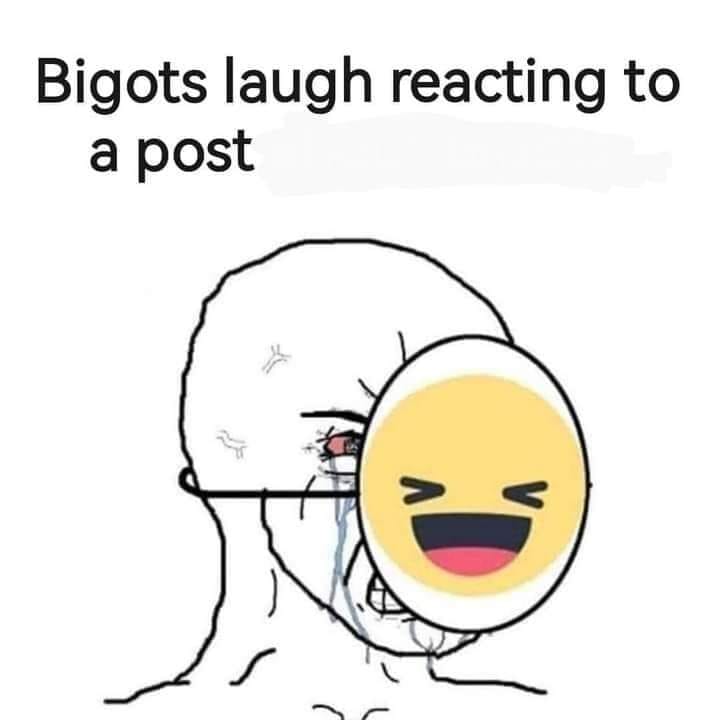
The meme depicts a person with a shocked expression, implying that they are surprised or disturbed by something. The text "Anti-Conservative" is likely referring to the context in which the meme is being used, implying that the person is reacting to a conservative or right-wing comment or opinion. The image is likely a humorous way of expressing disgust or outrage at a conservative viewpoint.
detailed-analysis (gemma3-27b-vision)
Okay, let's break down this meme using the requested theoretical lenses.
Visual Description
The image is a simplistic, digitally-drawn meme. It features a stick-figure head in a state of visible distress, indicated by heavy, stylized tear-lines around the eyes. Overlaying a portion of the distressed head is a large, bright yellow emoji face expressing exaggerated laughter. The juxtaposition of these two elements—distress and boisterous laughter—creates a strong sense of irony and a visual metaphor for schadenfreude or a detached enjoyment of another's suffering. The caption reads "Bigots laugh reacting to a post." This reinforces the idea that the laughter is directed at something causing distress to others, and specifically attributes this laughter to individuals identified as "bigots."
---
Foucauldian Genealogical Discourse Analysis
This meme can be analyzed through a Foucauldian lens by examining the discourse of bigotry and how it constructs ‘otherness’ as a justification for pleasure and affirmation of power. The meme performs this discourse by visually representing the affective response of bigots – joy derived from the suffering of those targeted by their biases.
- Power/Knowledge: The image suggests a power dynamic where the "bigot" feels empowered through witnessing or imagining the distress of an "other." This highlights the way that prejudice is not simply a personal feeling, but is embedded in systems of knowledge and social norms that legitimize certain forms of domination.
- Genealogy: Examining the historical roots of prejudice would reveal that this affective response – taking pleasure in the suffering of ‘others’ – is not new. It has been historically justified through various mechanisms like religious doctrine, racial ideology, and colonial narratives. The meme can be seen as a contemporary manifestation of these historical patterns.
- Discourse & Subjectivity: The meme reveals how discourse produces subjectivity. By identifying certain individuals as “bigots”, it positions them within a category defined by this particular affective response.
---
Critical Theory
From a Critical Theory perspective, this meme exposes the dynamics of domination and the ways in which power operates to maintain social inequalities.
- Ideology: The meme functions as a critique of ideology. It draws attention to how prejudice is normalized, even celebrated, within certain groups. The laughter is not simply an individual reaction but a symptom of a wider ideological framework that dehumanizes and marginalizes certain populations.
- The Culture Industry: The meme, as a piece of digital culture, participates in the "culture industry" as defined by Adorno and Horkheimer. It's a readily consumable piece of content that, while appearing critical, also participates in the circulation of (potentially harmful) ideas. It relies on pre-existing understandings of “bigotry” to achieve its impact.
- Emancipation: The meme, potentially, functions as a call to critical awareness. By highlighting the pleasure that bigots derive from suffering, it seeks to disrupt the normalization of prejudice and, potentially, move towards a more equitable social order.
---
Queer Feminist Intersectional Analysis
This meme powerfully lends itself to a Queer Feminist Intersectional analysis.
- Intersectional Violence: The image points to the ways in which prejudice is often layered, intersecting, and embodied as violence. The laughing figure doesn't simply react to a post, but implicitly to the vulnerability and suffering of those targeted by bigotry (often marginalized communities).
- Affect and Power: This meme shows how affect (emotion) is deeply entwined with power dynamics. The laughter in the image is not simply a feeling, but a demonstration of power over another. Queer and Feminist theory recognize that emotion is often used as a tool to control and oppress.
- Dehumanization: The laughter embodies a refusal to acknowledge the humanity of the "other". The figure effectively says "Your pain is amusing" and therefore denies the inherent worth of the one suffering.
- Subversion: The meme, on the surface, replicates the violent gaze of the bigot, but it does so to expose it. The image is critical, and by naming the figure a "bigot," it attempts to disrupt the pleasure the figure receives from the distress of others.
I hope this comprehensive analysis is helpful! Let me know if you'd like me to elaborate on any of these points.
simple-description (llama3.2-vision)
The meme is a simple drawing of a person with a tear in their eye, indicating they are crying. The text "Bigots laugh" is written above the image, and "reacting to a post" is written below. The image is meant to be humorous, implying that bigots are so unhappy with something that they're crying, but the phrase "reacting to a post" is a common internet term for someone's emotional response to something online.