First Seen
2025-04-22T22:03:30.657635+00:00
detailed-analysis (gemma3_27b-it-q8_0)
Okay, let's break down this image/article snippet through the lens of Anti-Centrism, touching on relevant theoretical frameworks where applicable.
Understanding the Anti-Centrist Perspective
First, it’s important to establish what "Anti-Centrism" signifies in a political context. It’s a rejection of the political center – the perceived compromise between left and right. Anti-Centrism typically suggests the center is not a neutral ground, but rather a position upholding existing power structures, often serving to dilute or neutralize radical or progressive change. Anti-Centrists often view centrism as a form of quiet complicity with systemic injustices.
---
Visual Description
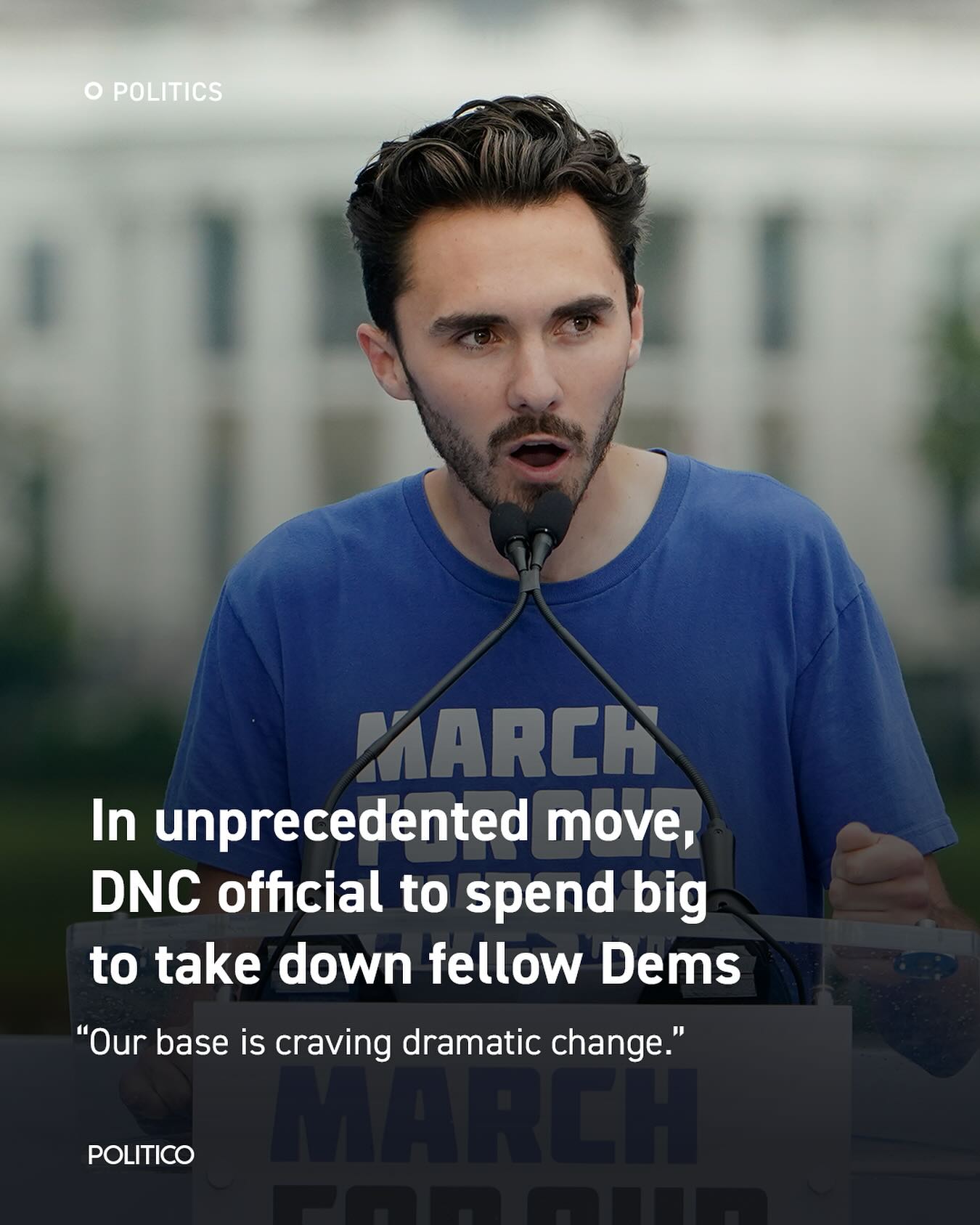
The image features a man (identified through the article as a DNC official) speaking into a microphone. He appears agitated, potentially even shouting. His brow is furrowed, his mouth is open in mid-speech. He is wearing a blue shirt with the word "MARCH" in large white letters visible. The background is a muted, institutional grey, giving the impression of a press conference or public announcement. The overall composition conveys a sense of urgency and perhaps aggression. It also suggests a focus on action (implied by the “MARCH” banner).
---
Foucauldian Genealogical Discourse Analysis
From a Foucault-influenced perspective, this image illustrates a power struggle occurring through discourse. The claim that the DNC official is spending "big to take down fellow Dems" is a significant discursive move.
- Genealogy of Power: Foucault would ask, "What historical processes have made possible the existence of a scenario where the Democratic party would openly work against its own?" The genealogy would trace the shifting dynamics within the Democratic party, the rise of internal factions (progressives vs. moderates/centrists), and the increasing frustration with the perceived lack of meaningful change.
- Discursive Formation: The article isn’t simply reporting a fact; it's constructing a narrative about internal conflict. The language ("unprecedented," "take down," "dramatic change") shapes how we perceive this conflict. The anti-centrist reading assumes this conflict is about the control of discourse – who gets to define the terms of debate within the party and the direction of policy.
- Power/Knowledge: The official’s statement, "Our base is craving dramatic change," is a knowledge claim—an assertion about the desires of a group. However, for Foucault, knowledge is always intertwined with power. This statement isn't a neutral observation; it's an attempt to legitimize a specific course of action (the "taking down" of other Democrats) by appealing to an idealized "base."
The Anti-Centrist perspective would see this as the power-holders within the DNC attempting to manage the discourse around "change" to avoid real shifts in power dynamics.
---
Critical Theory
Critical Theory, particularly in its Frankfurt School tradition, would analyze this situation as a manifestation of the "repressive tolerance" of liberal institutions.
- Repressive Tolerance: The DNC, as a representative of liberal political structures, outwardly tolerates a range of viewpoints (from progressive to moderate). However, this tolerance, according to Critical Theory, often functions to neutralize genuinely radical challenges. The act of "taking down fellow Dems" may appear like internal conflict, but is in reality an attempt to maintain the status quo by silencing or marginalizing those demanding more fundamental change.
- Instrumental Reason: The emphasis on spending “big” suggests a focus on purely instrumental reason – using resources strategically to achieve a specific political outcome. This, Critical Theorists would argue, reflects a broader tendency in modern society to reduce politics to a matter of calculation and manipulation, rather than genuine deliberation and the pursuit of the common good.
- Ideology Critique: The claim of representing the "base" is subject to ideological critique. What does the "base" really want? Who defines the "base"? This statement is an ideological construct—an attempt to mask the official’s own agenda behind a veneer of popular legitimacy.
From an anti-centrist standpoint, the DNC is acting as an agent of the established order, using its power to suppress challenges from the left.
---
Marxist Conflict Theory
From a Marxist perspective, this image reveals class tensions within the ruling class (in this case, the Democratic Party).
- Class Struggle Within the Bourgeoisie: This isn't a struggle against capitalism, but a struggle within the capitalist system, between different factions of the bourgeoisie (the Democratic Party being a representative of the capitalist class). The official's actions represent a desire to consolidate power and control within the party, potentially to better serve the interests of specific capital interests or to maintain the party's viability in a changing political landscape.
- Hegemony & Contradiction: The Democratic Party traditionally relies on a degree of hegemony – a cultural and ideological dominance that allows it to maintain power through consent. However, the internal conflict revealed in this image suggests a breakdown in that hegemony. The "base" demanding "dramatic change" represents a challenge to the party’s established ideological framework.
- False Consciousness: Marxist theory might suggest that the "base" is suffering from a degree of "false consciousness"—a misunderstanding of their own interests. The official’s attempt to mobilize them is an attempt to channel their discontent in a way that ultimately serves the interests of the party elite.
---
Postmodernism
A postmodern approach would deconstruct the very concepts at play.
- Deconstruction of "Dramatic Change": What does "dramatic change" actually mean? Is it a coherent concept, or simply a signifier used to evoke emotion and mobilize support? Postmodernism would question the assumption that there is a single, objective definition of "change" and highlight the subjective interpretations of the term.
- Rejection of Grand Narratives: Postmodernism challenges "grand narratives" – overarching explanations of history or society. The idea of a unified “base” with shared desires is a grand narrative that postmodernism would deconstruct. It would emphasize the diversity and fragmentation of experience, suggesting that there is no single, authentic voice of the "base."
- Simulacra & Simulation: The image itself could be seen as a simulacrum – a copy without an original. The act of presenting a "dramatic" event through media (like POLITICO) is itself a form of simulation, creating an impression of reality that may bear little relationship to the underlying truth.
---
In Conclusion
From an Anti-Centrist perspective, this image and its accompanying text represent a critical moment of internal conflict within the Democratic Party. It is seen as a manifestation of the party's attempt to stifle genuine progressive change, to maintain its power, and to control the narrative around issues of justice and equality. The theoretical frameworks above provide different lenses through which to analyze the dynamics at play, highlighting the role of power, ideology, and discourse in shaping the political landscape.
simple-description (llama3.2-vision_11b)
The meme features a photo of a young man with a determined expression, wearing a "March for Our Lives" t-shirt. The image is overlaid with a quote from a politician, likely a Democrat, stating that they will "not be silenced" by the Republican Party's "anti- centrism" agenda. The meme is meant to be humorous and satirical, poking fun at the idea that a politician would be so bold as to say they won't be silenced by the Republican Party's anti-centrism.
detailed-analysis (gemma3-27b-vision)
Okay, let's break down this image and its associated text through the requested theoretical lenses.
Visual Description
The image presents a close-up shot of a man speaking into a microphone. He appears to be giving a speech or addressing a crowd. He is wearing a blue t-shirt with the word "MARCH" boldly printed across the chest. His expression is intense, with wide eyes and a slightly furrowed brow. The background is blurred, consisting of a grey, lattice-like structure. The image is framed with a "POLITICO" banner and headline that reads, "In unprecedented move, DNC official to spend big to take down fellow Dems." Below that is a quote: “Our base is craving dramatic change." The overall tone is one of confrontation and potentially internal political struggle.
---
Foucauldian Genealogical Discourse Analysis
This image can be understood through a Foucauldian lens by examining the discourse surrounding political campaigns and "dramatic change." The discourse of political campaigning and the idea of “taking down” fellow party members (even in a primary or internal dispute) constructs a particular understanding of power and legitimacy.
- Power/Knowledge: The statement “Our base is craving dramatic change” frames a perceived “need” for change, and this perceived need is used to legitimize the DNC official’s actions. The official is positioned as responding to a “natural” desire. The official’s power is derived from their alleged ability to represent and respond to this base's “craving,” and the ability to spend money to realize this goal.
- Genealogy of “Taking Down”: A genealogical analysis would trace the historical development of this strategy of internal political maneuvering. When and how did "taking down" fellow party members become an accepted (or at least common) tactic? What historical conditions gave rise to this practice? How did it become understood as a legitimate means to achieve political goals? It reveals how political rhetoric and tactics become normalized.
- Discipline and Control: The act of spending "big" to “take down” fellow Democrats, in a way, positions voters as a population requiring management. It implies a need to steer or discipline the “base” to align with a particular vision.
---
Critical Theory
From a Critical Theory perspective, this image highlights the contradictions inherent within the Democratic party and the ways in which power operates within it.
- Hegemony: The claim that “Our base is craving dramatic change” could be read as an attempt to establish a new hegemonic narrative. The official is trying to establish a "common sense" idea that change is necessary, and that their strategy is the correct path towards it. This seeks to establish consent by framing the campaign as something that is responding to a popular demand.
- Ideology: The phrasing implies that the "base" is passively "craving" something, obscuring the work of organizing, advocacy, and the shaping of public opinion. It presents a potentially simplistic or essentialized view of the electorate.
- The role of money: The phrase “spend big” exposes the structural inequalities and the influence of capital in the political process. It begs the question of who is funding this initiative and what interests they represent.
---
Marxist Conflict Theory
This image and its accompanying text can be analyzed through the lens of Marxist conflict theory by focusing on the internal class struggles within the Democratic Party.
- Factionalism: The image reveals a clear split within the party. It’s not a conflict between Democrats and Republicans, but within the Democratic party itself. This aligns with the Marxist concept that class struggles can manifest in many forms, including factional struggles within seemingly unified institutions.
- Ideological Struggle: The "dramatic change" being sought likely relates to fundamental ideological differences about the direction of the party and the best way to address social and economic issues. This points to a contestation over the dominant ideology within the party.
- Control of Resources: The "spending big" element highlights the role of economic resources in shaping political outcomes. It demonstrates how those who control capital can exert influence over the political process, even within a single party.
---
Postmodernism
A postmodern reading of this image could focus on the fragmentation of meaning and the instability of truth within political discourse.
- Deconstruction of Narrative: The idea that a DNC official is "taking down" fellow Democrats challenges the traditional narrative of party unity. It exposes the performative aspect of political alliances and the ways in which they can be manipulated.
- Simulacra and Simulation: The phrase “Our base is craving dramatic change” could be seen as a simulacrum—a copy without an original. It’s a representation of a perceived desire, rather than an authentic expression of it. It's a constructed "reality" created for political effect.
- Relativism of Truth: From a postmodern perspective, there's no single, objective "truth" about what the "base" wants. It's a matter of interpretation and perspective. The official’s claim is just one possible interpretation.
---
Queer Feminist Intersectional Analysis
(This is trickier to apply directly, but here's an attempt).
- Power Dynamics: This scenario reveals power dynamics within the Democratic Party. Who is this official? Who are the "fellow Dems" being targeted? How do issues of gender, race, and sexuality intersect with this internal struggle? Is this a battle over representation and inclusion within the party?
- Marginalization: It's important to consider who the targeted "fellow Dems" represent. Are they advocating for policies that benefit marginalized communities? If so, this campaign could be seen as a silencing of progressive voices and a consolidation of power by those in positions of privilege.
- Intersectionality: The “base” mentioned is not a monolithic entity. Different groups within the base have different priorities and desires. The official's claim about "craving dramatic change" may privilege the interests of some groups over others.
Let me know if you'd like me to elaborate on any of these analyses or explore different theoretical perspectives!
simple-description (llama3.2-vision)
The meme features a photo of a young man with a shocked expression, likely from a news article or interview. The text overlay reads: "In 2-3 sentences, describe this meme for someone who cannot see it." The image is actually a joke about the difficulty of describing a visual meme to someone who can't see it, and the text is a humorous commentary on that challenge.