First Seen
2025-07-11T20:19:30+00:00
simple-description (qwen3.5_2b-q8_0)
This image is likely part of the "Anti-Capitalism - Minimum Wage" meme trope, which uses figures in tight clothing as a visual metaphor for workers who are trapped in low-wage jobs. The concept highlights how these employees often earn less than the cost of basic goods (like food or heating), forcing them into poverty and leaving them too cold to move effectively.
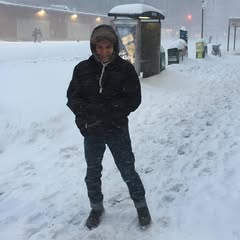
While there is no clear text visible on any signs in this specific photo, the visual language is standard for this movement: showing people bundled up against the harsh winter snow as a symbol of stagnation and poverty. The person in the image, dressed in tight jeans and heavy boots (typical "working class" winter gear), stands still in deep snow, embodying the trope of employees who are too poor or exhausted to be productive or move.
detailed-analysis (gemma3_27b-it-q8_0)
Okay, let's break down this image as a meme within the context of "Anti-Capitalism - Minimum Wage," utilizing the frameworks you've requested.
Visual Description
The image depicts a person standing resolutely in a blizzard. They are bundled in a dark coat, jeans, and a beanie, facing the camera. The background is heavily obscured by snow, with a bus stop visible. The general impression is one of weathering harsh conditions, persistence, and a certain degree of grim determination. The snowy environment is likely symbolic, connoting hardship, a difficult journey, and potentially exposure.
Marxist Conflict Theory
This image directly resonates with Marxist conflict theory, specifically concerning the exploitation of labor. The person in the image is the labor. Their willingness to face severe weather conditions speaks volumes about economic precarity. They're likely commuting to or from a low-wage job—a job they must do to survive, regardless of the hardship.
- Class Struggle: The snow represents the inherent struggles faced by the working class under capitalism. While those with economic capital can avoid exposure, the working class is often forced to endure dangerous conditions to maintain their livelihoods.
- Alienation: The image hints at the alienation of labor. This person isn't enjoying the scenery; they're battling the elements because of economic necessity. Their labor is not fulfilling, but a means to survive.
- Surplus Value: The wage they receive, regardless of how minimal, is being used to create surplus value for the capitalist. This surplus value is the difference between the value of their labor and their wage – the profit for the employer. The fact they're out in the blizzard is a visual representation of that exploitation.
- False Consciousness: The meme might implicitly call out "false consciousness"—the idea that workers do not recognize their own exploitation. It invites viewers to recognize the harsh realities of working-class existence.
Critical Theory
From a Critical Theory perspective, the image challenges the dominant narrative that hard work is always rewarded. It exposes the systemic inequalities built into the capitalist system that necessitate people enduring hardship for survival.
- Power Dynamics: The image points to an imbalance of power between employers and employees. The employer holds the power of wage determination, while the employee is essentially compelled to accept the conditions.
- Social Construction of “Hard Work”: The meme deconstructs the idealization of “hard work” that's so prevalent in capitalist ideology. It implies that true hardship isn't necessarily linked to productivity or success, but to systemic inequity.
- Critique of Rationality: Critical Theory often questions the rationality of capitalist systems. This image suggests that a rational system wouldn't force people to risk their health and safety for minimum wage.
Foucauldian Genealogical Discourse Analysis
The image can be understood through a Foucauldian lens by examining how discourses around "work ethic," "responsibility," and "individual merit" have historically constructed and normalized the expectation that individuals will endure hardship for employment.
- Discipline and Power: The snow itself becomes a form of disciplinary power. The person is essentially being disciplined by the necessity to endure the elements to maintain their employment.
- Genealogy of "Deservingness": The meme subtly questions the historical construction of who is "deserving" of comfort and safety. The discourse of individual responsibility often shifts the blame for hardship onto the individual rather than acknowledging systemic issues.
- Biopolitics: The image touches on biopolitics – the way in which modern states manage populations and exert control over life itself. The state is not ensuring the safety and well-being of the worker; the worker is expected to navigate potentially life-threatening conditions on their own.
Postmodernism
While not as central as the other frameworks, Postmodernism can contribute to understanding the image. The meme's effectiveness lies in its ambiguity. It doesn't provide a definitive solution or a grand narrative. Instead, it offers a stark image that invites interpretation.
- Deconstruction of the 'American Dream': The meme deconstructs the myth of the American Dream, in that there is no safety net for the working poor.
- Rejection of Metanarratives: It rejects any singular "truth" about work and economic success. It's a fragmented image representing a fragmented experience.
Queer Feminist Intersectional Analysis
This analysis would focus on how the burdens of low-wage work, and the exposure to harsh conditions, disproportionately affect marginalized groups.
- Intersectionality of Vulnerability: Women, people of color, LGBTQ+ individuals, and disabled individuals are more likely to be employed in low-wage jobs and face compounding vulnerabilities. The image, while not directly depicting these identities, invites the viewer to consider these intersectional realities.
- Gendered Expectations of Labor: Historically, women have been expected to perform "necessary" (often low-paying) labor regardless of the hardships involved.
- Reproducing Systems of Oppression: Minimum wage labor perpetuates cycles of poverty and oppression.
In conclusion:
This meme is a powerful visual statement on the exploitation and precarity of labor under capitalism. It effectively utilizes imagery to underscore the human cost of systemic economic inequality and to challenge dominant narratives about work, success, and responsibility. It functions as a call for recognition of the struggles faced by the working class and prompts reflection on the need for systemic change.
simple-description (llama3.2-vision_11b)
This meme features a photo of a person standing in the snow, with a caption that reads: "When you're trying to live on the minimum wage but the snow is still on the minimum wage". The image is likely a humorous commentary on the struggles of living on a low income, with the added irony of snow on the minimum wage being a literal reference to the concept of minimum wage being so low that it's still cold.
detailed-analysis (gemma3-27b-vision)
Okay, here's an analysis of the image, broken down into the requested theoretical lenses. Note that not all lenses will be strongly applicable, and I'll explain when that's the case.
Visual Description
The image depicts a person standing in a snowy, urban landscape. The person is wearing dark clothing – a hooded jacket and jeans – with dark footwear. They are facing the camera. The setting appears to be a road or parking lot covered in a significant amount of snow. In the background, there’s what appears to be a bus stop or small shelter, along with some street lighting and indistinct figures in the distance. The overall tone is somewhat bleak and cold, dominated by the whiteness of the snow. The scene lacks vibrancy and suggests either an abandoned or sparsely used public space.
Foucauldian Genealogical Discourse Analysis
This image, though simple, can be examined through a Foucauldian lens by considering how the practices of weather observation, urban planning, and even personal expression are interwoven.
- Discourse of "Normal" Weather: The very act of noting the "abnormality" of a snowy scene (as opposed to sunny or dry conditions) highlights the discursive construction of "normal" weather. We categorize and understand weather through systems of knowledge built up over time.
- Urban Planning and Control: The paved road, the bus shelter, the street lighting – these are not natural features. They are tools of social control, structuring movement and access within the city. They reflect a discourse of order and regulation, attempting to normalize space. The snow, disrupting this order, momentarily destabilizes the controlled environment.
- The Body & Presentation: The individual’s clothing choices (dark, practical) also speak to a discourse of protection, of preparing the body against the elements. It suggests a normalized expectation of shielding oneself from the environment, a historically contingent practice.
- Genealogical Approach: A genealogical analysis would trace the historical development of these practices. How did cities come to be built in this way? How did the concept of "normal" weather evolve? How did clothing become a tool for environmental adaptation? The image serves as a node in a much larger web of power/knowledge.
Critical Theory
The image lends itself well to aspects of Critical Theory, particularly regarding the alienation of the individual within the modern urban environment.
- Alienation: The figure stands isolated in the stark white landscape, separated from any readily visible social interaction. This evokes a sense of alienation – a feeling of disconnection and estrangement characteristic of modern urban life.
- Commodification of Space: The bus shelter and road infrastructure are products of capitalist development, designed to facilitate the movement of labor and goods. The snow, while potentially disrupting this flow, does not fundamentally alter the underlying capitalist structure. It temporarily exposes the constructedness of the space but doesn’t dismantle it.
- Instrumental Reason: The urban planning seen in the image reflects a form of instrumental reason – a focus on efficiency and control over the natural world. The snow represents a force that resists this rationalization, briefly reintroducing a degree of unpredictability and chaos.
Marxist Conflict Theory
While not a strong fit, Marxist elements can be observed.
- Class and Access: The bus shelter suggests a reliance on public transportation, potentially indicating a lower socioeconomic status for those who use it. The snow could be seen as a force that disproportionately affects those without private transportation or access to heated spaces.
- Control of Infrastructure: The road and bus stop are elements of infrastructure controlled by capital or the state. The snow represents a momentary disruption to this control, but doesn't threaten the fundamental power structure.
- Labor and Environment: The individual's presence could be interpreted as a worker commuting through harsh conditions, demonstrating the exploitation of labor within a capitalist system.
Postmodernism
The image has certain postmodern qualities:
- Simulacra and Simulation: The urban environment – with its artificial structures – can be seen as a simulacrum – a copy without an original. The snow, a natural element, disrupts this simulation, momentarily revealing the constructedness of the space.
- Fragmentation and Loss of Meaning: The isolated figure and stark landscape evoke a sense of fragmentation and loss of meaning. The image lacks a clear narrative or purpose, reflecting a postmodern sensibility.
- Irony and Ambiguity: The image is open to multiple interpretations, lacking a definitive meaning. This ambiguity is characteristic of postmodern art and thought.
- Decentered Subject: The isolated figure can be seen as a decentered subject, lacking a fixed identity or purpose within the urban landscape.
Queer Feminist Intersectional Analysis
This lens is the least directly applicable without more context. However, we can explore potential intersections:
- Gendered Space: Urban spaces are often designed with a masculine perspective, prioritizing efficiency and control. The snow, disrupting this order, could be seen as a temporary reclamation of space by a natural force, potentially offering a different perspective.
- Safety and Vulnerability: The snow and cold could increase vulnerability for marginalized groups, particularly those experiencing homelessness or lacking adequate resources.
- Body and Surveillance: The individual's body in a public space is subject to surveillance and regulation. The snow, while potentially obscuring visibility, doesn't fundamentally alter this dynamic.
Let me know if you'd like me to elaborate on any of these analyses or explore a different angle!
simple-description (llama3.2-vision)
The meme features a person standing in the snow, dressed in winter clothing. The image is likely a still from a TV show or movie, but I don't have enough information to provide the specific context. The text on the image is not provided.