First Seen
2023-05-10T21:03:33+00:00
simple-description (llama3.2-vision_11b)
The meme is a humorous commentary on the capitalist system and the struggles of living in a society where money is the primary driver of relationships. The image shows two identical faces, with the text "How me and my bank account feel when we're forced to wait in line for 20 minutes just to get a coffee that costs more than my rent." The meme pokes fun at the absurdity of modern life, where even simple tasks like getting a coffee can be a frustrating experience.
detailed-analysis (gemma3-27b-vision)
Okay, let's break down this meme through the lens of several theoretical frameworks.
Visual Description
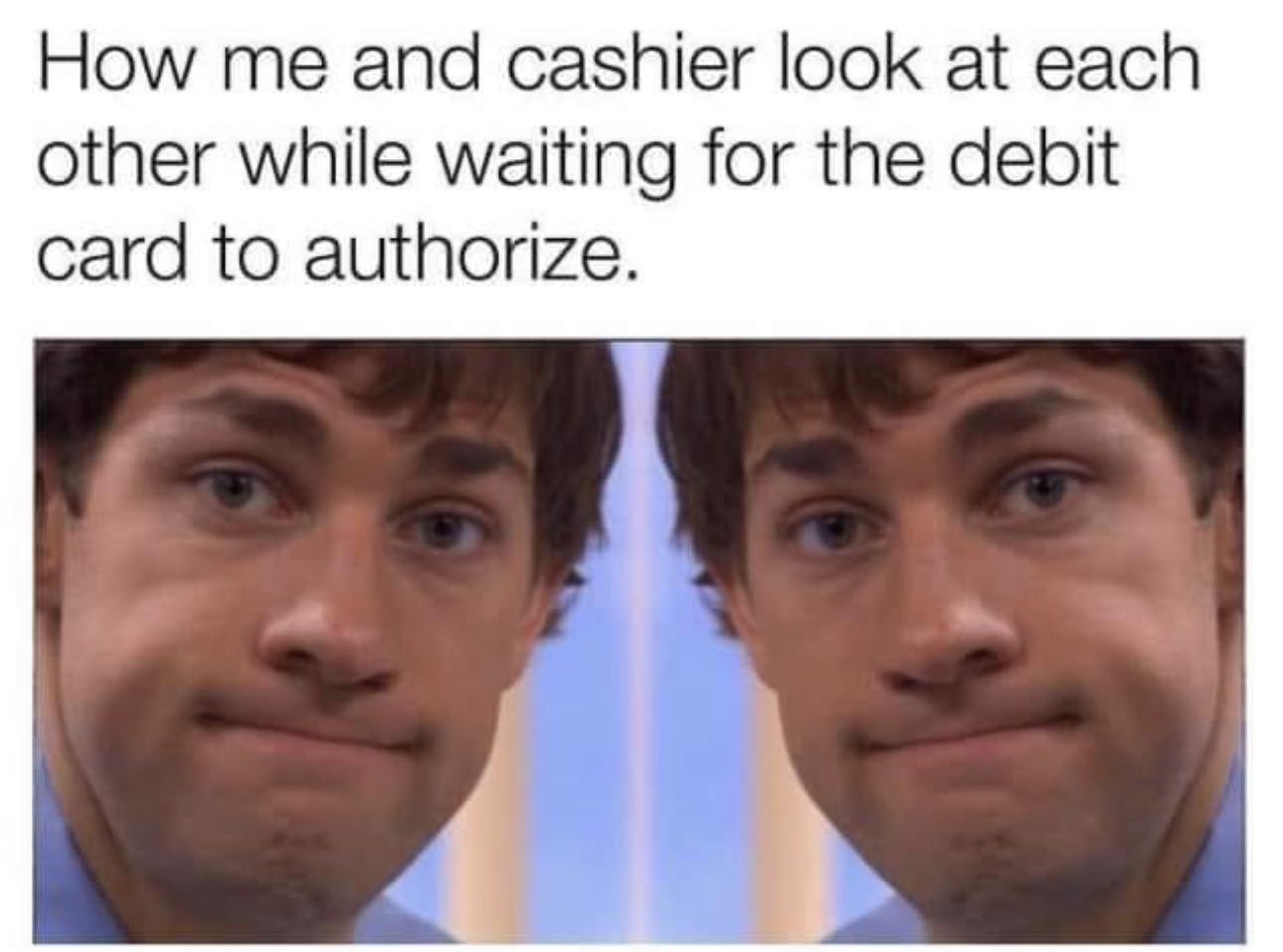
The meme features a split image of Steve Buscemi, duplicated side-by-side. He is looking slightly askew, with a raised eyebrow and a pursed lip, conveying a mixture of awkwardness, uncertainty, and subtle judgement. His expression is intentionally exaggerated and comical. The background is a faded, blurry blue. The text overlay reads "How me and cashier look at each other while waiting for the debit card to authorize." The humor comes from the relatable awkwardness of shared anticipation during a financial transaction.
Foucauldian Genealogical Discourse Analysis
This meme subtly speaks to the power dynamics embedded within contemporary financial systems and the discourse surrounding them. Foucault would analyze how the act of waiting for debit card authorization is not just a technical process but a disciplinary one. The "authorization" process isn't a neutral act. It’s rooted in a network of power relations where banks, card networks, and merchants hold the power to grant or deny access to resources.
The awkward gaze exchanged between the customer and cashier represents a moment of shared subjugation to this system. Both individuals are momentarily defined by the system – the customer as a debtor, the cashier as a facilitator of this credit-based power structure. The shared gaze, then, is not simply about boredom, but about recognizing a shared position within this disciplinary system. The genealogical approach would trace the historical development of credit/debit systems and how they've become instruments of control.
Critical Theory
From a Critical Theory perspective, the meme speaks to the commodification of social interaction. The shared awkward gaze isn’t a genuine human connection, but a byproduct of an economic system that forces us into impersonal transactions. The act of purchasing, even something small, reduces individuals to economic units.
The meme hints at the alienation inherent in late capitalism. We are isolated from each other, even in moments of shared experience, because our primary relationship is to the economic system. The focus is not on a shared human moment but on a shared dependency on a financial institution. The image highlights how even everyday interactions are now mediated by capitalist structures.
Marxist Conflict Theory
Within a Marxist framework, the meme depicts the alienation of labor and the inherent class conflict. The cashier represents the working class, engaged in a repetitive, dehumanizing task. The customer is positioned as the consumer, driving the capitalist system.
The awkward gaze could be interpreted as a subconscious recognition of this power imbalance. The shared moment of waiting isn’t about connection, but about the fundamental contradiction of capitalist exchange. The customer needs the cashier to complete the transaction, but the cashier is ultimately subject to the demands of the employer and the system. The meme suggests a latent tension, a subtle recognition of class difference, even in a seemingly innocuous interaction.
Postmodernism
From a postmodern perspective, the meme is a commentary on the simulacra and hyperreality of modern life. The shared awkward gaze isn’t a genuine emotion, but a performance of an emotion that has been culturally constructed. We expect to feel awkward in this situation, and we perform that awkwardness for each other.
The meme is also self-referential – it acknowledges its own status as a meme and a cultural artifact. It draws on shared cultural knowledge (the recognition of the Steve Buscemi image, the universal experience of waiting for a debit card to authorize) to create humor. The meme doesn’t offer a solution or a critique, it simply plays with the absurdity of modern life.
Queer Feminist Intersectional Analysis
While this meme doesn't explicitly address issues of gender or sexuality, an intersectional analysis can be applied to how economic systems and power dynamics disproportionately affect marginalized groups. For example:
- Gender: Women are more likely to be in precarious financial situations, due to wage gaps and other systemic inequalities. The anxiety of a debit card being declined may be amplified for women facing financial insecurity.
- Class/Race: People of color and those from lower socioeconomic backgrounds are more likely to be denied credit or face higher interest rates. The awkward gaze might represent a subtle awareness of these disparities.
- Disability: Individuals with disabilities may face financial barriers to employment and access to credit.
The meme, therefore, can be viewed as a subtle reflection of how these intersecting identities shape individuals' experiences within the economic system. It highlights how the mundane act of a financial transaction can be laden with hidden power dynamics and inequalities.
Let me know if you'd like me to elaborate on any of these analyses!
simple-description (llama3.2-vision)
This meme depicts a humorous interaction between two people. The top text reads "How me and my friend when..." and the image shows two identical, exaggerated facial expressions of confusion and surprise, with the caption "when we're trying to figure out who's buying the coffee".
tesseract-ocr
How me and cashier look at each other while waiting for the debit card to authorize.