First Seen
2026-03-05T06:51:20+00:00
simple-description (qwen3.5_2b-q8_0)
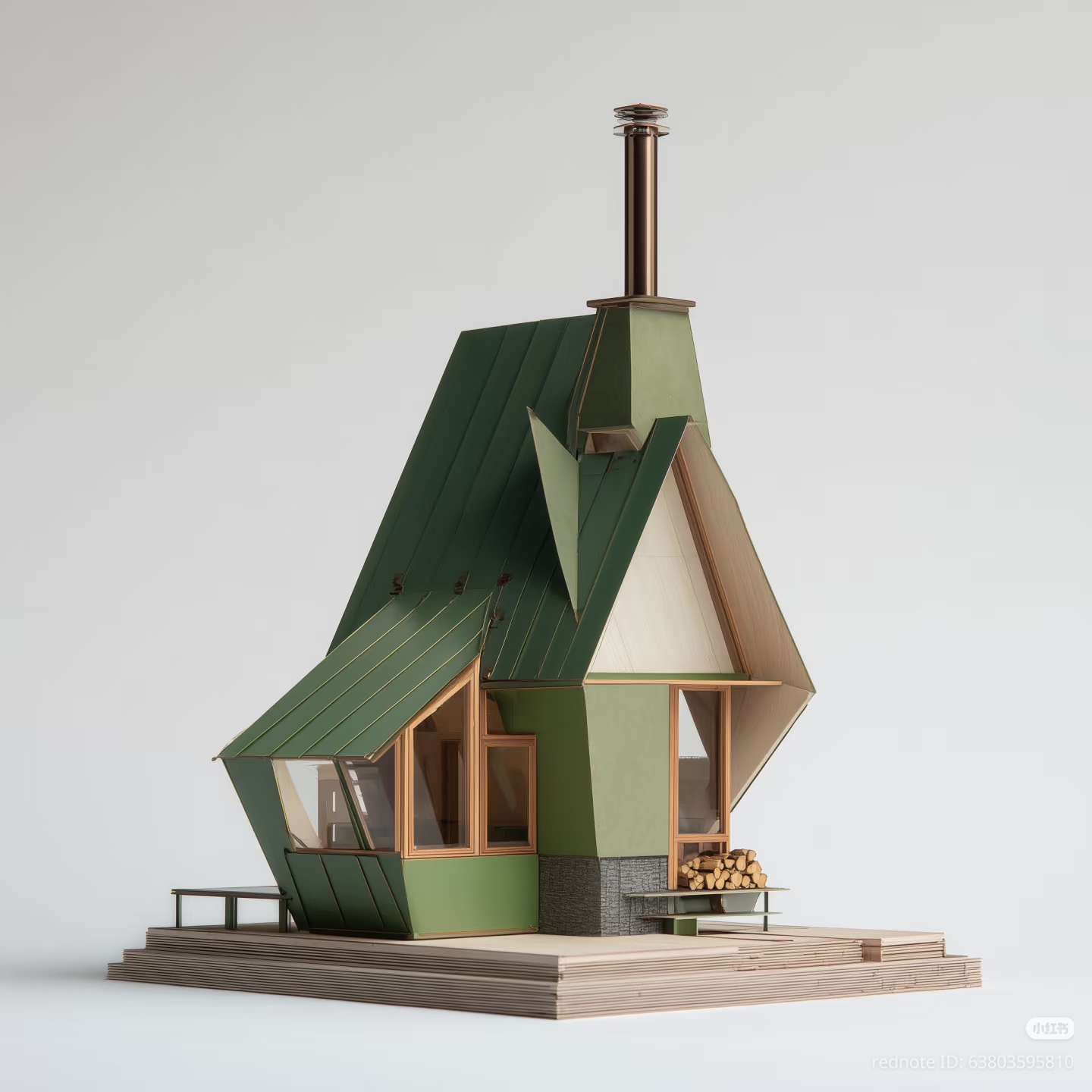
This image displays a stylized architectural model or digital rendering of a cottage featuring green siding, wooden trim, and a tall chimney, fitting into the "Cottagecore" aesthetic of beautiful, nature-inspired homes. It likely represents a creative digital creation or papercraft model often shared on social media platforms like RedNote. In the bottom right corner, there is text that reads "rednote ID: 63803595810," which serves as a watermark from the platform Xiaohongshu (Little Red Book), a site known for sharing these types of curated aesthetic photos.
detailed-analysis (gemma3_27b-it-q8_0)
Okay, let's analyze this image of a stylized cabin from a Cottagecore perspective, pulling in relevant theoretical frameworks where appropriate.
Visual Description
The image depicts a miniature model of a quaint, A-frame cabin. It's rendered with a distinct, almost digital clarity—not a rustic, "real" texture—which is telling in itself. The structure is primarily shades of green and tan, with a steeply pitched, multi-faceted green roof and a lighter tan base. A stone chimney rises from the roof, capped with a metal flue. Large, rectangular windows are prominent, suggesting a bright, inviting interior. A small woodpile and a simple wooden bench are situated next to the cabin, completing the scene. It’s presented on a simple, geometric base—emphasizing the almost artificial quality of the presentation. The clean lines and deliberate composition contribute to a feeling of idyllic, curated simplicity. The lack of surrounding context (no landscape, other structures, people) focuses attention entirely on the cabin as an idea of home and retreat.
Foucauldian Genealogical Discourse Analysis
From a Foucauldian perspective, this image isn't just about a building; it's about the discourse of "escape" and the construction of the "ideal" rural life. Cottagecore as a trend builds on historical discourses about nature, rurality, and the rejection of urban modernity. However, it selectively retrieves and reconfigures these elements.
Historically, rural life was often associated with hardship, poverty, and backbreaking labor. Yet, Cottagecore tends to sanitize this history, presenting a romanticized, almost fantastical version. This cabin exemplifies that. It's clean, organized, and isolated. It doesn’t show the messiness of actual rural existence. This isn't an authentic representation of rural life; it's a genealogy of desires—a tracing of how our longings for simpler times have been shaped by cultural narratives (literary pastoral, art history, etc.).
The image performs a power dynamic. It's a carefully constructed fantasy that implicitly sets a standard for "good" or "desirable" life, shaping subjectivities around the idea of rural escapism. Those who cannot achieve this aesthetic ideal might feel lacking, further reinforcing the power dynamics within this discourse.
Critical Theory
Applying Critical Theory, specifically Adorno and Horkheimer's concept of the "culture industry," the image becomes a symptom of late capitalism. The cabin, while appearing to represent an escape from consumerism, is itself a consumable aesthetic. Cottagecore becomes a commodified fantasy, accessible through curated Instagram feeds, Etsy shops selling handmade goods, and the broader trend of “aesthetic” living.
The perfectly rendered, miniature nature of the cabin is crucial. It's not a practical dwelling; it's an object of contemplation and consumption. It fulfills a psychological need for escapism, but does so in a way that reinforces the capitalist system by encouraging the purchase of related products and experiences. The emphasis on aesthetics and "vibe" becomes a substitute for real social or political change.
Postmodernism
The image strongly resonates with postmodern sensibilities. It's a hyperreal representation – not a naturalistic depiction of a cabin, but a stylized, digitally crafted sign for a cabin. The emphasis is on simulacra and simulation (Baudrillard). The cabin represents an idea of a cabin, detached from any "real" referent. It's a pastiche of rural aesthetics, a collection of tropes (the woodpile, the chimney, the A-frame shape) that don't necessarily signify a genuine connection to nature or a practical living space.
The lack of context is key. The cabin exists in a void, further emphasizing its status as a signifier. It’s about the feeling of cottagecore, the aesthetic experience, rather than the material reality. This fragmentation and emphasis on style over substance are hallmarks of postmodern thought.
Let me know if you'd like me to expand on any of these points or explore additional theoretical frameworks!
simple-description (llama3.2-vision_11b)
The meme is a photo of a small, cozy, and intricately designed wooden cottage with a sloping roof and a large window. The cottage is nestled in a forest, surrounded by trees and a small stream. The image is captioned "I'm not lazy, I'm just conserving energy for my cottagecore lifestyle".