First Seen
2026-03-05T06:51:20+00:00
simple-description (qwen3.5_2b-q8_0)
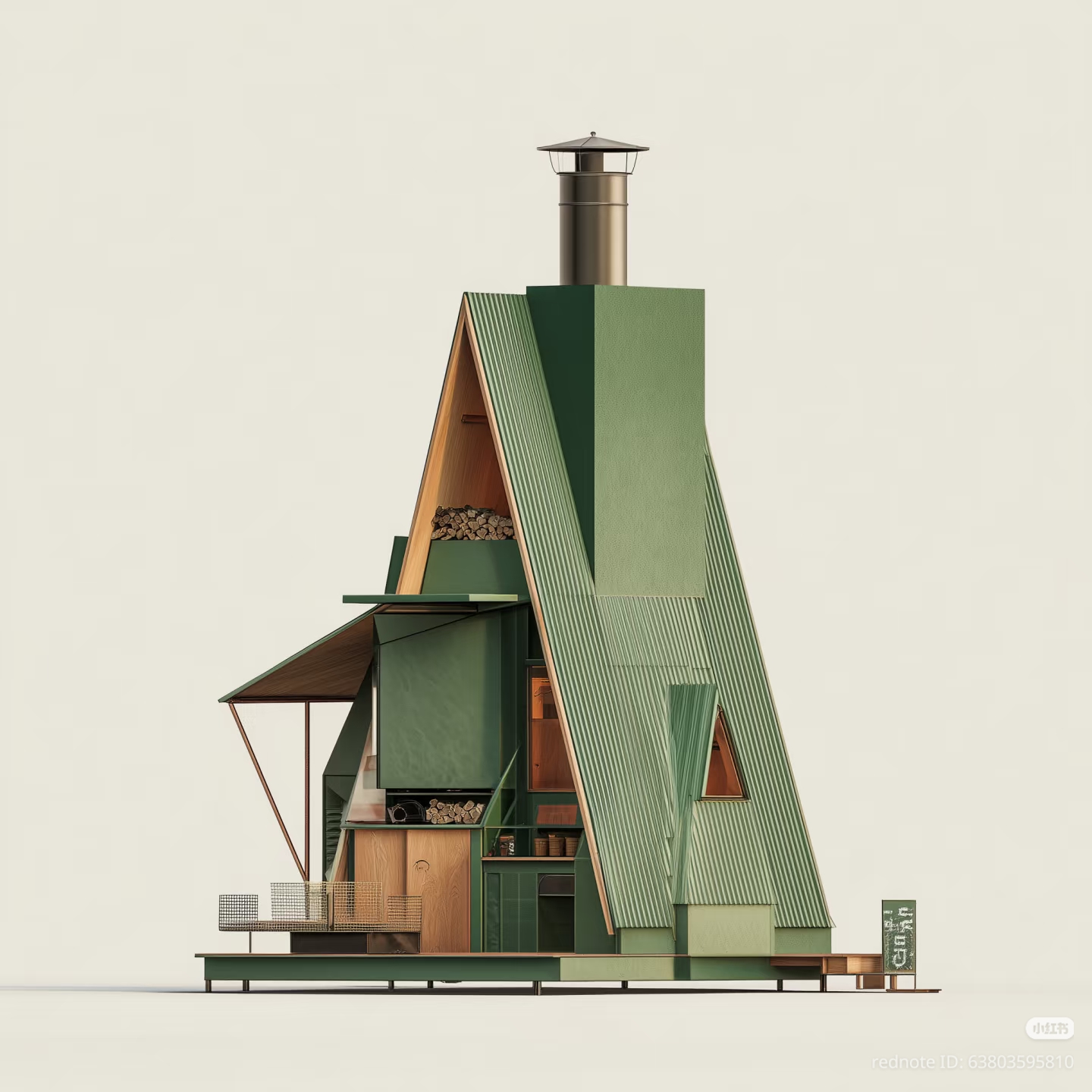
This cute "Catgirl Cottagecore" meme depicts a tiny cat wearing high heels standing in a grassy field next to a charming cottage painted in calming sage greens and warm wood tones. The scene highlights the aesthetic's love for rustic details like a tall, cylindrical chimney stack that rises from the roof and shelves holding firewood nearby. Text is visible at the bottom right corner with "rednote ID: 63803595810," along with a vertical sign that reads "Lobby" alongside Chinese characters.
detailed-analysis (gemma3_27b-it-q8_0)
Okay, let's analyze this image – a highly stylized, almost cartoonishly perfect little cabin – through the lens of Cottagecore aesthetics, and delving into potential theoretical frameworks where appropriate.
Visual Description
The image presents a strikingly idealized cabin. It's characterized by:
- Geometric Simplicity: Extremely clean lines, a sharply angled A-frame roof, and a rectangular base. It's not organic or ‘ramshackle’ in the traditional sense of cottages, despite the aspiration to appear rustic.
- Limited Palette: Dominated by shades of green (a natural, ‘earthy’ color) but rendered in a smooth, almost metallic finish. Touches of wood and the white chimney add contrast.
- Cleanliness & Order: The cabin is impeccably neat. Wood is neatly stacked, potted plants are strategically placed, and everything appears pristine. There's a clear sense of intentionality in the arrangement.
- Accessibility & Comfort: There's a small deck/patio with seating, suggesting a place for relaxation and enjoyment of nature. The windows are inviting, hinting at a cozy interior.
- "Miniature" Scale: It's notably small, adding to the sense of intimacy and deliberate downsizing.
Cottagecore Connection
This image is highly indicative of Cottagecore. Here's how:
- Romanticized Rural Life: Cottagecore centers around a nostalgic, idealized vision of rural life – self-sufficiency, connection to nature, and a rejection of modern stresses. This cabin embodies that longing. It's a space removed from the chaos of urban life.
- Domesticity & Craft: The focus on wood storage, potted plants, and the implied coziness within represent the emphasis on domestic crafts and skill. The idea of a self-made, simple life is central.
- Aesthetic Prioritization: Cottagecore isn't necessarily about actually living a rural life. It's largely about the aesthetic of that life – the visual elements that evoke feelings of warmth, peace, and authenticity. This image prioritizes aesthetics to an almost unreal degree.
- Escapism: The image functions as an escapist fantasy. It provides a visual space for daydreaming about a simpler, more harmonious existence.
Foucauldian Genealogical Discourse Analysis
This is where it gets interesting. Michel Foucault explored how power operates through discourse, shaping our understanding of norms and truth. We can see this at play in the Cottagecore trend:
- Constructing "Authenticity": The idea of an "authentic" rural life is not inherent; it's constructed through cultural narratives – literature, film, social media, etc. Cottagecore takes this constructed idea and amplifies it. This cabin is "rustic," not by virtue of its origins, but because it conforms to a set of aesthetic rules.
- Normalization of a Specific Lifestyle: The image represents a very specific, curated version of rural life. It glosses over the hard labor, economic challenges, and potential isolation that might be inherent in that lifestyle. This curation normalizes a particular, often privileged, interpretation of “simplicity.”
- Power Dynamics & The Gaze: The image is presented for consumption – it's a spectacle. We are positioned as viewers, gazing upon this idealized cabin. This creates a power dynamic where the image dictates our desires and aspirations. It is a performance of rurality.
Critical Theory
Drawing from thinkers like Adorno and Horkheimer, we can see elements of the "culture industry" at work.
- Commoditization of Nostalgia: Cottagecore (and this image) participates in the commoditization of nostalgia. A yearning for a past that likely never existed in this form is repackaged and sold as an aesthetic style. It becomes a trend, purchasable through clothing, home decor, and, conceptually, through the aspiration to this lifestyle.
- False Consciousness: The image, while visually appealing, might create a "false consciousness" by obscuring the complex realities of rural life and offering a superficial solution to modern alienation.
- Standardization of Taste: This particular cabin style is part of a broader trend. The aesthetic has become standardized, losing some of its original authenticity in the process.
Postmodernism
Postmodern thought emphasizes the breakdown of grand narratives and the subjectivity of truth.
- Hyperreality: The cabin exists as a hyperreality – a simulation of a simulation. It’s not an actual cabin, but a highly stylized representation that exceeds and distorts any ‘real’ equivalent. It’s more “cabin” than a cabin.
- Pastiche & Irony: Cottagecore sometimes engages in pastiche – the imitation of different styles. There can be a level of irony at play, acknowledging the artificiality of the aesthetic while simultaneously embracing it.
In Conclusion
The image, through a Cottagecore lens, is a potent symbol of escapism and idealized rural life. However, deeper analysis reveals a complex interplay of power dynamics, commodification, and the construction of authenticity. While seemingly harmless, it participates in a broader cultural discourse that shapes our desires and understanding of “the good life.” It is a beautifully rendered, hyperreal fantasy – and its allure lies in that very constructedness.
Let me know if you’d like me to elaborate on any of these points, or if you want to explore other theoretical frameworks!
simple-description (llama3.2-vision_11b)
This meme features a 3D model of a cozy, rustic cottage with a focus on natural materials and a warm, inviting atmosphere. The image is meant to evoke a sense of comfort and relaxation, with a focus on the cottage's natural surroundings and the feeling of being in a peaceful, isolated environment. The text "Cottagecore" is likely meant to be a humorous or ironic commentary on the idea of a cozy, rural cottage, with a focus on the idea of "cottage" as a place of peace and relaxation.