First Seen
2026-03-05T06:51:20+00:00
simple-description (qwen3.5_2b-q8_0)
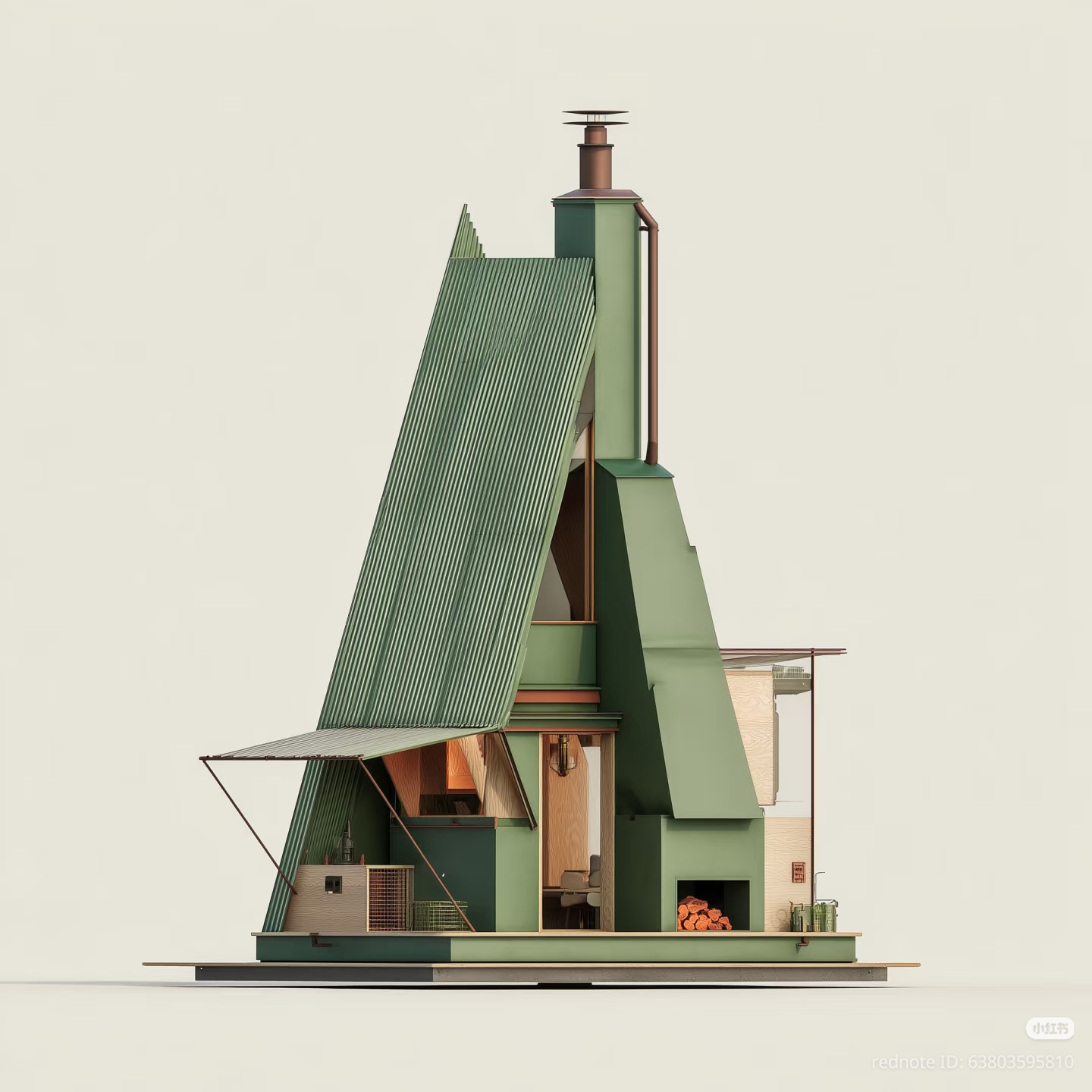
This image depicts a digital rendering of a "Cottagecore" dream home—a tiny, cozy sanctuary that perfectly captures the aesthetic of living like a forest creature. The meme context suggests that this little structure embodies a sense of small-scale perfection and simplicity, where one can truly bask in the warmth of nature and enjoy total immersion into the outdoors without modern distractions. As seen in the bottom right corner, it serves as a humorous "caption" for someone trying to post a photo of their tiny home in the woods on social media, complete with the text "rednote ID: 63803595810".
detailed-analysis (gemma3_27b-it-q8_0)
Okay, let's analyze this image through the lens of the "Cottagecore" aesthetic category, and delve into some applicable theoretical frameworks.
Visual Description
The image depicts a highly stylized, almost cartoonish, miniature house. It's built in a dramatically angled A-frame design, combining elements of a cabin and a modern, almost architectural, structure. The color scheme is muted and natural – predominantly greens, reds, and wood tones. Key visual elements include:
- Exaggerated Architecture: The steep roofline, projecting fireplace, and unusual window placement create a sense of whimsy and a departure from realistic architectural proportions.
- Cozy Interior: Visible through openings, the interior hints at a rustic and comfortable space—simple wooden furniture, a brick fireplace with neatly stacked wood, and small, inviting details.
- Textural Contrast: The image plays with different textures: smooth metal roofing, rough brick, and natural wood.
- Minimalist Composition: The house is situated on a plain, neutral background, isolating it and emphasizing its form.
- Industrial Touches: The presence of an air conditioning unit (or similar) subtly integrates modern life into the otherwise rustic setting.
Cottagecore & the Visual Language
This image very strongly resonates with Cottagecore. Cottagecore is a romanticized aesthetic celebrating rural life, simplicity, self-sufficiency, and a return to nature. This image encapsulates many of its core values:
- The Dream of the Cabin: The A-frame house is a classic symbol of retreat, escape, and a simpler existence. It evokes feelings of warmth, safety, and cozy domesticity.
- Emphasis on Domesticity: The visible interior focuses on elements of home-making: the fireplace as a hearth, the wood ready for burning, creating a sense of warmth.
- Nature-Inspired Palette: The colors evoke the natural world – forest greens, earthy reds, and warm wood tones.
- Curated Rurality: A key aspect of Cottagecore is selective embrace of rural life, focusing on the picturesque and avoiding the harsher realities. This image is a prime example – it’s a highly idealized, almost fantastical representation of a cabin, far removed from the challenges of actual rural living.
Foucauldian Genealogical Discourse Analysis
Cottagecore, as a constructed aesthetic, can be examined through Foucault’s concept of discourse. Foucault argues that discourse creates power/knowledge regimes—ways of understanding the world that shape our identities and behaviors.
- The Discourse of Escape: Cottagecore's popularity can be seen as a reaction against the dominant discourses of late capitalism – the pressure to work constantly, the anxieties of urban life, and the feeling of alienation. It generates a counter-discourse centered around escape, authenticity, and a return to perceived "natural" values.
- The Genealogy of Nostalgia: The aesthetic's nostalgia for a "simpler time" isn't a literal yearning for the past, but a constructed nostalgia. Foucault's genealogical approach would trace the historical conditions that led to the formation of this nostalgic desire. The "simpler time" Cottagecore references is an idealized and selectively remembered version of rural life, divorced from its hardships.
- Discipline and Self-Care: While ostensibly about freedom from societal pressures, Cottagecore can subtly reinforce forms of self-discipline—the pressure to cultivate a particular lifestyle, to be “productive” in a romanticized way (baking, gardening, crafting), and to present a curated image of oneself.
Critical Theory
From a Critical Theory perspective (informed by the Frankfurt School), Cottagecore can be seen as both a symptom and a potential critique of late capitalism.
- Commodifying the Rural: The aesthetic has been heavily commodified, with Cottagecore-inspired products and content becoming popular on platforms like Etsy and Instagram. This commodification ironically reinforces the capitalist structures it seems to reject. The aesthetic itself becomes a product to be consumed.
- False Consciousness: Cottagecore may offer a temporary escape from the alienation of modern life, but it doesn't address the root causes of that alienation. It risks creating a “false consciousness” – a sense of contentment that masks underlying systemic problems.
- The Spectacle of Authenticity: The highly curated and performative nature of Cottagecore on social media raises questions about authenticity. It's often a representation of a rural lifestyle, rather than a genuine embodiment of it. This aligns with Debord's concept of the "spectacle," where social life is mediated by images and representations.
Marxist Conflict Theory
While not a direct manifestation of class struggle, Cottagecore can be analyzed through a Marxist lens:
- Idealization of Pre-Industrial Labor: Cottagecore romanticizes traditional crafts and skills (baking, gardening, sewing) that were once forms of necessary labor for survival. This idealization can be seen as a rejection of the alienation of labor in industrial capitalism.
- Access to Nature as a Privilege: The ability to choose a "simpler life" and access the resources needed to cultivate a Cottagecore aesthetic (a garden, a cabin, time for crafting) is often dependent on economic privilege. It's a lifestyle that isn’t accessible to everyone.
- The Illusion of Self-Sufficiency: The aesthetic promotes self-sufficiency, but true self-sufficiency is increasingly difficult in a globalized capitalist system. Even Cottagecore practitioners rely on the infrastructure and products created by others.
Postmodernism
The image fits neatly into postmodern frameworks due to:
- Pastiche & Hybridity: The fusion of architectural styles – the A-frame with modern touches – embodies postmodern pastiche, blending elements from different eras and styles.
- Simulation & Hyperreality: The image is a simulation of a rural retreat, a constructed reality that exists primarily as an image. This aligns with Baudrillard’s concept of hyperreality, where simulations become more real than the real.
- Deconstruction of Authenticity: The emphasis on curated aesthetics and performative lifestyles challenges the notion of "authenticity." The image doesn't claim to be a real cabin; it presents itself as a stylized representation.
Queer Feminist Intersectional Analysis
While not immediately obvious, a Queer Feminist Intersectional lens can be applied:
- Reclaiming Domesticity: Cottagecore can be seen as a rejection of patriarchal expectations around career ambition and a reclaiming of traditionally "feminine" activities like crafting and homemaking, albeit within a highly aestheticized and often white-centered framework.
- Escaping Gender Roles: The romanticized nature of Cottagecore can offer a space for individuals to explore identities outside of traditional gender roles.
- The Importance of Intersectionality: It’s critical to acknowledge that the accessibility of Cottagecore and the associated privilege are often shaped by race, class, ability, and other intersecting identities. The aesthetic often lacks diversity and can reinforce existing inequalities.
In conclusion, this image is not merely a pretty picture; it's a potent symbol that encapsulates a complex set of cultural anxieties, desires, and contradictions. Through analyzing it with various theoretical lenses, we can unpack the deeper meanings and implications of the Cottagecore aesthetic.
simple-description (llama3.2-vision_11b)
The meme is a 3D rendering of a cottagecore-inspired A-frame cabin, with a focus on cozy and rustic elements. The image features a cozy A-frame cabin with a green and natural color scheme, featuring a fireplace, a kitchen, and a cozy living room. The text "Cottagecore A-Frame Cabin" appears in the image.