First Seen
2025-08-29T16:56:56+00:00
simple-description (qwen3.5_2b-q8_0)
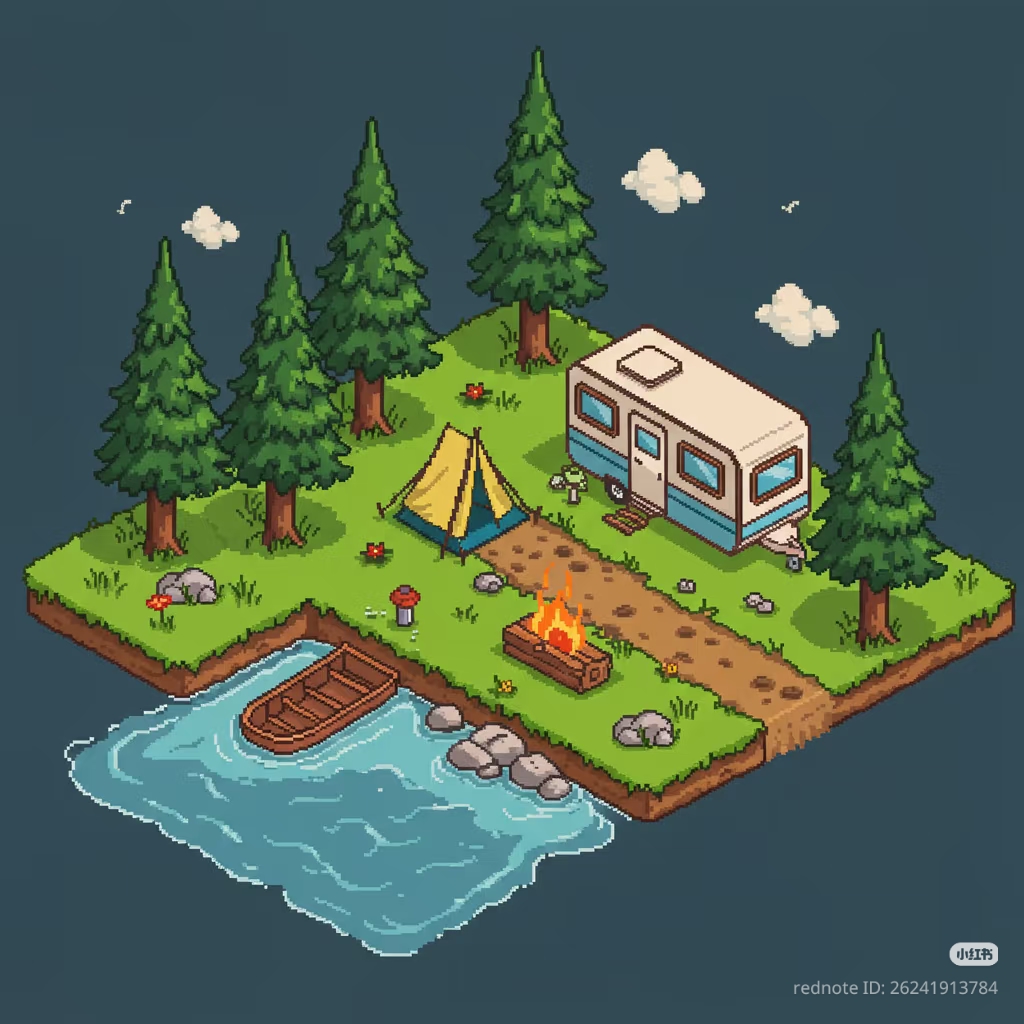
This image depicts a piece of internet nostalgia known as "Cottagecore," which draws heavily on vintage video game graphics and the longing for a simple, nature-connected life. Visually, it captures an isometric scene of a vintage camper parked on a floating island with a campfire and tent nearby. For someone who cannot see it: It looks like a cute pixel art scene featuring a vintage camper and trees floating in the middle of the ocean. Text visible in the bottom right corner reads "rednote ID: 26241913784".
detailed-analysis (gemma3_27b-it-q8_0)
Okay, let's analyze this pixel art image through the lens of Cottagecore aesthetics, and delve into applicable theoretical frameworks where relevant.
Visual Description
The image is a pixelated isometric illustration depicting a peaceful, idealized camping scene. The scene centers around a vintage-style camper van, positioned near a small, bright blue tent. A campfire crackles between the tent and the van, complete with logs and camping chairs. A body of water, presumably a lake, is featured with a small wooden rowboat tied to the shore. Surrounding the campsite are lush green trees, scattered rocks, and patches of wildflowers. The overall aesthetic is deliberately nostalgic and "cute"—the use of pixel art itself contributes to this, referencing early video games and a simpler digital past. The color palette is soft and natural, reinforcing the idyllic nature of the scene. The sky is a muted blue with puffy white clouds. The scene's clean, almost toy-like presentation reinforces the fantasy aspect, distancing it from the realities of actual camping (mud, bugs, discomfort).
Cottagecore Aesthetic Analysis
The image is very strongly representative of Cottagecore. Here’s how:
- Romanticization of Rural Life: The core tenet of Cottagecore is a longing for a simpler, more self-sufficient, and pastoral lifestyle. This scene embodies that; it's a visual escape to nature, far removed from urban chaos.
- Nostalgia and Retro Aesthetics: The vintage camper van, the pixel art style, and the overall “cozy” vibe all trigger nostalgia—a desire for a perceived simpler past (even if it wasn’t actually simpler).
- Focus on Comfort and Craft: The camping setup suggests a deliberate creation of a comfortable, cozy space within nature. Cottagecore values handcrafted elements, and the implied care taken in setting up the campsite fits within that. The campfire represents warmth, connection, and a slow pace of life.
- Connection to Nature: The natural elements—trees, lake, wildflowers—are central. Cottagecore emphasizes a harmonious relationship with the natural world, though often presented in a highly curated, aestheticized way.
- Gentle Aesthetics: The overall tone is soft, gentle, and comforting. There are no harsh edges or threatening elements. It is meant to evoke a sense of peace and tranquility.
Foucauldian Genealogical Discourse Analysis
While not immediately obvious, a Foucauldian lens can be applied. Cottagecore's resurgence can be seen as a reaction against dominant discourses of productivity, capitalism, and constant connectivity.
- Discipline and Normalization: Modern life, as shaped by capitalist structures, disciplines us to be perpetually productive. Cottagecore, as an aesthetic and lifestyle, represents a deliberate escape from those disciplinary regimes. It's a rejection of the normalization of hustle culture and a search for alternative ways of being.
- Power/Knowledge: The very construction of "nature" as a desirable escape is a product of power/knowledge relations. Historically, access to nature has been unevenly distributed, often tied to class and privilege. The image of a peaceful, accessible nature, like the one shown, can mask those power dynamics. Cottagecore’s popularity can be seen as a reclaiming of a sense of freedom, but it's a freedom constructed within a specific ideological context.
- Genealogy of the "Simple Life": We can trace the historical shifts in attitudes towards rural life and self-sufficiency – from practical necessity, to romanticized escape, to an aestheticized trend. Cottagecore isn’t a return to a ‘natural’ state, but a reinterpretation and reframing of past ideals.
Critical Theory
Cottagecore, as seen in this image, can be critically examined through a lens that questions its idealized nature and the potential for it to be a form of escapism that ignores or glosses over real-world issues.
- Commodification of the Aesthetic: The popularity of Cottagecore has led to its commodification—the sale of “Cottagecore” themed clothing, décor, and experiences. This transforms a potential critique of consumerism into another avenue for it. The image itself can be viewed as part of that commodification process.
- Ideology and False Consciousness: The idyllic scene could be argued to represent a form of ideological fantasy. By presenting a romanticized vision of rural life, it might distract from or obscure the material conditions and inequalities that exist in the real world. It’s a "false consciousness" in the sense that it presents a comforting illusion rather than a critical engagement with reality.
- Representation and Exclusion: Historically, the visual tropes of rural life (farming, crafts, etc.) have often been associated with specific demographic groups. The current iteration of Cottagecore, often dominated by a specific aesthetic and online presence, may inadvertently exclude or marginalize those groups.
Postmodernism
Postmodernism can be seen in how Cottagecore operates as a pastiche of various aesthetic elements.
- Simulation and Hyperreality: The pixelated nature of the image, the curated perfection of the scene, and the blend of vintage and contemporary elements create a hyperreality – a simulation of nature and rural life that is more idealized than reality itself. It’s not claiming to be nature, but to represent a feeling or mood associated with it.
- Deconstruction of Norms: While perhaps subtle, Cottagecore can be viewed as a deconstruction of modern norms around work, productivity, and success. It suggests that value can be found in slower, simpler pursuits, rather than constant striving.
- Intertextuality: The image draws on multiple cultural references—vintage camping, pixel art, pastoral paintings—creating a web of intertextual connections.
In conclusion, the image functions powerfully as Cottagecore. However, a critical reading reveals complexities beneath the surface of this idyllic scene, pointing to questions of power, commodification, and the nature of reality. The image is not merely a pleasant escape, but a culturally loaded symbol that reflects our anxieties and desires in the 21st century.
simple-description (llama3.2-vision_11b)
The meme is an image of a serene, pixelated cottagecore scene, featuring a small cottage, a pond, and a boat. The scene is surrounded by trees, flowers, and a campfire, with a small, yellow tent in the center. The text "I'm not lazy, I'm just on cottagecore time" appears above the image, implying that the person is taking a break from their usual activities to enjoy a relaxing, nature-based experience.