First Seen
2025-10-05T07:04:29+00:00
simple-description (qwen3.5_2b-q8_0)
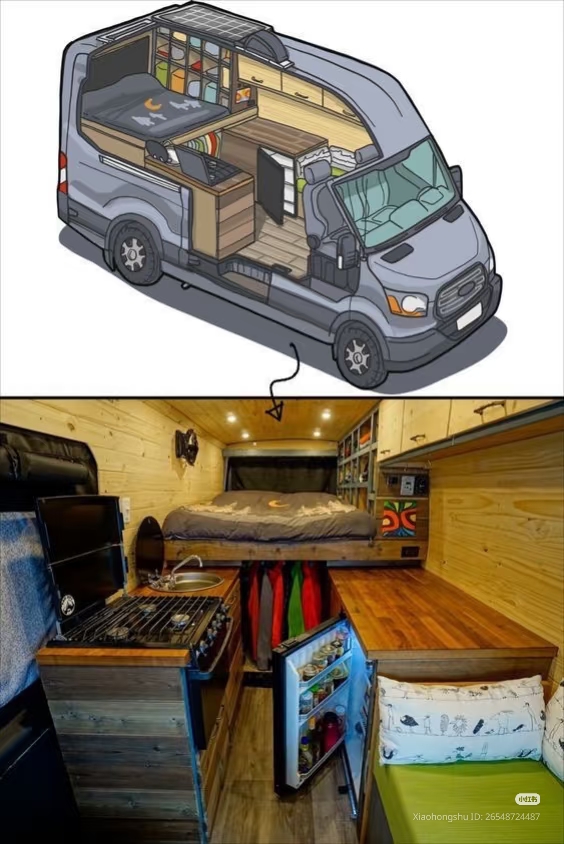
This meme compares a flat, illustrative design of a camper van interior to a realistic photograph that matches it perfectly. This visual juxtaposition highlights a "Cottagecore" aesthetic preference for rustic, wood-paneled living spaces while showcasing the cozy mobile-home lifestyle known as Vanlife. It serves as a humorous example of how designers use these sketches to create detailed models for photography, complete with an ID number from Xiaohongshu visible in the bottom right corner: Xiaohongshu ID: 26548724457.
detailed-analysis (gemma3_27b-it-q8_0)
Okay, let's analyze this image through the lens of "Aesthetics - Cottagecore - Vanlife." Here's a breakdown, utilizing the relevant theoretical approaches. It's worth noting that the meme leans heavily into aesthetics, and the theoretical analyses will follow from that central point.
Visual Description
The image presents two views of a meticulously converted van. The top image is a cutaway diagram showing the entire layout: a driver's cabin, a compact kitchen area, a seating area that converts into a bed, storage solutions, and decorative elements. The bottom image is a closer view of the interior, showcasing a cozy, wood-paneled cabin, a large bed with patterned bedding, a small kitchen with organized supplies, and personal touches like a dream catcher and colorful clothes hung for visibility.
The aesthetic is overwhelmingly warm, rustic, and intentional. There's a clear effort to maximize space while creating a comfortable, inviting atmosphere. Key visual features include:
- Wood Paneling: Dominates the interior, evoking natural materials and a sense of warmth.
- Soft Textiles: Bedding, curtains, and clothing contribute to a feeling of comfort and domesticity.
- Organized Storage: Every space is utilized, showcasing a sense of preparedness and control.
- Personalization: The dream catcher, clothing, and other small items make the space feel lived-in and individual.
- Light and Airy: The colour scheme is dominated by light shades of wood and textiles, and the van has large windows.
Cottagecore & Vanlife Aesthetics
This image is a quintessential example of the intersection of Cottagecore and Vanlife aesthetics. Cottagecore romanticizes a rural, simple life, focusing on self-sufficiency, traditional crafts, and a connection to nature. Vanlife, in turn, represents freedom, minimalism, and a rejection of conventional lifestyles.
The van interior directly translates Cottagecore elements into a mobile space. The wood, textiles, and organized supplies all contribute to the 'hand-made' or 'homestead' vibe central to Cottagecore. Vanlife provides the vehicle for enacting the desire for freedom and escape from societal norms, which also resonates with the roots of Cottagecore.
This creates a powerful combination: a self-contained, mobile sanctuary embodying a romanticized, idealized lifestyle. It represents a retreat from the complexities and pressures of modern life, a desire for authenticity, and a commitment to a simpler, more meaningful existence.
Foucauldian Genealogical Discourse Analysis
From a Foucaultian perspective, we can examine how the image reflects and reinforces discourses surrounding freedom, authenticity, and self-care. The vanlife/cottagecore aesthetic represents a specific way of constructing the self as liberated from capitalist structures and societal expectations.
- Discipline & Power: Paradoxically, the highly curated nature of the van's interior suggests a new form of self-discipline. It's not freedom from all constraints, but a shift in where and how discipline is applied. The organization, the aesthetic choices, the efficiency of space – these are all self-imposed regulations that define the "successful" vanlife/cottagecore self.
- Genealogy of Self: The aesthetic draws on historical imaginaries of rural life, crafting a specific "truth" about what it means to be free and authentic. This isn’t a spontaneous emergence; it's a historically constructed way of understanding oneself, built upon romanticized pasts.
- Normalization: The pervasiveness of this aesthetic on platforms like Instagram, Pinterest, and TikTok contributes to its normalization. It presents this specific lifestyle as desirable and achievable, influencing how people perceive freedom and authenticity.
Critical Theory
Critical Theory prompts us to question the ideological function of this aesthetic. Is this truly a rebellious act against consumerism and societal norms, or is it a commodification of those ideals?
- False Consciousness: The image might be seen as promoting a "false consciousness" – a belief that simply appearing to live a simpler life is enough to address the systemic issues of capitalism and environmental degradation.
- Commodification of Rebellion: The aesthetic is easily marketed and sold. "Vanlife conversion kits," rustic home decor, and curated experiences all capitalize on the desire for this lifestyle, turning rebellion into a commodity.
- Privilege & Accessibility: Access to a van, the time and resources to convert it, and the ability to travel are inherently tied to privilege. The image often glosses over these economic realities, presenting an idealized vision that isn't accessible to everyone.
Postmodernism
Postmodernism suggests that the image embodies a rejection of grand narratives and a embrace of individual expression.
- Pastiche and Simulation: The van interior is a deliberate blend of different styles and references – rustic wood, modern textiles, handmade crafts – creating a pastiche of different eras and aesthetic traditions. It’s not authentic in the traditional sense; it’s a carefully constructed simulation of a desired lifestyle.
- Deconstruction of Home: The van itself deconstructs the traditional idea of "home" as a fixed, permanent space. It embraces mobility and fluidity, challenging established notions of domesticity.
- Irony and Self-Awareness: The image may convey an element of irony, as it recognizes the performative nature of the lifestyle it represents. The highly stylized interior suggests an awareness of its own construction and a playful engagement with authenticity.
In conclusion, while the image presents a visually appealing and romanticized lifestyle, a deeper analysis reveals a complex interplay of aesthetics, ideology, and power. It's a fascinating example of how cultural trends can both reflect and reinforce societal values, while simultaneously offering a space for individual expression and resistance.
simple-description (llama3.2-vision_11b)
The meme is a humorous comparison between a luxurious, high-end van and a more modest, rustic van. The image shows a sleek, modern van with a luxurious interior, contrasted with a more basic, simple van with a cozy, rustic interior. The text "van life" is written above the two images, implying that the person who wrote the tweet is trying to make a humorous comparison between the two vans, implying that the more basic van is the "van life" that the person is trying to live.