First Seen
2024-06-13T21:50:54.773077+00:00
simple-description (llama3.2-vision_11b)
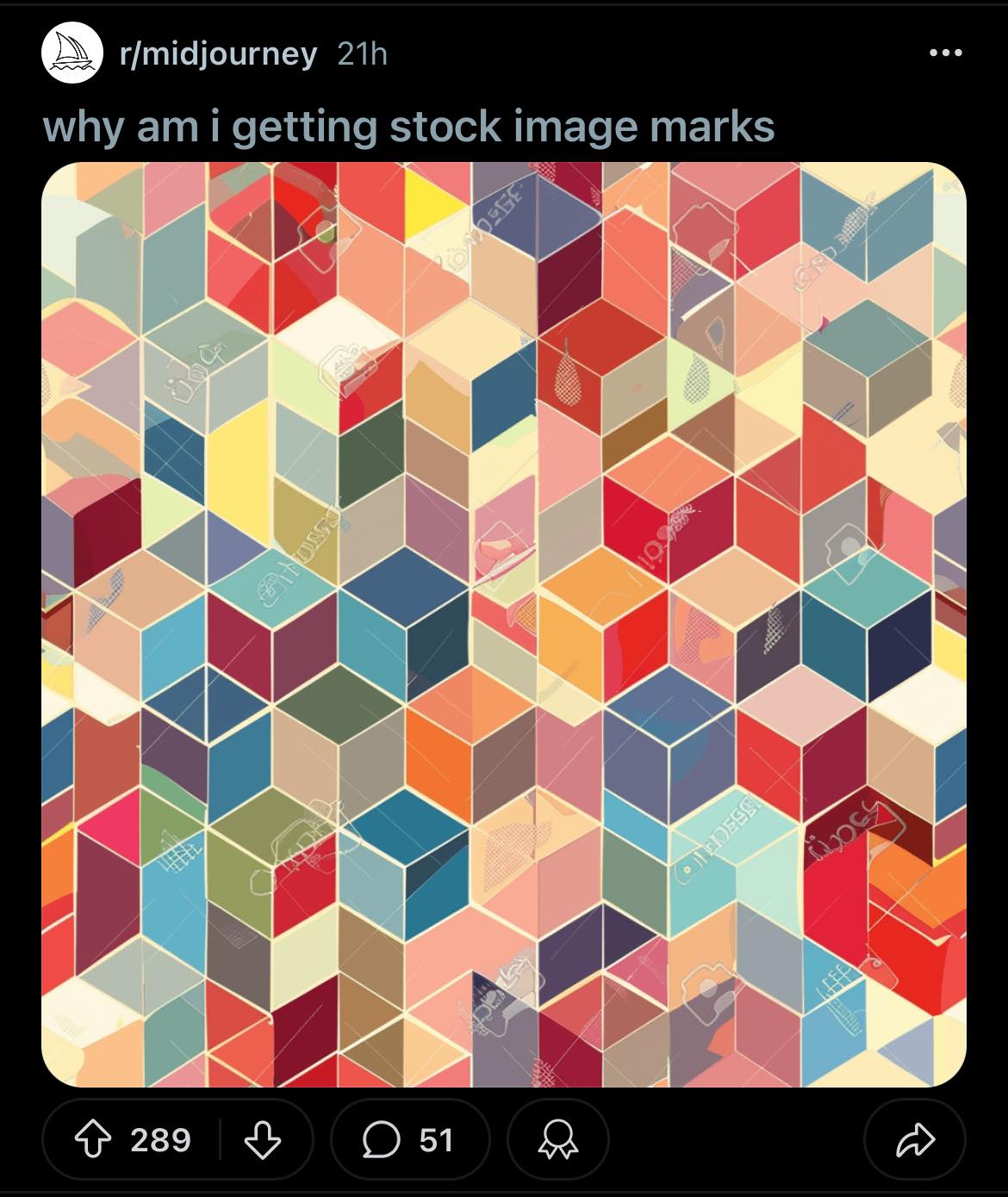
The meme is a humorous image of a 3D cube mosaic, but instead of a traditional image, it's made up of small, identical 3D cubes that are all slightly different colors. The image is captioned "why am i getting stock image results?" implying that the user is searching for a specific image but is getting generic, low-quality stock images instead. The meme is poking fun at the frustration of searching for a specific image and getting generic results instead.
detailed-analysis (gemma3-27b-vision)
Okay, here's an analysis of the image, broken down into sections as requested, addressing relevant theoretical frameworks where applicable.
Visual Description
The image is a digitally-generated pattern composed of numerous isometric cubes. The cubes are tiled together, creating a repeating, textured background. A diverse color palette is used, with shades of green, red, blue, pink, and earth tones. The cubes appear slightly distressed, with varying degrees of shading and texture suggesting imperfections or a handmade quality, despite clearly being digitally created.
Overlaying the entire composition are faintly visible, semi-transparent watermarks reading "shutterstock," indicating the source or branding of the image. These watermarks are partially obscured, suggesting an attempt to bypass or remove them. The overall effect is a busy, colorful, and somewhat unsettling pattern, complicated by the inherent contradiction of a digitally created, endlessly replicable image bearing the marks of a proprietary system.
Foucauldian Genealogical Discourse Analysis
The presence of the "shutterstock" watermarks immediately lends itself to a Foucauldian analysis. Michel Foucault’s work centers on power and knowledge, and how these are intertwined through discourses. This image doesn’t just show cubes; it represents a discourse around ownership, control, and the commodification of visual content.
The watermarks are traces of a specific power/knowledge structure. They are remnants of the legal and economic systems that govern intellectual property. The fact they are visible, even in a context of attempted removal, signifies the ever-present reach of these structures.
A genealogical approach would trace the historical development of these watermarks – from the early days of photography and copyright to the present-day digital stock image industry. It would examine how the practices of watermarking, licensing, and legal enforcement have shaped our understanding of image ownership. The act of trying to remove the marks signifies a disruption of this established order, an attempt to escape the panoptic gaze of control. The image itself is a site where power operates through visibility and the assertion of control.
Critical Theory
The image lends itself to a critique rooted in the Frankfurt School of Critical Theory. The endless repetition of the geometric shapes and the overlaying of commercial watermarks can be seen as representing the culture industry (Adorno & Horkheimer).
The image, as a digitally produced pattern, epitomizes standardization and the homogenization of aesthetic experience. It is a product of mass production designed for consumption. The watermarks emphasize the commodification of creativity – turning artistic expression into a tradable asset.
This image can also be seen as an example of false consciousness. The aesthetically pleasing pattern masks the underlying economic and power relations inherent in the stock image industry. The illusion of freely available visuals conceals the restrictions imposed by copyright and licensing agreements.
Postmodernism
The image is strongly aligned with many facets of postmodern thought.
- Simulation & Hyperreality: The image represents a digitally constructed reality devoid of original meaning. The cubes are not of anything; they are purely abstract, creating a “simulacrum” or copy without an original. This blurring of the lines between reality and simulation is a key theme in Jean Baudrillard's work.
- Deconstruction: The attempt to remove the watermarks can be interpreted as a form of deconstruction—a challenging of the established order of ownership and meaning. The act of trying to erase the source of the image undermines the traditional notion of author and originality.
- Pastiche & Irony: The image might be a form of ironic commentary on the ubiquity of stock imagery and its impact on contemporary visual culture. It’s a visual representation of the fragmented, often superficial nature of modern aesthetic experience.
- Loss of Grand Narratives: The image reflects the postmodern rejection of overarching narratives or ideologies. It’s a self-referential, visually busy composition that offers no inherent meaning or purpose.
Marxist Conflict Theory
From a Marxist perspective, the image demonstrates the inherent class conflict within the digital realm.
The stock image industry itself represents the commodification of labor and creativity. Artists and photographers create content that is then owned and controlled by corporations (like Shutterstock). The profits generated from this content are not equitably distributed to the creators.
The watermarks serve as a visual manifestation of this power imbalance—a constant reminder of who owns the image and controls its distribution. The attempt to remove the watermark, from a Marxist lens, could be seen as a small act of resistance against capitalist control.
The image also reflects the alienation of labor. The endless replication of the geometric shapes and the focus on quantity over quality highlights the dehumanizing aspects of capitalist production.
In short, the image, even as a simple visual, is rich with implications when viewed through the lens of critical theory. It is a potent symbol of our increasingly commodified, digital, and often contradictory world.
simple-description (llama3.2-vision)
The meme is a screenshot of a Reddit post with the title "why am i getting stock image marks". The image is a grid of tiny, identical, 3D cubes in various colors, but upon closer inspection, they all appear to be identical and are actually just a stock image of a 3D cube grid. The post is likely complaining about receiving stock image marks, which are small, transparent, or "watermark" images that appear over the top of the actual image, often used to protect the image's copyright.
tesseract-ocr
r/midjourney 21h eee why am i getting stock image marks "sD 6 pes Sos & a. Kw | ge - coy s: i: nO en AR By